


Growing up, I desperately wanted a dog. My parents made clear it wasn’t going to happen, but I never gave up hope. I borrowed books about dogs from the library. I bought a dog-training guide with my allowance. When MaryAnn, who lived down the street, said her mother hated their dog Woofy and asked me if my family would take her, I thought that sounded like the perfect idea. Later that day, MaryAnn dropped Woofy at my house after school.
When my mom got home from work she said, “Take that dog back right now.”
I assumed I’d get a dog when I became an adult. But in my twenties, my husband and I lived in small city apartments and in my thirties we adopted the cat that wandered into our suburban home’s yard.
But the cat would often run in the opposite direction when my fast-moving son wanted to cuddle or pet it, leading him to ask us, "Why can’t I have a pet who loves me? Why can’t I have a dog?"
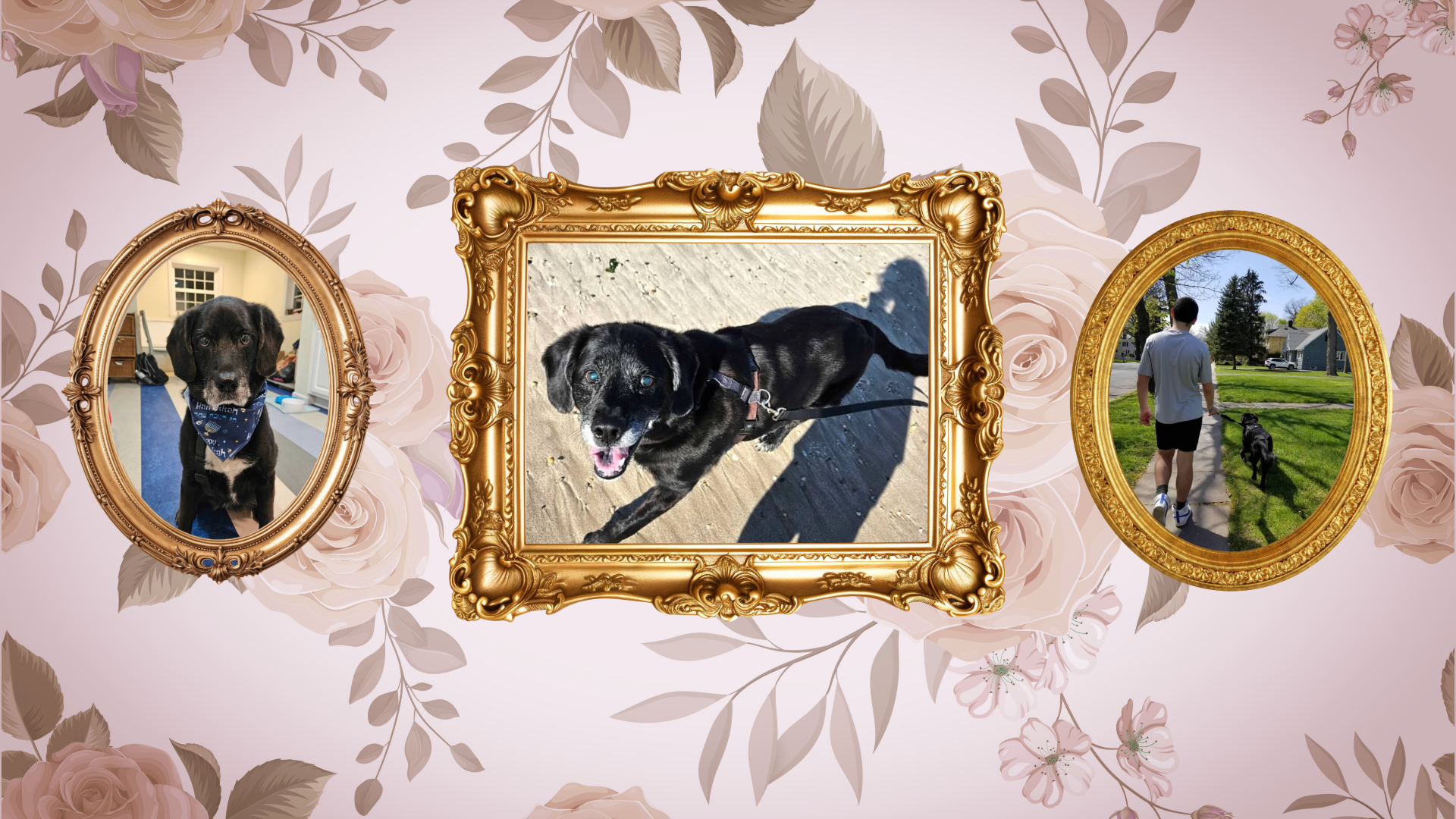
That’s when, in my forties, I decided to get a dog. Her name was Opal. She was seven years old when we adopted her. My son was 13. She’d been surrendered because of a domestic violence situation and then bounced around homes for a year after that.
She looked so forlorn in her Facebook adoption photo that someone commented, “Please someone help this beautiful gal, she looks so sad.”
Her Petfinder description said she was house-trained, walked nicely on a leash, and was good with cats and kids. Only the first was true. She barked at and chased the cat mercilessly. On walks, she burst onto the sidewalk like a bull in a china shop and lunged and barked at other dogs, cyclists, joggers, and anyone who got too close to us.
No matter, I thought. I’d seen enough of The Dodo videos to know that with enough love, any dog can be trained into the perfect canine companion.
With consistent training and treats, Opal got the hang of suburban life, but she never achieved the viral-worthy transformation of a perfectly trained dog. You can teach an old dog new tricks, I learned, but those tricks won’t necessarily become second nature. We successfully trained Opal to look at us for a treat when a biker or jogger passed instead of barking at them; but she never lost the instinctive urge to bark and lunge with the full force of her 65 pound body.

Similarly, having guests to the house required a ritual. Telling visitors, “Do not pet the dog. She doesn’t like it,” was key. Invariably, my son would then pet her, and I would say, “Well, she likes being petted by this guy.” And what could make someone feel more special than that?
Opal never became the perfect dog, but she was perfect with our family of four. What she lacked in behavioural skills, she made up for with love, not least of all with me. When I felt her bottomless love, I remembered in a visceral way how much I wanted a dog when I was a child. I was a bit of an outsider; a bookish, sensitive child in a blue-collar town. Opal would have been perfect for that child. She was the epitome of the dog who understands her owners’ emotions. If I was sad, she would put her head in my lap; if I was distraught, she’d offer her paw. When anyone in the family was really happy—like when my daughter received her college acceptance—she’d go berserk, running around the house in excitement.
She was perfect for my son, too. People thought I was crazy to get a senior dog; didn’t my energetic boy need an equally energetic dog? You know, like a puppy. I didn’t see it that way. I saw that he needed an emotionally in-tune dog who needed him. No one could have fit that bill better than Opal (and it turned out she was full of energy).
Whatever we wanted to do, she wanted to do, as long as we did it together. When I took my son to school in the mornings, she would look at me pleadingly with the sad yet hopeful expression in her adoption photo, willing me to bring her along for the seven-minute ride. During a spirited rendition of Dayenu one Pesach, she joined in the singing.
When she saw suitcases, we'd have to put her in the car right away so she knew she was coming. When we packed the trunk, she’d look at us from the backseat and smile. Her whole life people had given up on her. I promised I never would.
At one point I wasn’t certain I would be able to keep that promise. During the summer of 2021, when we rented a beach house and had 23 people over, Opal constantly barked at all of my youngest nieces and nephews. I was worried I wouldn’t be able to keep a dog who seemed to hate small children. But later that evening, when Opal and my son were lying on the carpet together, he told her that she was “the best dog” and that he loved her. She licked his face in return. And I knew, then, that she was part of our family and that I would make it work.
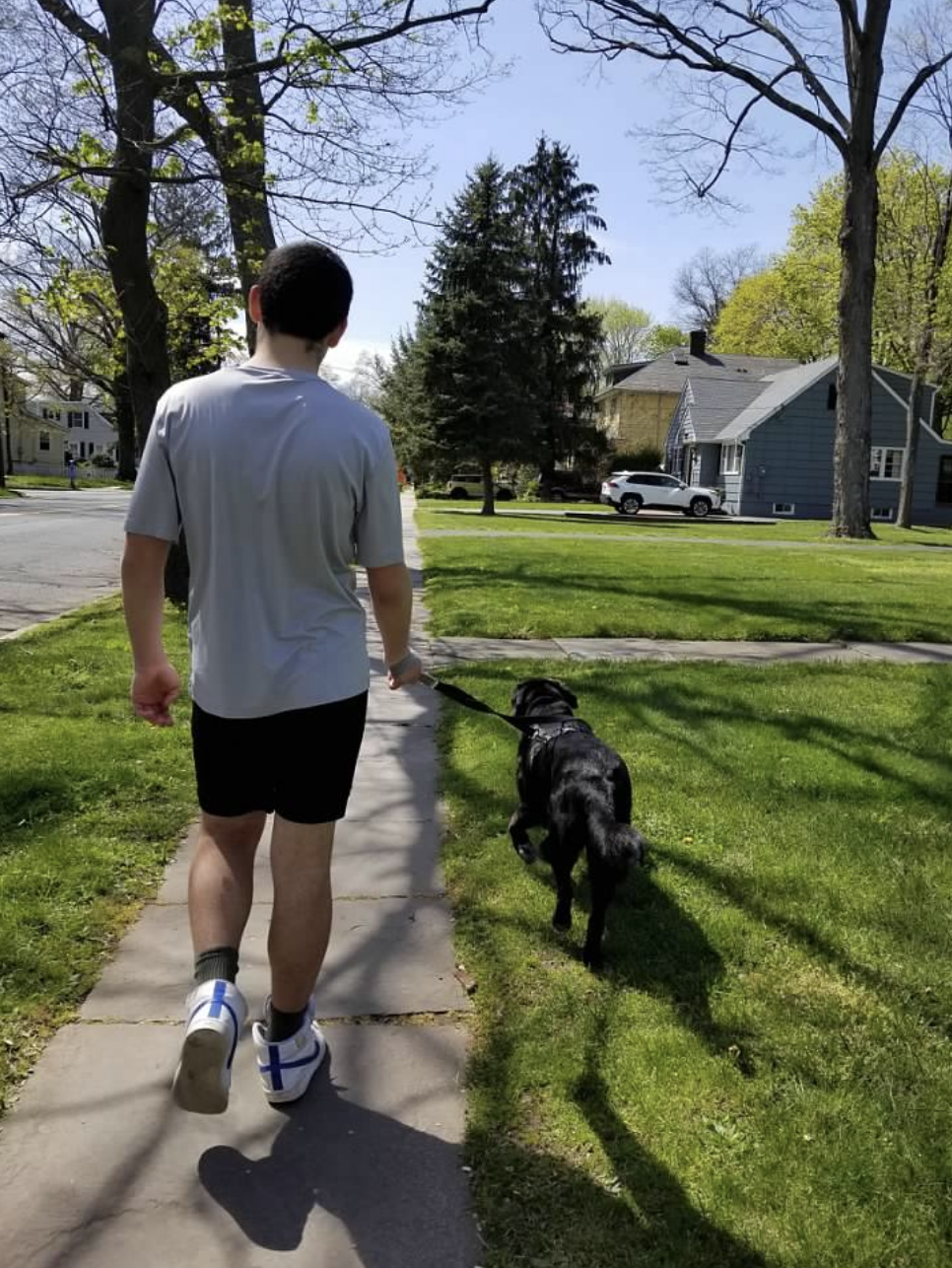
Opal’s health began to take a turn for the worse when she went blind from SARDS in fall 2023. But she adjusted to blindness the way she approached everything, with courage and gusto. We had to help her down stairs and keep her from running into telephone poles on walks, but that was about it. My children adjusted to her blindness with quiet love, empathy, and deep understanding. Sometimes when my son and Opal left for a walk together, I’d peek at them from between the blinds. She would look up at him, even though her eyes couldn’t see, and he would give her a treat. They’d continue walking, and I could see her tail wagging the whole way until I lost track of them.
She acted like a happy, energetic puppy right up until the end, which is part of what made saying goodbye so hard. In her last year of life her health deteriorated. Then one Friday when my husband and I were going away for the weekend, which we rarely did, Opal was struggling to get out of bed in the morning. In a string of bad decisions I’ll always regret, I decided to go on our scheduled getaway. I told my daughter to take Opal to the emergency vet, and we would come home if it was serious. We would be only two hours away. Unfortunately, Opal’s health greatly diminished for the next week.
Three vet appointments over three days ended with all doctors agreeing she seemed to have a brain tumour.
Reluctantly, I agreed to put my soul dog down.
One of the only things I remember from that appointment is the vet warning us that Opal might soil herself or experience tremors. Nothing of the sort happened. Opal took euthanasia the way she took everything else she didn’t want to happen: with grace and without a fight, in a way that was as easy as possible for her family.
I tried to find more comfort in Jewish ritual, but, for the first time in my life, my faith was a source of pain instead of comfort. A Google search revealed that you can’t say Kaddish for a dog, and Judaism teaches that animals don’t go to heaven.
When my grandmother died, I dreamt of her.
“I can’t believe you thought I died!” she’d say. We’d laugh and I’d respond, “I can’t believe I thought that, either.” Those dreams were my proof that God was real, heaven was real, and I would see my grandmother again.
The thought of never seeing Opal again gutted me. She did not come to me in my dreams as my grandmother had, which seemed proof that dogs did not go to heaven, and I would never see my precious good girl again.
The despair worsened when I reviewed the medical records and was hit in the face by the fact that it was never actually determined that Opal had a brain tumour. I’d just assumed. But there it was, on my screen: “Primary concern for intracranial disease (possible brain tumor); less likely differentials: old dog vestibular disease, middle/inner ear infection.”
I felt dizzy and couldn’t breathe. Did I kill my dog for a simple ear infection? And why didn’t it occur to me to take her back to the ER vet for an MRI to be sure?
It was one thing for other people to say confidently that this was no life for Opal and we needed to put her down. It was another thing for me, her primary caregiver, the decider. Opal counted on me to look out for her. People had given up on Opal her whole life. I promised I never would. But in the end, I gave up on her in the worst way.
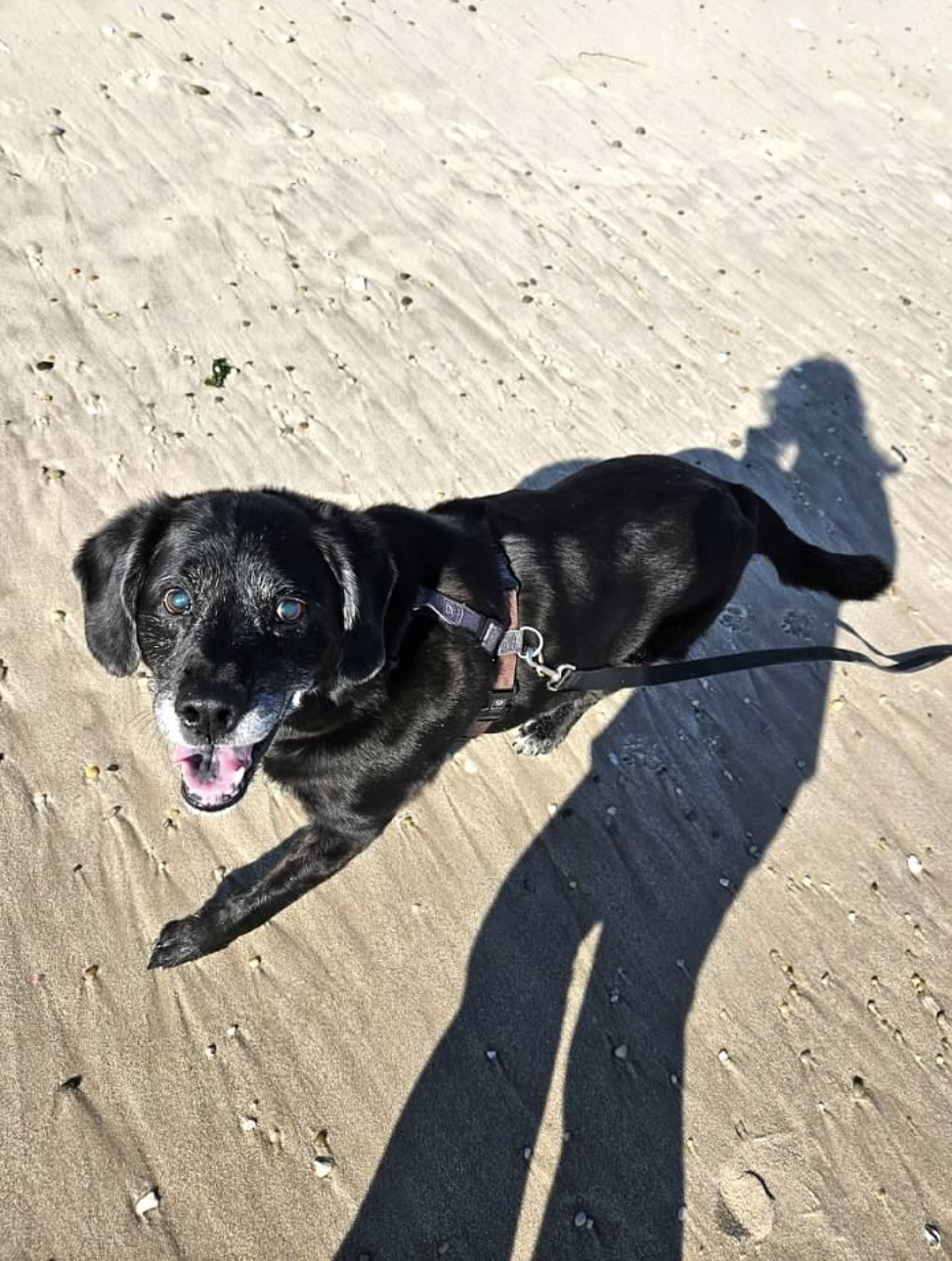
There is a video of us running on the beach in the off-season. Opal is running next to me, ears flapping in the wind. When the video was taken, I thought it was a video of Opal running free. Now I see it's a video of how she just wanted to be with her people. She is free, but her un-seeing eyes are on me as we run together, her body colliding into my legs in her quest to be as close to me as possible.
“We really don’t know whether animals go to heaven,” my rabbi said when I called her, distraught over what I read. “Judaism struggles with profound unknown things, and death is the biggest.” I clung to that. We don’t know, and I just had to be okay with that.
That night, I finally dreamt of Opal. It was not a dream like I had with my grandmother. In this dream, I walked onto our front lawn in the summer heat and saw a pile of Opal’s poop on the grass. I looked up and saw her. I pet her the way she liked and whispered into her fur the way I had in life, “I love you, Opal. You’re the dog I always wanted.” I smelled her unmistakable Opal scent and thought, I don’t know how this is possible, but I don’t care. She didn’t talk to me like a person; she was just herself, loving without limit or question.
Opal was such a presence that things feel radically different without her.
Walks without her are particularly difficult for me. Sometimes during our walks, Opal would spontaneously turn around and look at me with pure love. Opal was blind, but her love was so strong that she could see me with her heart. She lived in a world of darkness but made the world so bright. She reminded us that life was full of small happy moments that, taken together, make for one happy life. This summer, going to the beach for the first time without her was excruciating, but as my daughter pointed out, we could be grateful for all the happy summers she had.
I didn’t say Kaddish for Opal because she wasn’t a person. But I find her in other prayers. In that first Shabbat after her death, I found myself sobbing when we read a prayer I’d recited hundreds of times: “Days pass and the years vanish, and we walk sightless among miracles. God, fill our eyes with seeing and our minds with knowing; let there be moments when Your Presence, like lightning, illumines the darkness in which we walk. Help us to see, wherever we gaze, that the bush burns unconsumed. And we, clay touched by God, will reach out for holiness, and exclaim in wonder: How filled with awe is this place, and we did not know it!” That spirit of optimism and faith is just like Opal, always believing she was the luckiest dog in the world, and trusting without seeing that I was always there for her.
Growing up, I desperately wanted a dog. My parents made clear it wasn’t going to happen, but I never gave up hope. I borrowed books about dogs from the library. I bought a dog-training guide with my allowance. When MaryAnn, who lived down the street, said her mother hated their dog Woofy and asked me if my family would take her, I thought that sounded like the perfect idea. Later that day, MaryAnn dropped Woofy at my house after school.
When my mom got home from work she said, “Take that dog back right now.”
I assumed I’d get a dog when I became an adult. But in my twenties, my husband and I lived in small city apartments and in my thirties we adopted the cat that wandered into our suburban home’s yard.
But the cat would often run in the opposite direction when my fast-moving son wanted to cuddle or pet it, leading him to ask us, "Why can’t I have a pet who loves me? Why can’t I have a dog?"
That’s when, in my forties, I decided to get a dog. Her name was Opal. She was seven years old when we adopted her. My son was 13. She’d been surrendered because of a domestic violence situation and then bounced around homes for a year after that.
She looked so forlorn in her Facebook adoption photo that someone commented, “Please someone help this beautiful gal, she looks so sad.”
Her Petfinder description said she was house-trained, walked nicely on a leash, and was good with cats and kids. Only the first was true. She barked at and chased the cat mercilessly. On walks, she burst onto the sidewalk like a bull in a china shop and lunged and barked at other dogs, cyclists, joggers, and anyone who got too close to us.
No matter, I thought. I’d seen enough of The Dodo videos to know that with enough love, any dog can be trained into the perfect canine companion.
With consistent training and treats, Opal got the hang of suburban life, but she never achieved the viral-worthy transformation of a perfectly trained dog. You can teach an old dog new tricks, I learned, but those tricks won’t necessarily become second nature. We successfully trained Opal to look at us for a treat when a biker or jogger passed instead of barking at them; but she never lost the instinctive urge to bark and lunge with the full force of her 65 pound body.
Similarly, having guests to the house required a ritual. Telling visitors, “Do not pet the dog. She doesn’t like it,” was key. Invariably, my son would then pet her, and I would say, “Well, she likes being petted by this guy.” And what could make someone feel more special than that?
Opal never became the perfect dog, but she was perfect with our family of four. What she lacked in behavioural skills, she made up for with love, not least of all with me. When I felt her bottomless love, I remembered in a visceral way how much I wanted a dog when I was a child. I was a bit of an outsider; a bookish, sensitive child in a blue-collar town. Opal would have been perfect for that child. She was the epitome of the dog who understands her owners’ emotions. If I was sad, she would put her head in my lap; if I was distraught, she’d offer her paw. When anyone in the family was really happy—like when my daughter received her college acceptance—she’d go berserk, running around the house in excitement.
She was perfect for my son, too. People thought I was crazy to get a senior dog; didn’t my energetic boy need an equally energetic dog? You know, like a puppy. I didn’t see it that way. I saw that he needed an emotionally in-tune dog who needed him. No one could have fit that bill better than Opal (and it turned out she was full of energy).
Whatever we wanted to do, she wanted to do, as long as we did it together. When I took my son to school in the mornings, she would look at me pleadingly with the sad yet hopeful expression in her adoption photo, willing me to bring her along for the seven-minute ride. During a spirited rendition of Dayenu one Pesach, she joined in the singing.
When she saw suitcases, we'd have to put her in the car right away so she knew she was coming. When we packed the trunk, she’d look at us from the backseat and smile. Her whole life people had given up on her. I promised I never would.
At one point I wasn’t certain I would be able to keep that promise. During the summer of 2021, when we rented a beach house and had 23 people over, Opal constantly barked at all of my youngest nieces and nephews. I was worried I wouldn’t be able to keep a dog who seemed to hate small children. But later that evening, when Opal and my son were lying on the carpet together, he told her that she was “the best dog” and that he loved her. She licked his face in return. And I knew, then, that she was part of our family and that I would make it work.
Opal’s health began to take a turn for the worse when she went blind from SARDS in fall 2023. But she adjusted to blindness the way she approached everything, with courage and gusto. We had to help her down stairs and keep her from running into telephone poles on walks, but that was about it. My children adjusted to her blindness with quiet love, empathy, and deep understanding. Sometimes when my son and Opal left for a walk together, I’d peek at them from between the blinds. She would look up at him, even though her eyes couldn’t see, and he would give her a treat. They’d continue walking, and I could see her tail wagging the whole way until I lost track of them.
She acted like a happy, energetic puppy right up until the end, which is part of what made saying goodbye so hard. In her last year of life her health deteriorated. Then one Friday when my husband and I were going away for the weekend, which we rarely did, Opal was struggling to get out of bed in the morning. In a string of bad decisions I’ll always regret, I decided to go on our scheduled getaway. I told my daughter to take Opal to the emergency vet, and we would come home if it was serious. We would be only two hours away. Unfortunately, Opal’s health greatly diminished for the next week.
Three vet appointments over three days ended with all doctors agreeing she seemed to have a brain tumour.
Reluctantly, I agreed to put my soul dog down.
One of the only things I remember from that appointment is the vet warning us that Opal might soil herself or experience tremors. Nothing of the sort happened. Opal took euthanasia the way she took everything else she didn’t want to happen: with grace and without a fight, in a way that was as easy as possible for her family.
I tried to find more comfort in Jewish ritual, but, for the first time in my life, my faith was a source of pain instead of comfort. A Google search revealed that you can’t say Kaddish for a dog, and Judaism teaches that animals don’t go to heaven.
When my grandmother died, I dreamt of her.
“I can’t believe you thought I died!” she’d say. We’d laugh and I’d respond, “I can’t believe I thought that, either.” Those dreams were my proof that God was real, heaven was real, and I would see my grandmother again.
The thought of never seeing Opal again gutted me. She did not come to me in my dreams as my grandmother had, which seemed proof that dogs did not go to heaven, and I would never see my precious good girl again.
The despair worsened when I reviewed the medical records and was hit in the face by the fact that it was never actually determined that Opal had a brain tumour. I’d just assumed. But there it was, on my screen: “Primary concern for intracranial disease (possible brain tumor); less likely differentials: old dog vestibular disease, middle/inner ear infection.”
I felt dizzy and couldn’t breathe. Did I kill my dog for a simple ear infection? And why didn’t it occur to me to take her back to the ER vet for an MRI to be sure?
It was one thing for other people to say confidently that this was no life for Opal and we needed to put her down. It was another thing for me, her primary caregiver, the decider. Opal counted on me to look out for her. People had given up on Opal her whole life. I promised I never would. But in the end, I gave up on her in the worst way.
There is a video of us running on the beach in the off-season. Opal is running next to me, ears flapping in the wind. When the video was taken, I thought it was a video of Opal running free. Now I see it's a video of how she just wanted to be with her people. She is free, but her un-seeing eyes are on me as we run together, her body colliding into my legs in her quest to be as close to me as possible.
“We really don’t know whether animals go to heaven,” my rabbi said when I called her, distraught over what I read. “Judaism struggles with profound unknown things, and death is the biggest.” I clung to that. We don’t know, and I just had to be okay with that.
That night, I finally dreamt of Opal. It was not a dream like I had with my grandmother. In this dream, I walked onto our front lawn in the summer heat and saw a pile of Opal’s poop on the grass. I looked up and saw her. I pet her the way she liked and whispered into her fur the way I had in life, “I love you, Opal. You’re the dog I always wanted.” I smelled her unmistakable Opal scent and thought, I don’t know how this is possible, but I don’t care. She didn’t talk to me like a person; she was just herself, loving without limit or question.
Opal was such a presence that things feel radically different without her.
Walks without her are particularly difficult for me. Sometimes during our walks, Opal would spontaneously turn around and look at me with pure love. Opal was blind, but her love was so strong that she could see me with her heart. She lived in a world of darkness but made the world so bright. She reminded us that life was full of small happy moments that, taken together, make for one happy life. This summer, going to the beach for the first time without her was excruciating, but as my daughter pointed out, we could be grateful for all the happy summers she had.
I didn’t say Kaddish for Opal because she wasn’t a person. But I find her in other prayers. In that first Shabbat after her death, I found myself sobbing when we read a prayer I’d recited hundreds of times: “Days pass and the years vanish, and we walk sightless among miracles. God, fill our eyes with seeing and our minds with knowing; let there be moments when Your Presence, like lightning, illumines the darkness in which we walk. Help us to see, wherever we gaze, that the bush burns unconsumed. And we, clay touched by God, will reach out for holiness, and exclaim in wonder: How filled with awe is this place, and we did not know it!” That spirit of optimism and faith is just like Opal, always believing she was the luckiest dog in the world, and trusting without seeing that I was always there for her.