


March 30, 1941
Snow was falling, steady and heavy, onto the upper deck of the Serpa Pinto, the ship which had been our home, with six hundred fellow Jews and other refugees, for the last fifteen days. Built to accommodate three hundred, she had carried us well in spite of the overload, and I imagined she was happy to be rid of us soon. My twin sister, Hannah, and I stood with my parents who were crying quietly. I elbowed Hannah, but she had already noticed. It was a sight neither of us had ever seen, even in the face of all we had recently been through. At nine years old, we were the youngest on the ship. Our parents had taken great pains to keep us close to them throughout our journey from Lisbon. They were less protective of our older brothers, Arthur, who was thirteen, and Josef, who was fifteen, throwing snowballs at one another.
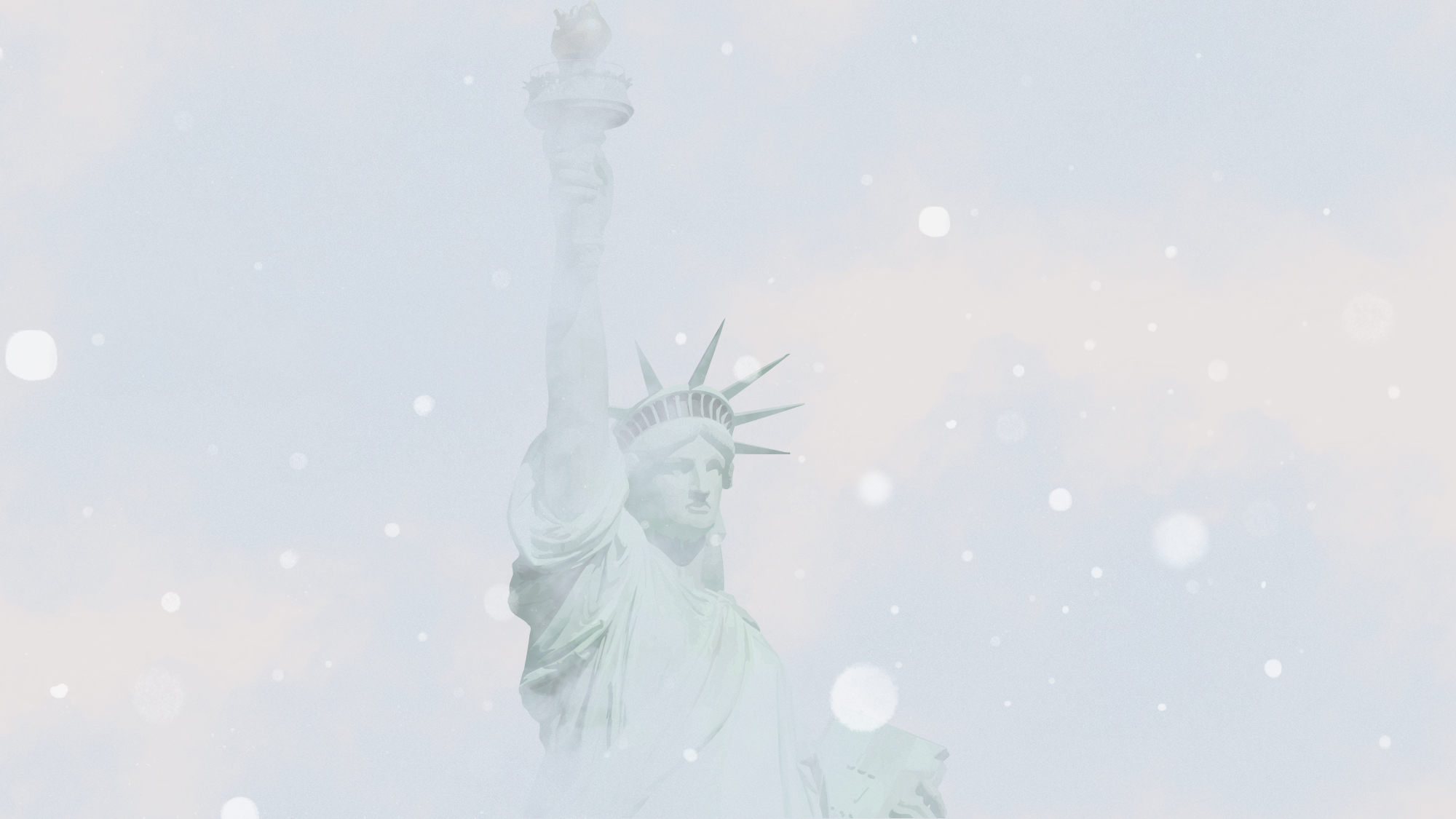
Hannah answered my nudge with a slight shift toward me. These were the subtle movements the two of us had developed, the silent communication of identical twins. We had always done this, and our mother prided herself in being able to intercept and decode our messages like a spy. Through what I could now see were happy tears, shared by all of the adults, she had sensed how badly we both wanted to be with the other children who were frolicking noisily in the falling snow. She nodded, signaling it was alright for us to join our brothers in the fun. Hannah leapt on her toes and grabbed my hand, but before I let her pull me with her, I followed the eyes of the grown-ups hoping for a glimpse of whatever it was that held their collective attention so firmly. I saw the outline in the snow of that statue I’d seen in history books and newsreels, the one with the torch held high and the crown of spikes on her head.
“We’ve made it,” someone said. Our parents embraced, and their public intimacy fascinated me almost as much as the giant, scary lady whose solemn face I could barely make out through the falling snow.
“Heidi, come!” my sister said, yanking on my hand so hard it hurt.
“Ow!”
Our Mary Jane shoes were not made for this weather, and we half ran, half slid our way over to where Arthur had begun making a snowman. A couple of dark-eyed girls, their hair pulled back in tight ponytails, were watching Arthur work. They giggled when he smiled at them, his blue eyes twinkling in that way Hannah and I both adored. There was not much snow to work with yet, but Arthur was skilled at scraping what there was together and making discernible shapes out of it. My sister and I stood with the two Roma girls and marvelled at the magic that was our brother Arthur.
“That’s our brother,” I told one of them. She simply smiled and giggled some more, before saying something to the other girl, who I imagined to be her younger sister, in a language I’d never heard before. Since they didn’t understand my German, I tried English, which I’d more recently learned at Saint Julian’s school, where all four of us attended when we first arrived in Portugal, in the fall of 1938. She shook her head, as if saying, “Sorry. Don’t know that one either.”
Before Hannah or I could try the French they taught us in first grade, Josef sprinted over from where he had been making snow angels with a very pretty girl called Rita whom he had shared an obvious flirtation with throughout our journey. He had something in his arms which, I realized just in time, were three snowballs. He fired them in succession. Hannah and I ducked, as did the two girls standing next to us, but Arthur failed to see our older brother coming, and he took a direct hit in the neck.
“Bloody hell!” Arthur called out in the perfect schoolboy English he had learned at Saint Julian’s. It had become natural for him, as it had for Josef, Hannah, and me.
“Ooh,” Hannah and I intoned in perfect harmony. Our mother knew little English, but she knew this kind of talk and would not be happy if she heard it.
Before Arthur could retaliate, he and Josef both noticed the statue.
“Come on!” Josef yelled, and we all, including the two dark-eyed girls, followed him to join the crowds of people who silently regarded Lady Liberty. Many of the adults were wiping their eyes; no one spoke. A boy with wild brown curls hurled a snowball in the direction of the statue, and a large woman who Hannah and I decided early on was his grandmother, cuffed him hard on the back of his head.
“Mostre algum respeito!” she hissed at him. I knew enough Portuguese from our time in Lisbon to understand the words, and I probably could have guessed them anyway, judging from how quickly the boy quieted down, stood beside his grandmother, and held back tears.
“Girls, come here,” I heard my mother call in German. “You boys, too.”
We stood together and watched as the ship made its way into port at Ellis Island. Oil smoke and steam obscured what I was able to see from up on deck.
“Look!” Hannah said, poking my shoulder. “Look at all the doves!”
A large flock of birds flew around the port in wild, coordinated circles.
Josef laughed. “Those aren’t doves. They’re pigeons, aren’t they?”
I had never heard that word before. Mrs. Winfrey, our English teacher at Saint Julian’s did teach us about a number of bird species—doves, cardinals, bluejays, and sparrows. She even made a point to let us know we would be likely to encounter many of them once we arrived in America. How strange that she didn’t mention this one. There appeared to be more of them than people.
“Arthur, are you alright?” my mother asked in German. She was inspecting a large, red welt on his neck.
Arthur squinted at Josef, before answering in English.
“Yes, Mother. Quite alright.”
Our father gathered us and shepherded us inside to our cabin. Getting there was no easy task, as many of those who were up on deck were making their way to collect their things and preparing to disembark.
“We’re not quite there yet,” he explained as the four of us sat like good soldiers on the bed Hannah and I had shared for the past two weeks. The cabin was first class, small but comfortable, even for my mother, my sister, and me. Father, Josef, and Arthur had their own cabin, a few doors down the corridor.
“But the statue,” I protested. In my mind, all those who came to America came to this statue. They received blessings from the giant woman before making their way to their new lives.
My father explained that because there were so many passengers that would need to be processed, the ship was making two stops—one here at Ellis Island, and one in the Port of Hoboken (a word that made Hannah and me giggle)––a few miles up the river. We would be in the second group.
“Can we go back on deck to play in the snow some more?” I asked eagerly.
“We’ll let the passengers disembark first,” my mother said, wiping my nose with a handkerchief she produced, as if by magic, from up her coat sleeve. All of our cheeks were red from the cold, so we got comfortable in the dark panelled cabin, amidst the usual smell of oil, the gentle rocking of the ship, and the excited, multi-lingual voices of the throngs of new Americans making their way to the lives that awaited them. Hannah and I snuggled under the covers of our warm bed. My mother busied herself with packing our things, and I watched the snow falling outside the porthole, my sister’s breathing already steadying into sleep beside me.
“In just a few short hours,” our father said, before he and the boys headed down the passageway to their cabin, “we will be home.”
March 30, 1941
Snow was falling, steady and heavy, onto the upper deck of the Serpa Pinto, the ship which had been our home, with six hundred fellow Jews and other refugees, for the last fifteen days. Built to accommodate three hundred, she had carried us well in spite of the overload, and I imagined she was happy to be rid of us soon. My twin sister, Hannah, and I stood with my parents who were crying quietly. I elbowed Hannah, but she had already noticed. It was a sight neither of us had ever seen, even in the face of all we had recently been through. At nine years old, we were the youngest on the ship. Our parents had taken great pains to keep us close to them throughout our journey from Lisbon. They were less protective of our older brothers, Arthur, who was thirteen, and Josef, who was fifteen, throwing snowballs at one another.
Hannah answered my nudge with a slight shift toward me. These were the subtle movements the two of us had developed, the silent communication of identical twins. We had always done this, and our mother prided herself in being able to intercept and decode our messages like a spy. Through what I could now see were happy tears, shared by all of the adults, she had sensed how badly we both wanted to be with the other children who were frolicking noisily in the falling snow. She nodded, signaling it was alright for us to join our brothers in the fun. Hannah leapt on her toes and grabbed my hand, but before I let her pull me with her, I followed the eyes of the grown-ups hoping for a glimpse of whatever it was that held their collective attention so firmly. I saw the outline in the snow of that statue I’d seen in history books and newsreels, the one with the torch held high and the crown of spikes on her head.
“We’ve made it,” someone said. Our parents embraced, and their public intimacy fascinated me almost as much as the giant, scary lady whose solemn face I could barely make out through the falling snow.
“Heidi, come!” my sister said, yanking on my hand so hard it hurt.
“Ow!”
Our Mary Jane shoes were not made for this weather, and we half ran, half slid our way over to where Arthur had begun making a snowman. A couple of dark-eyed girls, their hair pulled back in tight ponytails, were watching Arthur work. They giggled when he smiled at them, his blue eyes twinkling in that way Hannah and I both adored. There was not much snow to work with yet, but Arthur was skilled at scraping what there was together and making discernible shapes out of it. My sister and I stood with the two Roma girls and marvelled at the magic that was our brother Arthur.
“That’s our brother,” I told one of them. She simply smiled and giggled some more, before saying something to the other girl, who I imagined to be her younger sister, in a language I’d never heard before. Since they didn’t understand my German, I tried English, which I’d more recently learned at Saint Julian’s school, where all four of us attended when we first arrived in Portugal, in the fall of 1938. She shook her head, as if saying, “Sorry. Don’t know that one either.”
Before Hannah or I could try the French they taught us in first grade, Josef sprinted over from where he had been making snow angels with a very pretty girl called Rita whom he had shared an obvious flirtation with throughout our journey. He had something in his arms which, I realized just in time, were three snowballs. He fired them in succession. Hannah and I ducked, as did the two girls standing next to us, but Arthur failed to see our older brother coming, and he took a direct hit in the neck.
“Bloody hell!” Arthur called out in the perfect schoolboy English he had learned at Saint Julian’s. It had become natural for him, as it had for Josef, Hannah, and me.
“Ooh,” Hannah and I intoned in perfect harmony. Our mother knew little English, but she knew this kind of talk and would not be happy if she heard it.
Before Arthur could retaliate, he and Josef both noticed the statue.
“Come on!” Josef yelled, and we all, including the two dark-eyed girls, followed him to join the crowds of people who silently regarded Lady Liberty. Many of the adults were wiping their eyes; no one spoke. A boy with wild brown curls hurled a snowball in the direction of the statue, and a large woman who Hannah and I decided early on was his grandmother, cuffed him hard on the back of his head.
“Mostre algum respeito!” she hissed at him. I knew enough Portuguese from our time in Lisbon to understand the words, and I probably could have guessed them anyway, judging from how quickly the boy quieted down, stood beside his grandmother, and held back tears.
“Girls, come here,” I heard my mother call in German. “You boys, too.”
We stood together and watched as the ship made its way into port at Ellis Island. Oil smoke and steam obscured what I was able to see from up on deck.
“Look!” Hannah said, poking my shoulder. “Look at all the doves!”
A large flock of birds flew around the port in wild, coordinated circles.
Josef laughed. “Those aren’t doves. They’re pigeons, aren’t they?”
I had never heard that word before. Mrs. Winfrey, our English teacher at Saint Julian’s did teach us about a number of bird species—doves, cardinals, bluejays, and sparrows. She even made a point to let us know we would be likely to encounter many of them once we arrived in America. How strange that she didn’t mention this one. There appeared to be more of them than people.
“Arthur, are you alright?” my mother asked in German. She was inspecting a large, red welt on his neck.
Arthur squinted at Josef, before answering in English.
“Yes, Mother. Quite alright.”
Our father gathered us and shepherded us inside to our cabin. Getting there was no easy task, as many of those who were up on deck were making their way to collect their things and preparing to disembark.
“We’re not quite there yet,” he explained as the four of us sat like good soldiers on the bed Hannah and I had shared for the past two weeks. The cabin was first class, small but comfortable, even for my mother, my sister, and me. Father, Josef, and Arthur had their own cabin, a few doors down the corridor.
“But the statue,” I protested. In my mind, all those who came to America came to this statue. They received blessings from the giant woman before making their way to their new lives.
My father explained that because there were so many passengers that would need to be processed, the ship was making two stops—one here at Ellis Island, and one in the Port of Hoboken (a word that made Hannah and me giggle)––a few miles up the river. We would be in the second group.
“Can we go back on deck to play in the snow some more?” I asked eagerly.
“We’ll let the passengers disembark first,” my mother said, wiping my nose with a handkerchief she produced, as if by magic, from up her coat sleeve. All of our cheeks were red from the cold, so we got comfortable in the dark panelled cabin, amidst the usual smell of oil, the gentle rocking of the ship, and the excited, multi-lingual voices of the throngs of new Americans making their way to the lives that awaited them. Hannah and I snuggled under the covers of our warm bed. My mother busied herself with packing our things, and I watched the snow falling outside the porthole, my sister’s breathing already steadying into sleep beside me.
“In just a few short hours,” our father said, before he and the boys headed down the passageway to their cabin, “we will be home.”