


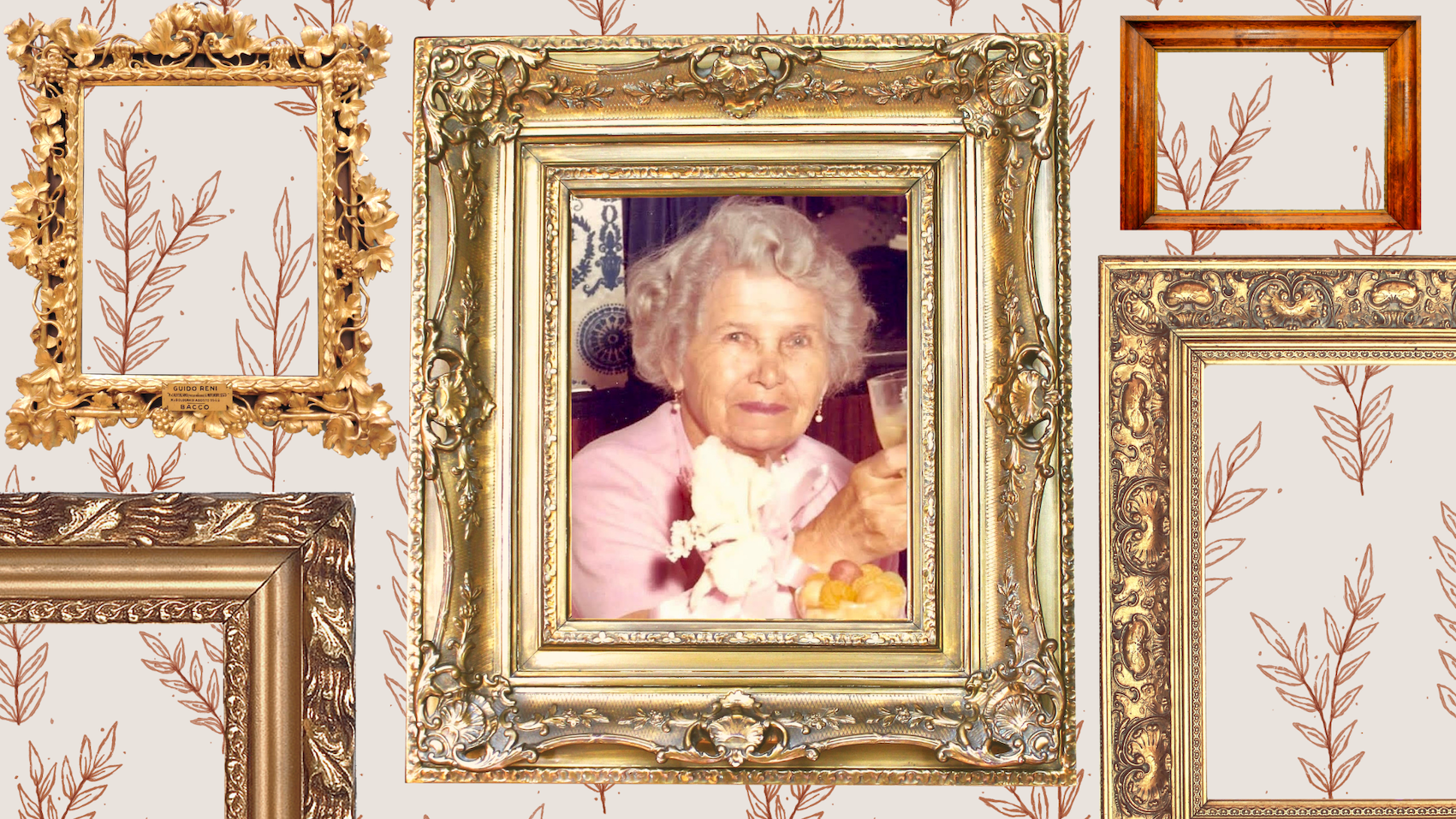
My grandmother’s earrings were her most prized possession. She wore them every day for sixty years.
When I look back at old photo albums, there they are; barely visible, little specks on my grandmother, Rose’s, ears. The twenty-four karat gold dangle earrings are delicate. Each one has a small, slate-blue sapphire with a tiny diamond underneath encircled by gold. The small plump perfect pearl below the diamond glistens like the one in Vermeer’s painting.
I first saw the earrings in a photograph of Rose outside a café in Budapest in 1910. Sitting with her friends at a large table, a half empty beer stein before her, captured in a rare spontaneous moment of laughter. I never remember her laughing or smiling. She was a serious woman. (Some family members say she did not have a sense of humour.) This moment captured a woman I do not know. It was before her marriage, journey to America, the births of her two children, four grandchildren, and one great-grandchild. In the photograph she is young, beautiful, and fashionably dressed, looking confident and happy.
She told me that the pearls were added to the earrings after arriving in America. She wanted to feel the earrings move when she turned her head. She proudly revealed that after several months of saving, she bought the earrings using her wages as a dressmaker. Perhaps she loved them so much because of the effort it took to obtain them. Perhaps they reminded her of Europe and her youth.
Rose’s life wasn’t easy. Suddenly orphaned at sixteen in Ternopol, Poland (now Ukraine), and bereft of family nearby, she was invited to live with a family friend in Budapest. Accepting the invitation, she immediately sought employment. Fortunately, she had a talent and skill that enabled her to find a job in a boutique clothing store. She was an excellent seamstress and had a natural sense of style. In the photograph of her outside the café, she is wearing one of her own creations, a beautifully tailored frock with a lovely hat to frame her delicate features.
Suitors flocked to Rose during her time in Budapest but she turned them all away. Rose had one consuming dream—move to America and escape the pogroms of her childhood. Most of her beaus did not share that dream so she discarded them. Then, one day her landlady’s husband came home and announced: “In the barber shop, I found a man, Nathan, as crazy as you Rose. All he talks about is going to America.”
The two met, fell in love, and our family saga began. Rose left Budapest for a year to work in London, where she could earn more money and quickly save enough for their passage to America. But living with her older sister in a tiny and decrepit East End flat was not easy. Bathrooms were outside and there was little privacy in the small crowded flat. Rose didn’t know English, but still she soon found work as a seamstress in a boutique near Buckingham Palace patronized by wealthy women. Nathan remained in Budapest, apprenticed to a bookbinder. Theirs was a long-distance relationship sparked only by letters. A year after parting, they reunited and married in London. Within weeks, they departed for America and arrived at Ellis Island seventeen days later after a difficult journey. The date was April 13, 1913, a scant year before the outbreak of WWI. All the couple had was $40 to forge their way in this new land.
Life was often arduous in their new home. During the Depression, my grandfather kept his job as a bookbinder. Eventually, he became a foreman but not before having a serious accident that almost prevented him from working again. While operating a machine, he lost several fingers of one hand. The factory was not liable. There was no workmen’s compensation. But the owners liked him, kept him on and even promoted him to foreman. He was very grateful and worked at the same company for more than fifty years, often working six-day weeks. Even though Rose and Nathan struggled at times and money was scarce, my grandmother never considered parting with her earrings. They were all she had left from her old life. And they were an intrinsic part of her now.
I remember her wearing them not just for family occasions, but every day. Relatives bought her other earrings as gifts, but I never saw her wear any of them—she would thank them and then tuck the new earrings away in her dresser.
Two days before her death, when she was on a stretcher going to the hospital, she motioned to her daughter (my mother) and pointed to her earrings. My mother understood. She removed them for the first and last time. After Rose's death, they were given to me because my mother didn’t have pierced ears.
I, too, wear them on holidays and family occasions, and they have become a part of me. One day, several years ago, when I was strolling on the boardwalk near Brighton Beach after a family gathering, I suddenly realized that a pearl had fallen off one of the earrings. Frantically, I retraced my steps. After a long search, which involved crawling on my hands and knees, I found the missing pearl. I was so relieved I began to cry.
I almost lost them again when I had thought I placed them in the safe in the basement of my house. When I went to retrieve them some days later, they were gone. I was shattered and searched the entire house to no avail. I felt a void without them, especially at family events, but I eventually reconciled myself to their loss. Nearly a year later when I was preparing to move, I found them in a crevice near the safe where they must have slipped from my hands. Grateful, I vowed to be more careful in the future.
Grandma’s earrings have been in many places over the last 115 years. They have been worn by my two daughters at their sweet sixteens, their wedding rehearsal dinners, and also by my cousin at her rehearsal dinner. They are worn by me, my children, and grandchildren as a homage to the past, a legacy for the present, and always a link to the future.
My grandmother’s earrings were her most prized possession. She wore them every day for sixty years.
When I look back at old photo albums, there they are; barely visible, little specks on my grandmother, Rose’s, ears. The twenty-four karat gold dangle earrings are delicate. Each one has a small, slate-blue sapphire with a tiny diamond underneath encircled by gold. The small plump perfect pearl below the diamond glistens like the one in Vermeer’s painting.
I first saw the earrings in a photograph of Rose outside a café in Budapest in 1910. Sitting with her friends at a large table, a half empty beer stein before her, captured in a rare spontaneous moment of laughter. I never remember her laughing or smiling. She was a serious woman. (Some family members say she did not have a sense of humour.) This moment captured a woman I do not know. It was before her marriage, journey to America, the births of her two children, four grandchildren, and one great-grandchild. In the photograph she is young, beautiful, and fashionably dressed, looking confident and happy.
She told me that the pearls were added to the earrings after arriving in America. She wanted to feel the earrings move when she turned her head. She proudly revealed that after several months of saving, she bought the earrings using her wages as a dressmaker. Perhaps she loved them so much because of the effort it took to obtain them. Perhaps they reminded her of Europe and her youth.
Rose’s life wasn’t easy. Suddenly orphaned at sixteen in Ternopol, Poland (now Ukraine), and bereft of family nearby, she was invited to live with a family friend in Budapest. Accepting the invitation, she immediately sought employment. Fortunately, she had a talent and skill that enabled her to find a job in a boutique clothing store. She was an excellent seamstress and had a natural sense of style. In the photograph of her outside the café, she is wearing one of her own creations, a beautifully tailored frock with a lovely hat to frame her delicate features.
Suitors flocked to Rose during her time in Budapest but she turned them all away. Rose had one consuming dream—move to America and escape the pogroms of her childhood. Most of her beaus did not share that dream so she discarded them. Then, one day her landlady’s husband came home and announced: “In the barber shop, I found a man, Nathan, as crazy as you Rose. All he talks about is going to America.”
The two met, fell in love, and our family saga began. Rose left Budapest for a year to work in London, where she could earn more money and quickly save enough for their passage to America. But living with her older sister in a tiny and decrepit East End flat was not easy. Bathrooms were outside and there was little privacy in the small crowded flat. Rose didn’t know English, but still she soon found work as a seamstress in a boutique near Buckingham Palace patronized by wealthy women. Nathan remained in Budapest, apprenticed to a bookbinder. Theirs was a long-distance relationship sparked only by letters. A year after parting, they reunited and married in London. Within weeks, they departed for America and arrived at Ellis Island seventeen days later after a difficult journey. The date was April 13, 1913, a scant year before the outbreak of WWI. All the couple had was $40 to forge their way in this new land.
Life was often arduous in their new home. During the Depression, my grandfather kept his job as a bookbinder. Eventually, he became a foreman but not before having a serious accident that almost prevented him from working again. While operating a machine, he lost several fingers of one hand. The factory was not liable. There was no workmen’s compensation. But the owners liked him, kept him on and even promoted him to foreman. He was very grateful and worked at the same company for more than fifty years, often working six-day weeks. Even though Rose and Nathan struggled at times and money was scarce, my grandmother never considered parting with her earrings. They were all she had left from her old life. And they were an intrinsic part of her now.
I remember her wearing them not just for family occasions, but every day. Relatives bought her other earrings as gifts, but I never saw her wear any of them—she would thank them and then tuck the new earrings away in her dresser.
Two days before her death, when she was on a stretcher going to the hospital, she motioned to her daughter (my mother) and pointed to her earrings. My mother understood. She removed them for the first and last time. After Rose's death, they were given to me because my mother didn’t have pierced ears.
I, too, wear them on holidays and family occasions, and they have become a part of me. One day, several years ago, when I was strolling on the boardwalk near Brighton Beach after a family gathering, I suddenly realized that a pearl had fallen off one of the earrings. Frantically, I retraced my steps. After a long search, which involved crawling on my hands and knees, I found the missing pearl. I was so relieved I began to cry.
I almost lost them again when I had thought I placed them in the safe in the basement of my house. When I went to retrieve them some days later, they were gone. I was shattered and searched the entire house to no avail. I felt a void without them, especially at family events, but I eventually reconciled myself to their loss. Nearly a year later when I was preparing to move, I found them in a crevice near the safe where they must have slipped from my hands. Grateful, I vowed to be more careful in the future.
Grandma’s earrings have been in many places over the last 115 years. They have been worn by my two daughters at their sweet sixteens, their wedding rehearsal dinners, and also by my cousin at her rehearsal dinner. They are worn by me, my children, and grandchildren as a homage to the past, a legacy for the present, and always a link to the future.