




September 8, 1628
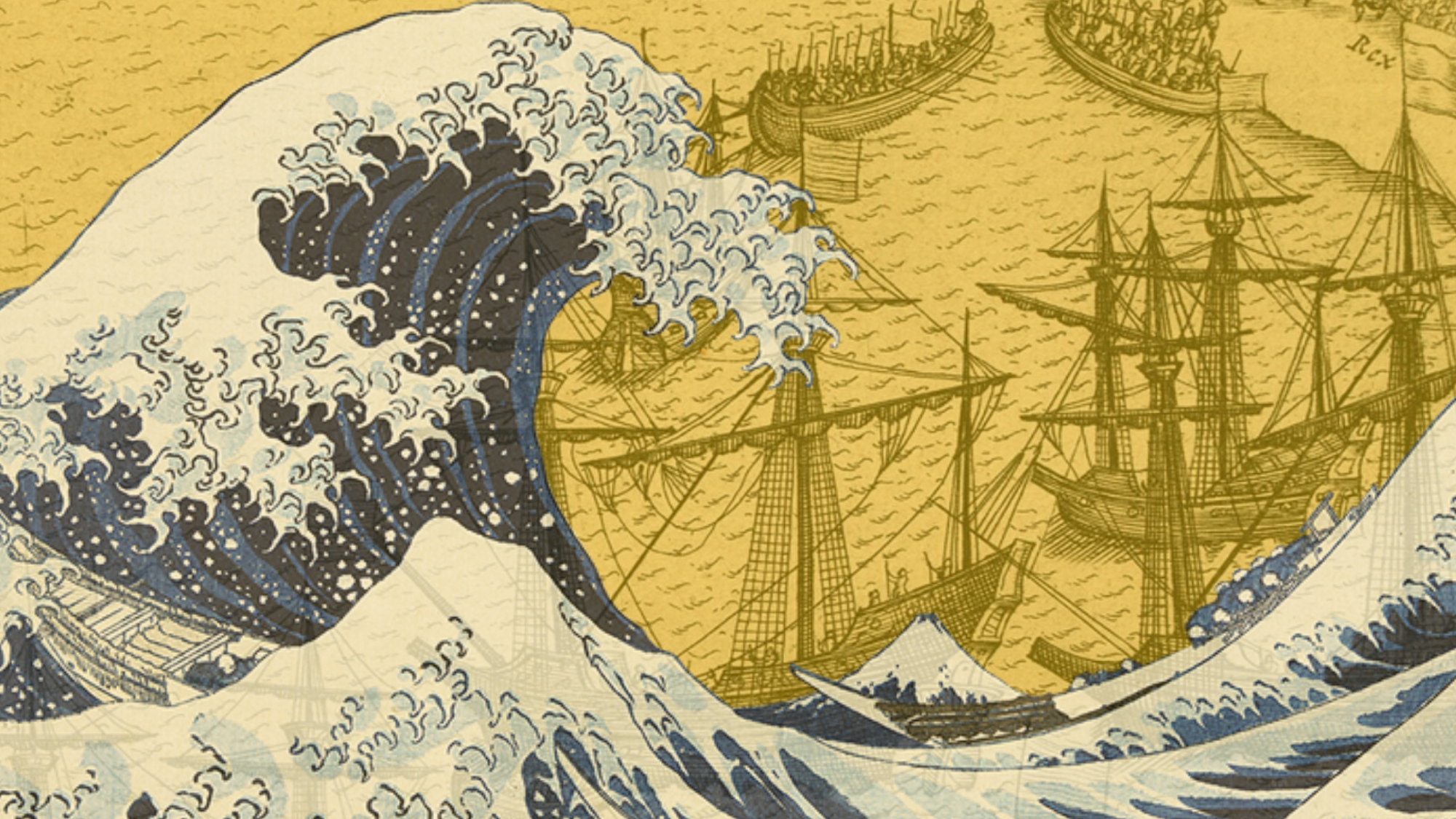
I stood on the deck of a Dutch admiral flagship, staring into a gray Atlantic dawn. The mist lay thick as wool over the water. For weeks we had hunted rumours of a treasure convoy sailing from New Spain to Spain.
I told myself not to hope. Then I saw it.
A shape in the fog. At first I thought my eyes betrayed me. I wiped them with the back of my sleeve. I looked again and saw topsails swelling like ghosts rising from the sea, appearing one by one.
“Ships,” I yelled.
A Dutch sailor beside me squinted. “How many?”
“Enough to make widows in Seville.”
The mist dissipated. Sunlight caught polished wood and brass. The sight struck my chest like cannon fire. It was the famed Silver Fleet.
We counted them: twelve Spanish ships heavy with ninety-two tons of silver. Chests of pearls. Rubies glowing like captured sunsets. Enough gold to ransom kings.
In that moment, they saw us, now we were the prey being hunted.
Our admiral barked orders in clipped Dutch. Drums rolled as twenty-five of our ships fanned outward in a tightening net.
“Hold your fire. Let them see our formidable ships. Let fear do its work.”
The Spanish ships had no escort warships. Their guns were loaded for ceremony when they reached port, not battle. When our hulls encircled the fleet, confusion rippled across their decks.
One of my crew laughed. “They thought God hid them.”
“God hides no silver from me,” I replied.
Nine ships surrendered without a shot. Not a cannon fired, not a blade drawn. They struck their colours fearful for their lives.
But three galleons fled, their sails snapping in panic, heading for the harbour of Matanzas in Cuba.
“After them,” I ordered.
The chase was brief. Fear makes poor sailors. By the time we reached Matanzas Bay, the three galleons had anchored in desperation.
I grinned.
We lowered boats. As we rowed toward the admiral’s galleon, I could see the Spanish crew scrambling. Some shouted prayers. Others argued. Muskets were raised, then lowered. Discipline dissolves quickly when fear of death is involved.
We threw grappling hooks. The iron bit into Spanish railings.
“Up!” I shouted.
I climbed with cutlass between my teeth, boots scraping the hull. The sea slapped against the wood below. For a heartbeat I wondered how many of my ancestors had been chased from Spain with nothing but the clothes on their backs.
Now, I returned. Not as a supplicant. An avenger.
When we reached the deck, chaos reigned. Spanish sailors were leaping overboard, splashing toward shore like frightened children.
One officer tried to rally them. “Stand! Stand for Spain!”
I stepped forward, pistol levelled.
“Buena Guerra!” I roared. Good war.
The words echoed across the deck, not as battle cry, but a declaration. A reckoning the Spanish knew all too well.
My men fired a volley of muskets. Smoke swallowed us. When it cleared, Spanish swords clattered to the deck.
Their captain stared at me, eyes wide. “You are pirates.”
I wiped salt spray from my beard. “No,” I said evenly. “We are collectors.”
He looked at the ring on my hand, the one I never removed. He looked at the men around me. Dutch. Sephardic. Hardened by exile.
“You are Jews,” he whispered.
“Yes. And so are a few of the crew. Today, Spain pays interest for its persecution of our people.”
Within minutes the admiral’s galleon was ours. By nightfall, we had secured the entire fleet. When the cargo manifests were read aloud, even hardened sailors went silent.
Ninety-two tons of silver. Pearls in sacks like grain. Rubies the size of thumbnails. Gold bars stacked like bricks.
One Dutch officer clapped me on the shoulder. “This will cripple Spain.”
I gazed at the glittering piles and felt something deeper than greed.
“They bled the New World for this. Before that, they bled us.”
The sea wind cooled my face. In the distance, Spanish sailors who had swum ashore watched helplessly as their empire’s treasure drifted away under Dutch colours.
And as the ships turned northward, heavy with silver and vengeance, I stood at the rail and allowed myself one private smile.
Exile had made me many things: Merchant. Corsair. Avenger. But on that September morning in the mist, I became something else entirely. I became Spain’s reckoning.
On the voyage back to Holland, I began recording my story so that those who came after would know that my life did not begin with a sword or cannon, but with religion, teachers, and a special mentor. Above all, I owed a debt to Rabbi Palache and to the brave Jews who endured before us. Their names filled my waking hours: men like the corsair Sinan and the legendary Queen of the Jewish pirates, and the countless conversos who struck back at our Spanish and Portuguese tormentors from the pirate ships.
I was born in Portugal in 1595 to converso parents who still whispered Hebrew prayers behind shuttered windows. My birth was the impetus for my parents to escape the shroud of the Spanish Inquisition. Like so many of our people hunted by the long arm of the Inquisition, my parents fled north to the fragile refuge of the Dutch bustling port of Amsterdam.
There, for the first time, I reclaimed my Jewish name.
Amsterdam’s Sephardic quarter was young and alive with ambition; merchants spoke Portuguese, Spanish, Hebrew, and Dutch. Ships of every nationality crowded the harbour. I was sent by my parents to study Torah and the laws of our people, and it was there that I came under the guidance of Rabbi Palache.
He was already old when I first sat before him, his beard streaked with gray and his eyes bright with the memory of places I had never seen.
One evening, after study, he closed the great book of Torah with a soft thud and regarded me.
“You listen with two ears, Moses,” he said. “One for God, and one for the world.”
“I try, Rabbi.”
“You do more than try. I see the harbour in your eyes.”
I glanced toward the window where the masts of ships swayed beyond the rooftops.
“My father says trade is the future for our people,” I said.
“Trade and courage to take back from our enemies what they stole from us. The Spaniards drove us from our homes. They burned our books and called it holiness. Do you believe God commands us to suffer forever?”
“No, Rabbi.”
“Good,” he said with a faint smile. “Some of our people fight with prayer. Others with coin. And a courageous few with sails and cannon.”
“You mean pirates?”
“Privateers. When justice wears a mask.”
He stood and walked to the window, looking out toward the harbour.
“The sea is a strange court, Moses. There, a Jew may take back what kings have stolen. Gold from Spanish galleons often began its journey in the hands of our people.”
“Would God allow such a life?”
The rabbi turned back toward me.
“God allows many things. What matters is purpose. If you sail, remember who you are and our people.”
I nodded, though I did not yet understand the weight of those words.
By the time of my Bar Mitzvah in 1616, I stood among a growing and prosperous community of Sephardic Jews in Amsterdam. Our merchants financed fleets, traded across oceans, and rebuilt lives once shattered by exile. We were tolerated by the Dutch for our commerce and our connections, though never fully embraced as equals.
Still, we knew the truth of who we were. In that age, it was the closest thing to freedom the world could offer.
The rest of my teenage years passed between study and the docks. When my lessons were finished and the rabbis dismissed us, I hurried toward the harbour. Amsterdam’s docks were a world larger than any book. A forest of masts dotted the horizon with ropes creaking in the wind, the air thick with tar and salt, and the shouting of sailors in a dozen languages.
I lingered wherever ships were unloading. Crews came in from Brazil, the Caribbean, the Ottoman ports, and half the harbours of Europe. Sailors talked when given a mug of ale or a sympathetic ear, and I listened more than I spoke. From them I gathered fragments of knowledge: Spanish and Portuguese trade routes, the timing of treasure convoys, which ports were friendly to our Sephardic brothers, and which would deliver a Jew straight into the hands of the Inquisition.
I carried a small notebook tucked inside my coat. I wrote everything in it: which merchants quietly financed privateering voyages, which captains had the courage for a fight, what cargo a ship carried when it sailed west and what silver or sugar it brought back. The dockworkers began to recognize me. I was the thin Jewish boy always asking questions, always writing.
The Sephardic trading houses discovered that the boy with the notebook remembered everything. I began running errands as a factor for them—carrying letters, confirming cargo manifests, passing along information gathered from the sailors. What began as curiosity became useful.
At the same time I studied the craft of the sea itself. Old pilots showed me how to read the stars and the currents. Bosuns barked lessons in shipboard discipline that I memorized. From every tale of battle I listened for one thing—the weaknesses of Spanish galleons when the shooting began.
By the time I reached manhood, I knew the docks of Amsterdam as well as any sailor. I knew the routes of Spanish treasure, the men who hunted it, and the merchants willing to risk everything to capture it.
All that remained was to take my place among them.
In 1615, when the chance finally came, I seized it as a drowning man seizes a rope. The Dutch West India Company was gathering men for its grand ventures across the Atlantic, and I knew this was the path I had been preparing for since my boyhood days along the Amsterdam docks.
Many of my own people had already found their place within the Company. Sephardic Jews served as merchants, navigators, cartographers, financiers, and, when necessary, privateers. We carried knowledge that the Dutch valued: the languages of Spain and Portugal, the secrets of their trade routes, and the locations of their distant ports. For the first time in generations, the enemies who had driven our families from Iberia would feel my sword of revenge upon the sea.
When I entered the Company’s counting house to present myself, the room hummed with ambition. Maps of the Atlantic covered the walls as well as Brazil and the Caribbean. The Spanish Main with its lines of trade and silver routes were drawn like veins carrying the lifeblood of Spain’s empire.
A clerk studied my papers and glanced up. “You speak Spanish and Portuguese?”
“Fluently. And I know the routes their treasure fleets favour.”
“And the sea?”
“I have studied her since I was a boy.”
He looked at me for a long time, then gave a faint smile as he dipped his quill in ink.
The Dutch West India Company was not merely a trading venture. It was a weapon. Its ships carried merchants and missionaries but also cannons and men eager for prize money. Commerce, colonization, and war sailed together beneath its flag.
For me, it meant something more personal.
Every Spanish galleon we hunted carried the wealth of the empire that had hunted my people. Every Portuguese merchantman we intercepted reminded me why my parents had fled their homeland.
When I signed my name to the Company rolls, I knew my life had changed.
I was no longer merely the curious boy who haunted the docks with a notebook in his coat.
I had become a destroyer of empires.
By the early 1620s I had taken service as a navigator aboard a Dutch privateer cruising the long green coast of Brazil. The Dutch West India Company called us privateers. The Spanish called us pirates. I cared little what they named us. Every captured galleon was a small act of justice. From the quarterdeck I studied the horizon.
“Anything, Moses?” the captain would call.
“Patience. The Portuguese sugar ships will come. They always come.”
The coast of Brazil was a busy artery of Iberian wealth. Sugar, tobacco, hides, and silver flowed north toward Lisbon and Seville. Our job was simple, interrupt and seize that flow.
One humid afternoon a lookout’s cry split the air. “Sail to the east!”
I raised my glass. A fat Portuguese merchant carrack waddled across the water, her sails heavy and slow with cargo.
“There she is,” I said.
The captain grinned like a wolf. “Helm, bring us about.”
Our ship slid toward her. At two hundred yards we ran up the Prince’s flag and opened with our bow guns. The thunder of cannon rolled across the water.
The Portuguese crew panicked. “Boarders ready!” the captain shouted.
Cutlass in hand, I climbed the netting with the others. The two ships crashed together with a groan of wood.
“Buena guerra!” someone shouted mockingly toward the Iberian sailors.
A few muskets cracked, but their will was already broken. Within minutes we controlled the deck. Bales of sugar and chests of silver coins filled the hold.
The captain clapped my shoulder.
“Your charts again, Moses. You have a nose for Spanish gold.”
“It is not a nose. It is memory.”
For every voyage, I carried the knowledge of Sephardic merchants scattered across the Atlantic world—brothers, cousins, and secret Jews living behind Christian names in Iberian ports. They transferred information through coded letters and quiet conversations.
Between cruises we returned to Amsterdam, where the docks smelled of tar, spices, and money. There I shed the salt-stained clothes of a sailor and moved easily among the Sephardic trading houses.
In the counting rooms I served as interpreter between Dutch captains and Jewish merchants whose networks stretched from Recife to Venice.
One evening a merchant named Isaac Aboab leaned across a table scattered with shipping manifests.
“You have been to Bahia recently, yes?”
“Three months ago.”
“A convoy leaves Pernambuco next month. Sugar and Brazilian gold. Portuguese escort, but not strong.”
I studied the dates.
“And the route?”
Isaac tapped the map.
“They will hug the coast until Cape São Roque. After that they turn north for Lisbon.”
I smiled slowly. “They will not reach Lisbon.”
“Good. The Spanish king grows rich from the suffering of our people. It is time the sea collected its tax.”
These conversations were my true work. Sailors believed victories came from courage and cannon. They were wrong.
Victories came from information.
I gathered every scrap of shipping schedules, convoy sizes, captains’ habits, hidden anchorages along the Brazilian coast. I kept my own notebooks, filled with routes and weaknesses.
One night a young Dutch officer noticed me studying charts long after the others had gone ashore.
“You work like a rabbi over holy texts,” he said.
“In a way,” I replied.
He laughed. “What scripture are you reading?”
I tapped the map. “Spanish greed.”
Years passed this way: voyages, seizures, intelligence, and the endless rhythm of the Atlantic. My reputation as a navigator and informant grew among the captains of the West India Company.
In 1627 word spread through the docks of Amsterdam about a bold admiral assembling a fleet for a great strike against Spain.
His name, Piet Pieterszoon Hein, carried through every tavern and counting house.
One night a captain slid a mug of ale toward me and spoke quietly.
“Hein is planning something big. Not just merchant ships.”
“What then?”
He leaned closer.
“The Spanish Silver Fleet.”
For a moment the noise of the tavern vanished.
I looked down at the map spread before us, imagining the treasure fleets crossing the Caribbean like floating mountains of silver.
Slowly I smiled.
“If Hein truly intends that, he will need men who know the Spanish routes.”
The captain raised his mug.
“Then it seems your moment has arrived, Moses.”
And I knew the sea was about to offer something greater than scattered merchant prizes.
It was about to offer history.
After my success in capturing the treasure fleet, I found that victory brings a strange silence. A man can spend his youth chasing wind, cannon smoke, and Spanish gold, but sooner or later he hears another calling. Mine came in 1632, when I sailed south to the Dutch possession of Recife, determined to trade the sword for study.
Recife was unlike any place I had known. Ships crowded its harbour: Dutch traders, Jewish merchants, African sailors, soldiers of fortune, and men who had fled Spain and Portugal with nothing but their names and their faith. With the help of many Sephardic brothers—some merchants, some navigators, some who, like me, had earned their living as privateers—we helped transform the city into the first great Jewish center in the New World.
For the first time in our wandering history, we could pray openly.
I still remember the day our community gathered to dedicate the synagogue, Kahal Zur Israel Synagogue. The doors were thrown wide to the sunlight. No hidden rooms. No whispered prayers behind shuttered windows. No fear of the Inquisition’s knock.
An old merchant beside me wiped tears from his beard.
“Do you hear it?” he whispered.
“Hear what?” I asked.
“Our voices. For once, no one is trying to silence them.”
The sound of Hebrew prayer rose through the hall like a long-delayed storm breaking. In that moment I knew we had won a victory greater than any treasure fleet.
Still, a wolf does not become a lamb simply by changing harbours.
Though I pursued study and helped guide our growing community, I never abandoned the sea. From time to time I returned to my former craft: privateering along the Brazilian coast, coordinating intelligence on Spanish shipping, advising Dutch captains who sought Iberian treasure. Old habits cling like salt to a sailor’s coat.
My final great scheme came years later when I had learned that another Spanish silver fleet would soon sail from the Americas toward Europe. My mind ignited with the old fire. I drew up a daring plan: Dutch naval ships and privateers lying in wait, striking the fleet before it could assemble its escorts.
In a council chamber thick with tobacco smoke, I spread my maps across the table.
“We know their routes,” I said. “Their captains grow complacent. Strike swiftly and the treasure of the Indies will once again belong to the Dutch.”
The young officer nodded, smelling the riches. But an older admiral shook his head.
“The Spanish sail is stronger now. Too many escorts. Too great a risk.”
I argued long into the night.
But fear, like rust, eats courage. The plan was rejected.
When I left the chamber I laughed to myself. Not bitterly. Simply with the knowledge that the age of bold gambles was passing.
So I turned my energy to building Jewish life in Recife, guiding merchants, settling disputes, and helping new refugees from Portugal find a place among us. Our community flourished, rich with trade, scholarship, and the stubborn joy of survival.
But history rarely grants Jews a long season of peace.
In 1654, after nine bitter years of war, the Portuguese recaptured Dutch Brazil during the Insurrection of Pernambuco. Their decree was simple and final: Jews had three months to leave or face death.
Once again we packed our lives into chests and ships.
As my vessel pulled away from Recife harbour, I watched the shoreline fade into the haze. For a brief shining moment we had built a free Jewish city in the New World. Empires had crushed it, but they could not erase what had been created there.
When I returned to Amsterdam, the Sephardic community received me warmly. Among those who honoured my years in Brazil was the poet Daniel Levi de Barrios, who wrote of the work we had done in Recife.
He wrote that Abraham Cohen—his poetic name for me—had spent nine years aiding countless Jews and Christians alike in their misery, providing what help he could in troubled times.
Gold fades. Silver is spent. Even the mightiest fleets vanish into memory. But the true treasure of my life was never buried in Spanish chests. It was the sight of Jews praying in the open sunlight of Recife free, if only for a little while.
September 8, 1628
I stood on the deck of a Dutch admiral flagship, staring into a gray Atlantic dawn. The mist lay thick as wool over the water. For weeks we had hunted rumours of a treasure convoy sailing from New Spain to Spain.
I told myself not to hope. Then I saw it.
A shape in the fog. At first I thought my eyes betrayed me. I wiped them with the back of my sleeve. I looked again and saw topsails swelling like ghosts rising from the sea, appearing one by one.
“Ships,” I yelled.
A Dutch sailor beside me squinted. “How many?”
“Enough to make widows in Seville.”
The mist dissipated. Sunlight caught polished wood and brass. The sight struck my chest like cannon fire. It was the famed Silver Fleet.
We counted them: twelve Spanish ships heavy with ninety-two tons of silver. Chests of pearls. Rubies glowing like captured sunsets. Enough gold to ransom kings.
In that moment, they saw us, now we were the prey being hunted.
Our admiral barked orders in clipped Dutch. Drums rolled as twenty-five of our ships fanned outward in a tightening net.
“Hold your fire. Let them see our formidable ships. Let fear do its work.”
The Spanish ships had no escort warships. Their guns were loaded for ceremony when they reached port, not battle. When our hulls encircled the fleet, confusion rippled across their decks.
One of my crew laughed. “They thought God hid them.”
“God hides no silver from me,” I replied.
Nine ships surrendered without a shot. Not a cannon fired, not a blade drawn. They struck their colours fearful for their lives.
But three galleons fled, their sails snapping in panic, heading for the harbour of Matanzas in Cuba.
“After them,” I ordered.
The chase was brief. Fear makes poor sailors. By the time we reached Matanzas Bay, the three galleons had anchored in desperation.
I grinned.
We lowered boats. As we rowed toward the admiral’s galleon, I could see the Spanish crew scrambling. Some shouted prayers. Others argued. Muskets were raised, then lowered. Discipline dissolves quickly when fear of death is involved.
We threw grappling hooks. The iron bit into Spanish railings.
“Up!” I shouted.
I climbed with cutlass between my teeth, boots scraping the hull. The sea slapped against the wood below. For a heartbeat I wondered how many of my ancestors had been chased from Spain with nothing but the clothes on their backs.
Now, I returned. Not as a supplicant. An avenger.
When we reached the deck, chaos reigned. Spanish sailors were leaping overboard, splashing toward shore like frightened children.
One officer tried to rally them. “Stand! Stand for Spain!”
I stepped forward, pistol levelled.
“Buena Guerra!” I roared. Good war.
The words echoed across the deck, not as battle cry, but a declaration. A reckoning the Spanish knew all too well.
My men fired a volley of muskets. Smoke swallowed us. When it cleared, Spanish swords clattered to the deck.
Their captain stared at me, eyes wide. “You are pirates.”
I wiped salt spray from my beard. “No,” I said evenly. “We are collectors.”
He looked at the ring on my hand, the one I never removed. He looked at the men around me. Dutch. Sephardic. Hardened by exile.
“You are Jews,” he whispered.
“Yes. And so are a few of the crew. Today, Spain pays interest for its persecution of our people.”
Within minutes the admiral’s galleon was ours. By nightfall, we had secured the entire fleet. When the cargo manifests were read aloud, even hardened sailors went silent.
Ninety-two tons of silver. Pearls in sacks like grain. Rubies the size of thumbnails. Gold bars stacked like bricks.
One Dutch officer clapped me on the shoulder. “This will cripple Spain.”
I gazed at the glittering piles and felt something deeper than greed.
“They bled the New World for this. Before that, they bled us.”
The sea wind cooled my face. In the distance, Spanish sailors who had swum ashore watched helplessly as their empire’s treasure drifted away under Dutch colours.
And as the ships turned northward, heavy with silver and vengeance, I stood at the rail and allowed myself one private smile.
Exile had made me many things: Merchant. Corsair. Avenger. But on that September morning in the mist, I became something else entirely. I became Spain’s reckoning.
On the voyage back to Holland, I began recording my story so that those who came after would know that my life did not begin with a sword or cannon, but with religion, teachers, and a special mentor. Above all, I owed a debt to Rabbi Palache and to the brave Jews who endured before us. Their names filled my waking hours: men like the corsair Sinan and the legendary Queen of the Jewish pirates, and the countless conversos who struck back at our Spanish and Portuguese tormentors from the pirate ships.
I was born in Portugal in 1595 to converso parents who still whispered Hebrew prayers behind shuttered windows. My birth was the impetus for my parents to escape the shroud of the Spanish Inquisition. Like so many of our people hunted by the long arm of the Inquisition, my parents fled north to the fragile refuge of the Dutch bustling port of Amsterdam.
There, for the first time, I reclaimed my Jewish name.
Amsterdam’s Sephardic quarter was young and alive with ambition; merchants spoke Portuguese, Spanish, Hebrew, and Dutch. Ships of every nationality crowded the harbour. I was sent by my parents to study Torah and the laws of our people, and it was there that I came under the guidance of Rabbi Palache.
He was already old when I first sat before him, his beard streaked with gray and his eyes bright with the memory of places I had never seen.
One evening, after study, he closed the great book of Torah with a soft thud and regarded me.
“You listen with two ears, Moses,” he said. “One for God, and one for the world.”
“I try, Rabbi.”
“You do more than try. I see the harbour in your eyes.”
I glanced toward the window where the masts of ships swayed beyond the rooftops.
“My father says trade is the future for our people,” I said.
“Trade and courage to take back from our enemies what they stole from us. The Spaniards drove us from our homes. They burned our books and called it holiness. Do you believe God commands us to suffer forever?”
“No, Rabbi.”
“Good,” he said with a faint smile. “Some of our people fight with prayer. Others with coin. And a courageous few with sails and cannon.”
“You mean pirates?”
“Privateers. When justice wears a mask.”
He stood and walked to the window, looking out toward the harbour.
“The sea is a strange court, Moses. There, a Jew may take back what kings have stolen. Gold from Spanish galleons often began its journey in the hands of our people.”
“Would God allow such a life?”
The rabbi turned back toward me.
“God allows many things. What matters is purpose. If you sail, remember who you are and our people.”
I nodded, though I did not yet understand the weight of those words.
By the time of my Bar Mitzvah in 1616, I stood among a growing and prosperous community of Sephardic Jews in Amsterdam. Our merchants financed fleets, traded across oceans, and rebuilt lives once shattered by exile. We were tolerated by the Dutch for our commerce and our connections, though never fully embraced as equals.
Still, we knew the truth of who we were. In that age, it was the closest thing to freedom the world could offer.
The rest of my teenage years passed between study and the docks. When my lessons were finished and the rabbis dismissed us, I hurried toward the harbour. Amsterdam’s docks were a world larger than any book. A forest of masts dotted the horizon with ropes creaking in the wind, the air thick with tar and salt, and the shouting of sailors in a dozen languages.
I lingered wherever ships were unloading. Crews came in from Brazil, the Caribbean, the Ottoman ports, and half the harbours of Europe. Sailors talked when given a mug of ale or a sympathetic ear, and I listened more than I spoke. From them I gathered fragments of knowledge: Spanish and Portuguese trade routes, the timing of treasure convoys, which ports were friendly to our Sephardic brothers, and which would deliver a Jew straight into the hands of the Inquisition.
I carried a small notebook tucked inside my coat. I wrote everything in it: which merchants quietly financed privateering voyages, which captains had the courage for a fight, what cargo a ship carried when it sailed west and what silver or sugar it brought back. The dockworkers began to recognize me. I was the thin Jewish boy always asking questions, always writing.
The Sephardic trading houses discovered that the boy with the notebook remembered everything. I began running errands as a factor for them—carrying letters, confirming cargo manifests, passing along information gathered from the sailors. What began as curiosity became useful.
At the same time I studied the craft of the sea itself. Old pilots showed me how to read the stars and the currents. Bosuns barked lessons in shipboard discipline that I memorized. From every tale of battle I listened for one thing—the weaknesses of Spanish galleons when the shooting began.
By the time I reached manhood, I knew the docks of Amsterdam as well as any sailor. I knew the routes of Spanish treasure, the men who hunted it, and the merchants willing to risk everything to capture it.
All that remained was to take my place among them.
In 1615, when the chance finally came, I seized it as a drowning man seizes a rope. The Dutch West India Company was gathering men for its grand ventures across the Atlantic, and I knew this was the path I had been preparing for since my boyhood days along the Amsterdam docks.
Many of my own people had already found their place within the Company. Sephardic Jews served as merchants, navigators, cartographers, financiers, and, when necessary, privateers. We carried knowledge that the Dutch valued: the languages of Spain and Portugal, the secrets of their trade routes, and the locations of their distant ports. For the first time in generations, the enemies who had driven our families from Iberia would feel my sword of revenge upon the sea.
When I entered the Company’s counting house to present myself, the room hummed with ambition. Maps of the Atlantic covered the walls as well as Brazil and the Caribbean. The Spanish Main with its lines of trade and silver routes were drawn like veins carrying the lifeblood of Spain’s empire.
A clerk studied my papers and glanced up. “You speak Spanish and Portuguese?”
“Fluently. And I know the routes their treasure fleets favour.”
“And the sea?”
“I have studied her since I was a boy.”
He looked at me for a long time, then gave a faint smile as he dipped his quill in ink.
The Dutch West India Company was not merely a trading venture. It was a weapon. Its ships carried merchants and missionaries but also cannons and men eager for prize money. Commerce, colonization, and war sailed together beneath its flag.
For me, it meant something more personal.
Every Spanish galleon we hunted carried the wealth of the empire that had hunted my people. Every Portuguese merchantman we intercepted reminded me why my parents had fled their homeland.
When I signed my name to the Company rolls, I knew my life had changed.
I was no longer merely the curious boy who haunted the docks with a notebook in his coat.
I had become a destroyer of empires.
By the early 1620s I had taken service as a navigator aboard a Dutch privateer cruising the long green coast of Brazil. The Dutch West India Company called us privateers. The Spanish called us pirates. I cared little what they named us. Every captured galleon was a small act of justice. From the quarterdeck I studied the horizon.
“Anything, Moses?” the captain would call.
“Patience. The Portuguese sugar ships will come. They always come.”
The coast of Brazil was a busy artery of Iberian wealth. Sugar, tobacco, hides, and silver flowed north toward Lisbon and Seville. Our job was simple, interrupt and seize that flow.
One humid afternoon a lookout’s cry split the air. “Sail to the east!”
I raised my glass. A fat Portuguese merchant carrack waddled across the water, her sails heavy and slow with cargo.
“There she is,” I said.
The captain grinned like a wolf. “Helm, bring us about.”
Our ship slid toward her. At two hundred yards we ran up the Prince’s flag and opened with our bow guns. The thunder of cannon rolled across the water.
The Portuguese crew panicked. “Boarders ready!” the captain shouted.
Cutlass in hand, I climbed the netting with the others. The two ships crashed together with a groan of wood.
“Buena guerra!” someone shouted mockingly toward the Iberian sailors.
A few muskets cracked, but their will was already broken. Within minutes we controlled the deck. Bales of sugar and chests of silver coins filled the hold.
The captain clapped my shoulder.
“Your charts again, Moses. You have a nose for Spanish gold.”
“It is not a nose. It is memory.”
For every voyage, I carried the knowledge of Sephardic merchants scattered across the Atlantic world—brothers, cousins, and secret Jews living behind Christian names in Iberian ports. They transferred information through coded letters and quiet conversations.
Between cruises we returned to Amsterdam, where the docks smelled of tar, spices, and money. There I shed the salt-stained clothes of a sailor and moved easily among the Sephardic trading houses.
In the counting rooms I served as interpreter between Dutch captains and Jewish merchants whose networks stretched from Recife to Venice.
One evening a merchant named Isaac Aboab leaned across a table scattered with shipping manifests.
“You have been to Bahia recently, yes?”
“Three months ago.”
“A convoy leaves Pernambuco next month. Sugar and Brazilian gold. Portuguese escort, but not strong.”
I studied the dates.
“And the route?”
Isaac tapped the map.
“They will hug the coast until Cape São Roque. After that they turn north for Lisbon.”
I smiled slowly. “They will not reach Lisbon.”
“Good. The Spanish king grows rich from the suffering of our people. It is time the sea collected its tax.”
These conversations were my true work. Sailors believed victories came from courage and cannon. They were wrong.
Victories came from information.
I gathered every scrap of shipping schedules, convoy sizes, captains’ habits, hidden anchorages along the Brazilian coast. I kept my own notebooks, filled with routes and weaknesses.
One night a young Dutch officer noticed me studying charts long after the others had gone ashore.
“You work like a rabbi over holy texts,” he said.
“In a way,” I replied.
He laughed. “What scripture are you reading?”
I tapped the map. “Spanish greed.”
Years passed this way: voyages, seizures, intelligence, and the endless rhythm of the Atlantic. My reputation as a navigator and informant grew among the captains of the West India Company.
In 1627 word spread through the docks of Amsterdam about a bold admiral assembling a fleet for a great strike against Spain.
His name, Piet Pieterszoon Hein, carried through every tavern and counting house.
One night a captain slid a mug of ale toward me and spoke quietly.
“Hein is planning something big. Not just merchant ships.”
“What then?”
He leaned closer.
“The Spanish Silver Fleet.”
For a moment the noise of the tavern vanished.
I looked down at the map spread before us, imagining the treasure fleets crossing the Caribbean like floating mountains of silver.
Slowly I smiled.
“If Hein truly intends that, he will need men who know the Spanish routes.”
The captain raised his mug.
“Then it seems your moment has arrived, Moses.”
And I knew the sea was about to offer something greater than scattered merchant prizes.
It was about to offer history.
After my success in capturing the treasure fleet, I found that victory brings a strange silence. A man can spend his youth chasing wind, cannon smoke, and Spanish gold, but sooner or later he hears another calling. Mine came in 1632, when I sailed south to the Dutch possession of Recife, determined to trade the sword for study.
Recife was unlike any place I had known. Ships crowded its harbour: Dutch traders, Jewish merchants, African sailors, soldiers of fortune, and men who had fled Spain and Portugal with nothing but their names and their faith. With the help of many Sephardic brothers—some merchants, some navigators, some who, like me, had earned their living as privateers—we helped transform the city into the first great Jewish center in the New World.
For the first time in our wandering history, we could pray openly.
I still remember the day our community gathered to dedicate the synagogue, Kahal Zur Israel Synagogue. The doors were thrown wide to the sunlight. No hidden rooms. No whispered prayers behind shuttered windows. No fear of the Inquisition’s knock.
An old merchant beside me wiped tears from his beard.
“Do you hear it?” he whispered.
“Hear what?” I asked.
“Our voices. For once, no one is trying to silence them.”
The sound of Hebrew prayer rose through the hall like a long-delayed storm breaking. In that moment I knew we had won a victory greater than any treasure fleet.
Still, a wolf does not become a lamb simply by changing harbours.
Though I pursued study and helped guide our growing community, I never abandoned the sea. From time to time I returned to my former craft: privateering along the Brazilian coast, coordinating intelligence on Spanish shipping, advising Dutch captains who sought Iberian treasure. Old habits cling like salt to a sailor’s coat.
My final great scheme came years later when I had learned that another Spanish silver fleet would soon sail from the Americas toward Europe. My mind ignited with the old fire. I drew up a daring plan: Dutch naval ships and privateers lying in wait, striking the fleet before it could assemble its escorts.
In a council chamber thick with tobacco smoke, I spread my maps across the table.
“We know their routes,” I said. “Their captains grow complacent. Strike swiftly and the treasure of the Indies will once again belong to the Dutch.”
The young officer nodded, smelling the riches. But an older admiral shook his head.
“The Spanish sail is stronger now. Too many escorts. Too great a risk.”
I argued long into the night.
But fear, like rust, eats courage. The plan was rejected.
When I left the chamber I laughed to myself. Not bitterly. Simply with the knowledge that the age of bold gambles was passing.
So I turned my energy to building Jewish life in Recife, guiding merchants, settling disputes, and helping new refugees from Portugal find a place among us. Our community flourished, rich with trade, scholarship, and the stubborn joy of survival.
But history rarely grants Jews a long season of peace.
In 1654, after nine bitter years of war, the Portuguese recaptured Dutch Brazil during the Insurrection of Pernambuco. Their decree was simple and final: Jews had three months to leave or face death.
Once again we packed our lives into chests and ships.
As my vessel pulled away from Recife harbour, I watched the shoreline fade into the haze. For a brief shining moment we had built a free Jewish city in the New World. Empires had crushed it, but they could not erase what had been created there.
When I returned to Amsterdam, the Sephardic community received me warmly. Among those who honoured my years in Brazil was the poet Daniel Levi de Barrios, who wrote of the work we had done in Recife.
He wrote that Abraham Cohen—his poetic name for me—had spent nine years aiding countless Jews and Christians alike in their misery, providing what help he could in troubled times.
Gold fades. Silver is spent. Even the mightiest fleets vanish into memory. But the true treasure of my life was never buried in Spanish chests. It was the sight of Jews praying in the open sunlight of Recife free, if only for a little while.