


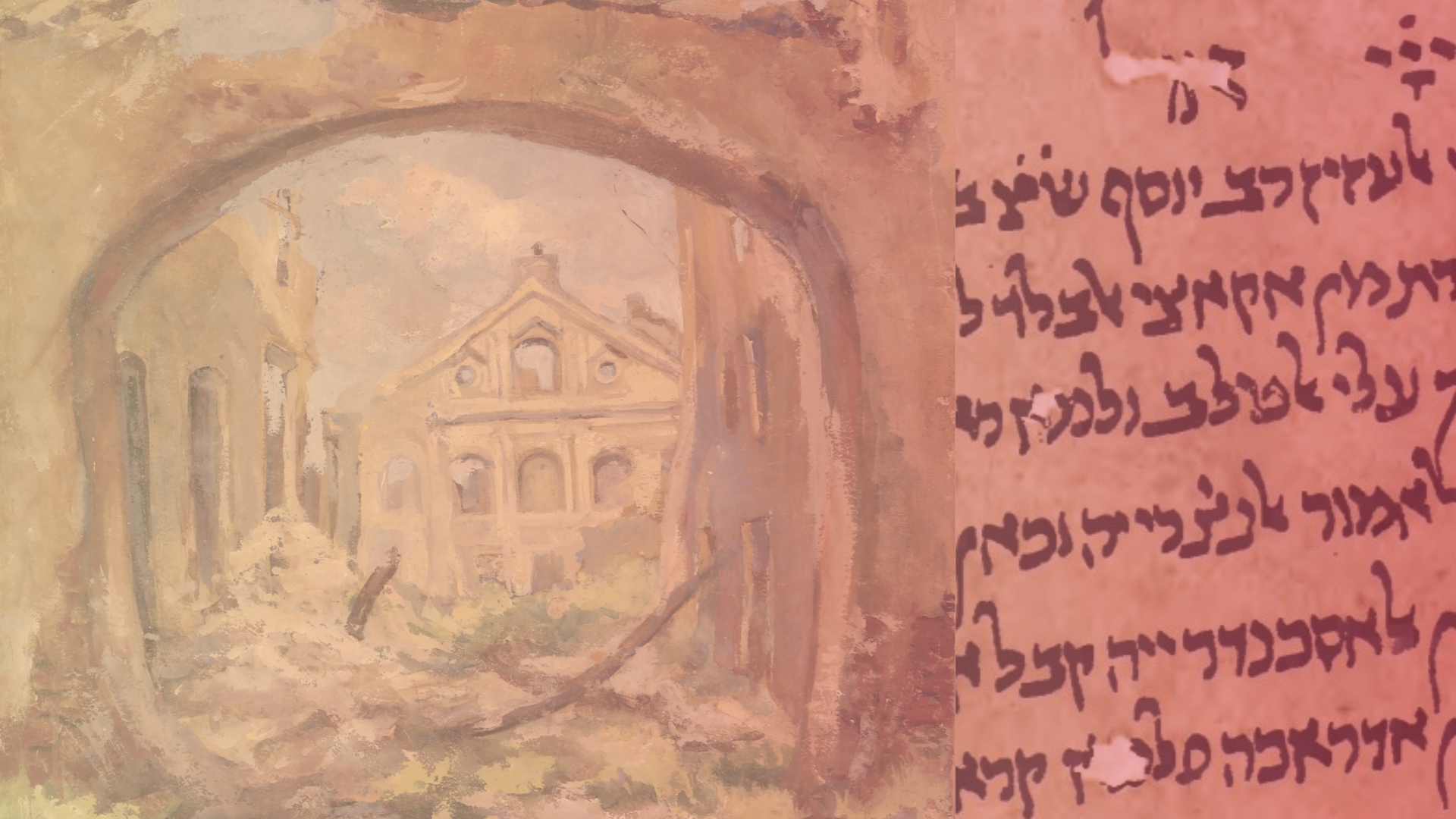
Imagine walking into The Soraya’s gallery this winter, and the air feels thick with conversation. The David Labkovski Project (DLP) has designed their current exhibition, Through the Eyes of David Labkovski: Sholem Aleichem and His Heroes, as an immersive exchange between two artists instead of a static display. Dedicated to Holocaust education and promoting historical dialogue through art, the DLP preserves and promotes the legacy of Lithuanian artist David Labkovski, whose works depict life before, during, and after the Holocaust. Labkovski’s paintings hang beside excerpts from renowned playwright and author Sholem Aleichem’s stories with an accompanying multimedia video installation.
The exhibition opened on September 13 and runs until December 31, 2025, at The Soraya Younes and Soraya Nazarian Center for the Performing Arts in Northridge, California. It stages a dialogue between the life Aleichem captured before the devastation of World War II and the loss Labkovski recorded after. One wrote the music of everyday life; the other painted its silence.
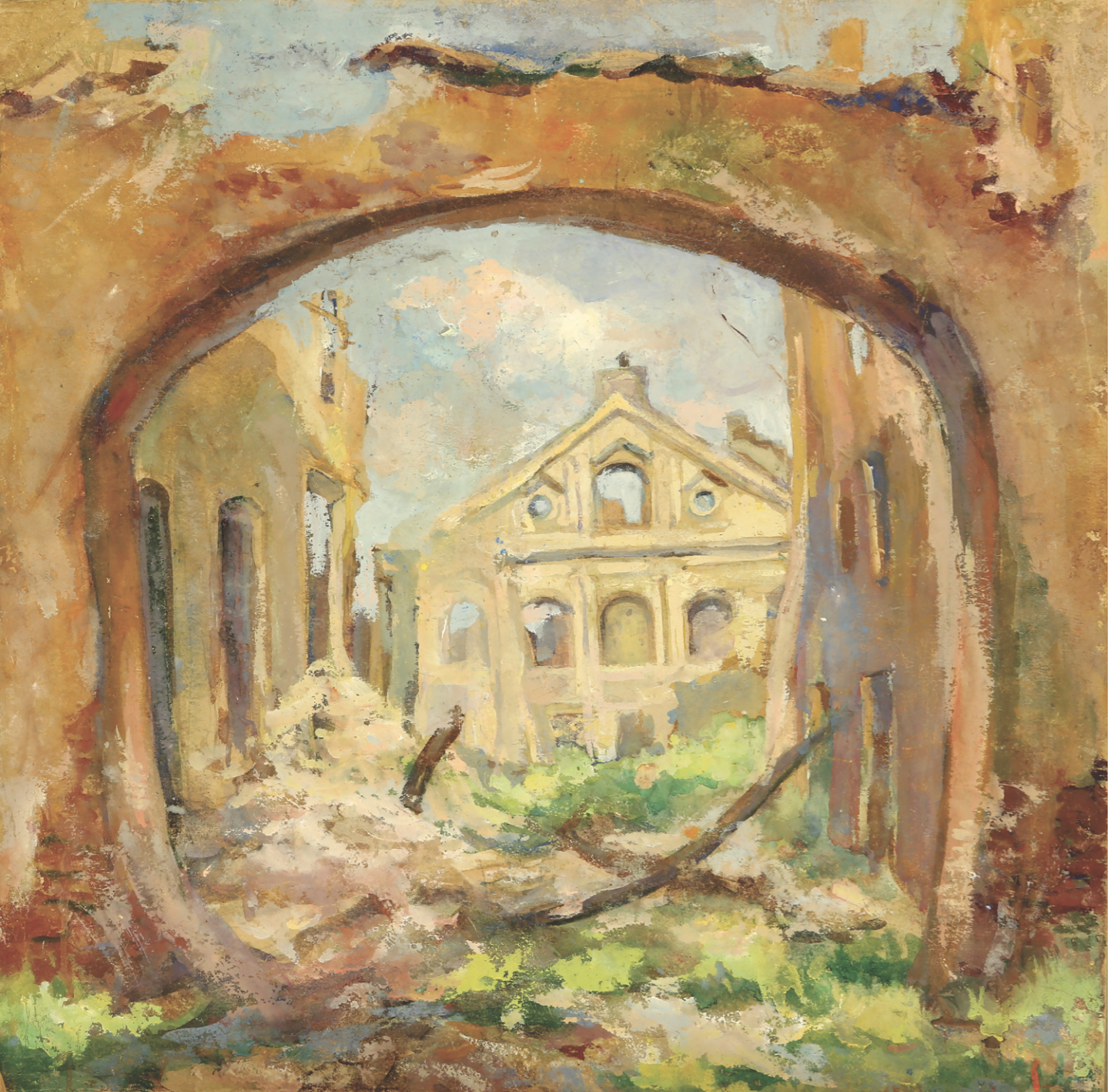
One side holds the painted world of Labkovski who was born in Vilnius, Lithuania, in 1906. He survived the Holocaust and years in Soviet labour camps before emigrating to Israel. Market squares, ghetto streets, narrow doorways, the haunted stillness of places where neighbours once stood—faces and streets rendered in vast shades of watercolour and oil, each brushstroke promising a refusal to forget. Each canvas is anchored in something he saw or knew would vanish without record. Decades earlier, Aleichem had been writing the life of those same towns before they disappeared. He used humour as a kind of armour. Often mistaken for sentimental folklore, Aleichem’s stories are layered portraits of a community negotiating hardship and change with resilience and grace.
What’s most striking is how seamlessly Labkovski’s paintings and Aleichem’s words speak to one another. A gesture or a glance in paint seems to echo a sentence written decades earlier; a line of text, in turn, illuminates a figure caught mid-breath on the canvas. Seen together, their work reveals how humour and heartbreak coexist, how both artists used storytelling to preserve dignity amid loss. The result is a dialogue that transcends time, inviting viewers to witness memory as a living exchange rather than a distant past.
This is not only an art show but also a community space for remembering. The Soraya, a cultural hub in one of Los Angeles’s most diverse regions, serves audiences as varied as the city itself: students, educators, members of the Jewish diaspora, and curious visitors. Here, they may find themselves picturing the uneven clatter of a water carrier’s cart, the flicker of candlelight before the advent of electricity, or the layered conversations of a small-town street. The particulars may belong to another century, but the emotions of love, envy, friendship, and ambition are timeless.
The debut in Northridge is only the beginning. Built to travel, the exhibition is intended for museums, universities, and community centres across the country, bringing with it the DLP’s acclaimed educational programs. These workshops use art and literature to prompt personal reflection, bridging the gap between historical fact and empathizing with lived experiences. For younger generations in particular, the combination offers a way into history that is as emotional as it is informational.
For all its historical gravity, Through the Eyes of David Labkovski: Sholem Aleichem and his Heroes is not a memorial in the conventional sense. It is a meeting between a pen and a brush, between what was lived and what was lost, between memory and imagination. It invites visitors to stand in the space between, to listen, and to carry the conversation forward.
Imagine walking into The Soraya’s gallery this winter, and the air feels thick with conversation. The David Labkovski Project (DLP) has designed their current exhibition, Through the Eyes of David Labkovski: Sholem Aleichem and His Heroes, as an immersive exchange between two artists instead of a static display. Dedicated to Holocaust education and promoting historical dialogue through art, the DLP preserves and promotes the legacy of Lithuanian artist David Labkovski, whose works depict life before, during, and after the Holocaust. Labkovski’s paintings hang beside excerpts from renowned playwright and author Sholem Aleichem’s stories with an accompanying multimedia video installation.
The exhibition opened on September 13 and runs until December 31, 2025, at The Soraya Younes and Soraya Nazarian Center for the Performing Arts in Northridge, California. It stages a dialogue between the life Aleichem captured before the devastation of World War II and the loss Labkovski recorded after. One wrote the music of everyday life; the other painted its silence.
One side holds the painted world of Labkovski who was born in Vilnius, Lithuania, in 1906. He survived the Holocaust and years in Soviet labour camps before emigrating to Israel. Market squares, ghetto streets, narrow doorways, the haunted stillness of places where neighbours once stood—faces and streets rendered in vast shades of watercolour and oil, each brushstroke promising a refusal to forget. Each canvas is anchored in something he saw or knew would vanish without record. Decades earlier, Aleichem had been writing the life of those same towns before they disappeared. He used humour as a kind of armour. Often mistaken for sentimental folklore, Aleichem’s stories are layered portraits of a community negotiating hardship and change with resilience and grace.
What’s most striking is how seamlessly Labkovski’s paintings and Aleichem’s words speak to one another. A gesture or a glance in paint seems to echo a sentence written decades earlier; a line of text, in turn, illuminates a figure caught mid-breath on the canvas. Seen together, their work reveals how humour and heartbreak coexist, how both artists used storytelling to preserve dignity amid loss. The result is a dialogue that transcends time, inviting viewers to witness memory as a living exchange rather than a distant past.
This is not only an art show but also a community space for remembering. The Soraya, a cultural hub in one of Los Angeles’s most diverse regions, serves audiences as varied as the city itself: students, educators, members of the Jewish diaspora, and curious visitors. Here, they may find themselves picturing the uneven clatter of a water carrier’s cart, the flicker of candlelight before the advent of electricity, or the layered conversations of a small-town street. The particulars may belong to another century, but the emotions of love, envy, friendship, and ambition are timeless.
The debut in Northridge is only the beginning. Built to travel, the exhibition is intended for museums, universities, and community centres across the country, bringing with it the DLP’s acclaimed educational programs. These workshops use art and literature to prompt personal reflection, bridging the gap between historical fact and empathizing with lived experiences. For younger generations in particular, the combination offers a way into history that is as emotional as it is informational.
For all its historical gravity, Through the Eyes of David Labkovski: Sholem Aleichem and his Heroes is not a memorial in the conventional sense. It is a meeting between a pen and a brush, between what was lived and what was lost, between memory and imagination. It invites visitors to stand in the space between, to listen, and to carry the conversation forward.