




Jordi Mand is a Jewish Canadian playwright who has collaborated with the biggest theatre companies in Canada, including Stratford Festival, Royal Manitoba Theatre Centre, the Grand Theatre, Harold Green Jewish Theatre Company, and more. Her work has been published into multiple languages, and produced both nationally and internationally.
One of Mand’s most celebrated plays, In Seven Days, was a co-production between The Grand Theatre and the Harold Green Jewish Theatre Company. NOW Magazine wrote that it is “beautifully penned,” and it has been described as a “poignant, timely, and deeply funny” play by the Canadian Play Outlet.
Not just a playwright, Mand is also a trained actor and has experience writing for television, but this year she is venturing into new territory—the world of film. She’s currently adapting her show In Seven Days into a film, and recently pitched the project at the Toronto Jewish Film Festival’s first Filmmaker Showcase in early June. The showcase allowed pre-selected filmmakers to pitch their projects to a jury to attain sought-after exposure and a pass for the 2027 edition of the festival. Mand’s pitch wowed the judges, tying for first place at the showcase.
Mand has had a busy couple of weeks following the pitch, so I corresponded with her over email to discuss her writing, the Filmmaker Showcase, and her plans for adapting In Seven Days.
Jordi, it’s so lovely to talk with you. Congratulations on the success of your pitch! Can you share a bit about your play In Seven Days and where the idea came from to adapt it into a film?
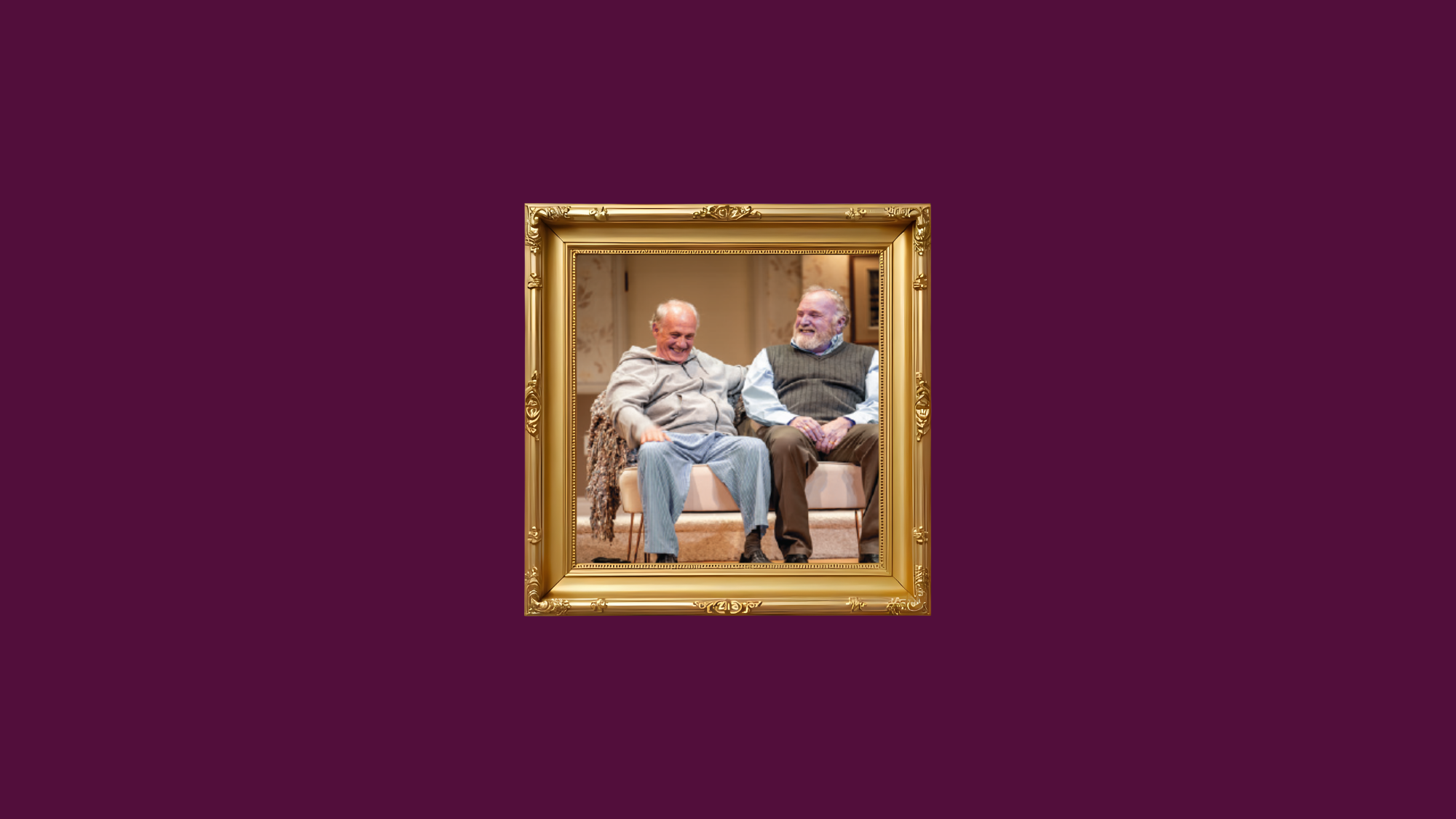
Of course! In the play, 30-year-old Rachel arrives at her father's house for Shabbat dinner expecting an ordinary evening with family. Instead, her father Sam—a beloved lawyer and pillar of his Jewish community—makes an announcement that changes everything. After years of living with cancer and chronic pain, he has decided to pursue Medical Assistance in Dying. And he's going to do it in seven days.
Determined to change his mind, Rachel throws herself into a battle she is almost certainly going to lose. Standing opposite her is Shelley, Sam's devoted partner and caregiver, whose years of sacrifice have created a complicated and often combative relationship with Rachel. Caught in the middle is Eli, Sam's oldest friend and rabbi, who believes what Sam is planning is fundamentally wrong, but loves him too much to walk away.
Over the course of the next week, old wounds are reopened, long-held secrets are revealed, and an entire community finds itself pulled into a deeply personal decision. Family members argue, friends take sides, and debates about faith, autonomy, love, and even the superiority of sesame seed versus poppy seed bagels erupt around the dinner table.
As the clock counts down toward Sam's final day, the people who love him most are forced to confront an impossible question: What happens when someone you love makes a choice you cannot accept? In Seven Days is ultimately not a play about death. It's a comedy about living; about family, faith, forgiveness, and the messy, beautiful challenge of saying goodbye.
Based on audience and media feedback, adapting the play into a film feels like a natural next step. The play generated such powerful conversations that I began to feel the story deserved the opportunity to reach a much wider audience.
How long did the play run, and what was the audience reception like?
In Seven Days premiered in 2024 as a co-production between the Grand Theatre in London, Ontario and the Harold Green Jewish Theatre Company in Toronto. Both six-week runs sold out, and the piece went on to win the Carol Bolt Award for Best New Play, one of Canada's most prestigious honours for new work. It was also selected to be part of CBC’s PlayMe Podcast, where they did an audio recording of the play with the original cast.
But what meant the most to me was the audience response. Following performances, people stayed for hours sharing their own experiences with illness, caregiving, loss, and MAID. I've never had that level of engagement with any other project I've written. It was unbelievably moving.
Can you share what the process was like for the Filmmaker Showcase? When did you submit your project as a pitch and was it selected from an initial round of submissions?
The process began with a written application and project submission. From there, a small group of filmmakers was selected to participate in the live pitching event at the Toronto Jewish Film Festival. Once selected, we were given the opportunity to present our projects in front of a panel of industry professionals and an audience. It was an incredible experience. Not only because of the opportunity to pitch In Seven Days, but because of the calibre of the projects and filmmakers involved. I left feeling inspired by the breadth of stories being told and the passion behind them. The event created a wonderful sense of community and reminded me how many exciting, thoughtful, and diverse Jewish stories are being developed right now.
Your pitch tied with another project, Solitaire, so huge congratulations again. What was the outcome of winning this pitch?
Thank you! First of all, congratulations to the Solitaire team as well. It's a terrific project and the artists working on it are amazing.
The outcome was a combination of recognition, industry exposure, and additional support as we continue developing the film. Perhaps most importantly, it provided validation that the story resonates beyond theatre audiences. It reinforced my belief that there is a real appetite for this conversation and for contemporary Jewish stories that tackle complex issues.
What was your process like preparing for the live pitch?
I spent a lot of time trying to figure out what the pitch was really about. At first, I approached it the way many writers do—talking about the plot, the themes, and the production history. But eventually I realized the most important thing wasn't the play itself. It was why I wrote it. Once I started talking about my father, his childhood friend Harold, and the conversation I had with my brother, everything clicked into place. In Seven Days isn't really a story about MAID; it's a story about family and about love. I wanted the audience to understand that this wasn't a political project for me. It came from a deeply personal place, and I think that's ultimately what people connected with.
During your pitch, you spoke a bit about how the play was inspired by real life events and conversations that you had had. Can you share that here?
Growing up in North York, Ontario, my dad had a best friend named Harold. They were inseparable. As they grew up life took them in different directions, and eventually they lost touch.
Fast forward 50 years: my parents decided to move to London, Ontario without knowing anyone. So they did what any good Jews do . . . they joined a synagogue. When they arrived for Rosh Hashanah services, they started playing Jewish Geography. Someone mentioned that the president was from North York, and it was Harold! My dad and Harold basically picked up where they left off.
But Harold was very sick. He was battling multiple illnesses, and lived with constant pain. One night, he announced to my parents that he qualified for MAID and had decided to go through with it.
Even though MAID is legal in Canada, in most sectors of Judaism it is considered forbidden. And Harold’s decision became the subject of endless debate. Friends, family members, congregants, everyone had an opinion.
I went to visit my parents in London while all of this was happening, and I came back to Toronto and saw my younger brother, relaying everything that was happening with Harold. He said, “I think going through MAID is one of the most selfish things you could do.” And I responded, “Zach, if dad (who we both love and adore) was sick enough to qualify, you’re telling me you wouldn’t support him?” He would not. I was stunned.
I am a cancer survivor. I am no stranger to the hospital or the medical world. So, I understand why someone who qualifies for MAID would want to go through with it. But any time two people have two wildly different opinions about something, to me, you have a piece of art. So, after we had that conversation and my brother drove away, I sat down and started writing my play, In Seven Days.
There are some really complex themes that you wrestle with in this story. At the heart of this project, we see characters grappling with Judaism and their feelings towards medically assisted death. Has working through this from a fictional standpoint affected conversations that you have in your own life and community?
Absolutely. Writing the play required me to approach every character with empathy and curiosity rather than judgment, and to spend time genuinely trying to understand people whose views I might not share. What surprised me most, though, was what happened after the play opened. Night after night, people approached me and trusted me with deeply personal stories. Some had gone through similar experiences themselves, and others were supporting loved ones through it. Many were still wrestling with difficult questions and didn’t know where they landed. I don’t think In Seven Days offers answers. What it offers is space for people to ask difficult questions together, and I've come to believe that can be just as valuable.
Do Jewish themes show up in much of your writing, or is In Seven Days an outlier in that way?
Jewish themes appear throughout much of my work, although not always in overt ways. I’m consistently drawn to stories about family, community, tradition, debate, humour, guilt, and the tension between individual desires and collective responsibility. Those are deeply Jewish ideas, whether the characters are explicitly Jewish or not. In Seven Days is certainly my most overtly Jewish work to date, but in many ways, it feels like a natural extension of questions I’ve been exploring throughout my career.
For example, my upcoming play The Cut, which will premiere in Toronto and Winnipeg in the fall of 2026, follows an interfaith couple struggling to decide whether or not to circumcise their unborn son. On the surface, it's a play about circumcision. But underneath, it’s really about identity, inheritance, marriage, parenthood, and what we choose to pass on to the next generation. Much like In Seven Days, it takes a specifically Jewish question and uses it as a doorway into a much larger human conversation.
That’s what interests me most as a writer. I love stories that are deeply rooted in Jewish life and culture, but that ultimately speak to universal experiences. The more specific a story becomes, the more audiences often see themselves in it.
I love that so much. And you’ve phrased it so well. What is the timeline like for a project of this scope—how much have you thought about the production process and when will you begin filming?
We’re currently in the development phase. I’ve completed a first draft of the screenplay, and we’re actively pursuing funding opportunities. Film development takes time, particularly for independent Canadian projects, so we're focused on building the strongest possible foundation. Right now, our priority is development, financing, and assembling the right creative team.
How are you planning to navigate casting? Are you considering prioritizing casting Jewish actors?
For me, casting always begins with finding the best actor for the role. That said, Jewish identity is an important part of this story, and authenticity matters. Those conversations are something we’ll be having throughout the casting process. I’m very interested in creating opportunities for Jewish performers and ensuring the world of the film feels truthful and lived-in. Ultimately, my goal is to assemble an ensemble cast capable of delivering the humour, vulnerability, and emotional complexity that audiences connected with in the play.
If you’d like to engage with the play before the film adaption makes its way into the world, here’s how you can read about it or see it:
- The play was published by Scirocco Drama and is available for purchase here: https://www.jgshillingford.com/product/in-seven-days/
- PlayMe also did an interview with Mand about the play that you can listen to here:https://www.cbc.ca/listen/cbc-podcasts/211-playme/episode/16139230-in-seven-days-interview-with-jordi-mand
Jordi Mand is a Jewish Canadian playwright who has collaborated with the biggest theatre companies in Canada, including Stratford Festival, Royal Manitoba Theatre Centre, the Grand Theatre, Harold Green Jewish Theatre Company, and more. Her work has been published into multiple languages, and produced both nationally and internationally.
One of Mand’s most celebrated plays, In Seven Days, was a co-production between The Grand Theatre and the Harold Green Jewish Theatre Company. NOW Magazine wrote that it is “beautifully penned,” and it has been described as a “poignant, timely, and deeply funny” play by the Canadian Play Outlet.
Not just a playwright, Mand is also a trained actor and has experience writing for television, but this year she is venturing into new territory—the world of film. She’s currently adapting her show In Seven Days into a film, and recently pitched the project at the Toronto Jewish Film Festival’s first Filmmaker Showcase in early June. The showcase allowed pre-selected filmmakers to pitch their projects to a jury to attain sought-after exposure and a pass for the 2027 edition of the festival. Mand’s pitch wowed the judges, tying for first place at the showcase.
Mand has had a busy couple of weeks following the pitch, so I corresponded with her over email to discuss her writing, the Filmmaker Showcase, and her plans for adapting In Seven Days.
Jordi, it’s so lovely to talk with you. Congratulations on the success of your pitch! Can you share a bit about your play In Seven Days and where the idea came from to adapt it into a film?
Of course! In the play, 30-year-old Rachel arrives at her father's house for Shabbat dinner expecting an ordinary evening with family. Instead, her father Sam—a beloved lawyer and pillar of his Jewish community—makes an announcement that changes everything. After years of living with cancer and chronic pain, he has decided to pursue Medical Assistance in Dying. And he's going to do it in seven days.
Determined to change his mind, Rachel throws herself into a battle she is almost certainly going to lose. Standing opposite her is Shelley, Sam's devoted partner and caregiver, whose years of sacrifice have created a complicated and often combative relationship with Rachel. Caught in the middle is Eli, Sam's oldest friend and rabbi, who believes what Sam is planning is fundamentally wrong, but loves him too much to walk away.
Over the course of the next week, old wounds are reopened, long-held secrets are revealed, and an entire community finds itself pulled into a deeply personal decision. Family members argue, friends take sides, and debates about faith, autonomy, love, and even the superiority of sesame seed versus poppy seed bagels erupt around the dinner table.
As the clock counts down toward Sam's final day, the people who love him most are forced to confront an impossible question: What happens when someone you love makes a choice you cannot accept? In Seven Days is ultimately not a play about death. It's a comedy about living; about family, faith, forgiveness, and the messy, beautiful challenge of saying goodbye.
Based on audience and media feedback, adapting the play into a film feels like a natural next step. The play generated such powerful conversations that I began to feel the story deserved the opportunity to reach a much wider audience.
How long did the play run, and what was the audience reception like?
In Seven Days premiered in 2024 as a co-production between the Grand Theatre in London, Ontario and the Harold Green Jewish Theatre Company in Toronto. Both six-week runs sold out, and the piece went on to win the Carol Bolt Award for Best New Play, one of Canada's most prestigious honours for new work. It was also selected to be part of CBC’s PlayMe Podcast, where they did an audio recording of the play with the original cast.
But what meant the most to me was the audience response. Following performances, people stayed for hours sharing their own experiences with illness, caregiving, loss, and MAID. I've never had that level of engagement with any other project I've written. It was unbelievably moving.
Can you share what the process was like for the Filmmaker Showcase? When did you submit your project as a pitch and was it selected from an initial round of submissions?
The process began with a written application and project submission. From there, a small group of filmmakers was selected to participate in the live pitching event at the Toronto Jewish Film Festival. Once selected, we were given the opportunity to present our projects in front of a panel of industry professionals and an audience. It was an incredible experience. Not only because of the opportunity to pitch In Seven Days, but because of the calibre of the projects and filmmakers involved. I left feeling inspired by the breadth of stories being told and the passion behind them. The event created a wonderful sense of community and reminded me how many exciting, thoughtful, and diverse Jewish stories are being developed right now.
Your pitch tied with another project, Solitaire, so huge congratulations again. What was the outcome of winning this pitch?
Thank you! First of all, congratulations to the Solitaire team as well. It's a terrific project and the artists working on it are amazing.
The outcome was a combination of recognition, industry exposure, and additional support as we continue developing the film. Perhaps most importantly, it provided validation that the story resonates beyond theatre audiences. It reinforced my belief that there is a real appetite for this conversation and for contemporary Jewish stories that tackle complex issues.
What was your process like preparing for the live pitch?
I spent a lot of time trying to figure out what the pitch was really about. At first, I approached it the way many writers do—talking about the plot, the themes, and the production history. But eventually I realized the most important thing wasn't the play itself. It was why I wrote it. Once I started talking about my father, his childhood friend Harold, and the conversation I had with my brother, everything clicked into place. In Seven Days isn't really a story about MAID; it's a story about family and about love. I wanted the audience to understand that this wasn't a political project for me. It came from a deeply personal place, and I think that's ultimately what people connected with.
During your pitch, you spoke a bit about how the play was inspired by real life events and conversations that you had had. Can you share that here?
Growing up in North York, Ontario, my dad had a best friend named Harold. They were inseparable. As they grew up life took them in different directions, and eventually they lost touch.
Fast forward 50 years: my parents decided to move to London, Ontario without knowing anyone. So they did what any good Jews do . . . they joined a synagogue. When they arrived for Rosh Hashanah services, they started playing Jewish Geography. Someone mentioned that the president was from North York, and it was Harold! My dad and Harold basically picked up where they left off.
But Harold was very sick. He was battling multiple illnesses, and lived with constant pain. One night, he announced to my parents that he qualified for MAID and had decided to go through with it.
Even though MAID is legal in Canada, in most sectors of Judaism it is considered forbidden. And Harold’s decision became the subject of endless debate. Friends, family members, congregants, everyone had an opinion.
I went to visit my parents in London while all of this was happening, and I came back to Toronto and saw my younger brother, relaying everything that was happening with Harold. He said, “I think going through MAID is one of the most selfish things you could do.” And I responded, “Zach, if dad (who we both love and adore) was sick enough to qualify, you’re telling me you wouldn’t support him?” He would not. I was stunned.
I am a cancer survivor. I am no stranger to the hospital or the medical world. So, I understand why someone who qualifies for MAID would want to go through with it. But any time two people have two wildly different opinions about something, to me, you have a piece of art. So, after we had that conversation and my brother drove away, I sat down and started writing my play, In Seven Days.
There are some really complex themes that you wrestle with in this story. At the heart of this project, we see characters grappling with Judaism and their feelings towards medically assisted death. Has working through this from a fictional standpoint affected conversations that you have in your own life and community?
Absolutely. Writing the play required me to approach every character with empathy and curiosity rather than judgment, and to spend time genuinely trying to understand people whose views I might not share. What surprised me most, though, was what happened after the play opened. Night after night, people approached me and trusted me with deeply personal stories. Some had gone through similar experiences themselves, and others were supporting loved ones through it. Many were still wrestling with difficult questions and didn’t know where they landed. I don’t think In Seven Days offers answers. What it offers is space for people to ask difficult questions together, and I've come to believe that can be just as valuable.
Do Jewish themes show up in much of your writing, or is In Seven Days an outlier in that way?
Jewish themes appear throughout much of my work, although not always in overt ways. I’m consistently drawn to stories about family, community, tradition, debate, humour, guilt, and the tension between individual desires and collective responsibility. Those are deeply Jewish ideas, whether the characters are explicitly Jewish or not. In Seven Days is certainly my most overtly Jewish work to date, but in many ways, it feels like a natural extension of questions I’ve been exploring throughout my career.
For example, my upcoming play The Cut, which will premiere in Toronto and Winnipeg in the fall of 2026, follows an interfaith couple struggling to decide whether or not to circumcise their unborn son. On the surface, it's a play about circumcision. But underneath, it’s really about identity, inheritance, marriage, parenthood, and what we choose to pass on to the next generation. Much like In Seven Days, it takes a specifically Jewish question and uses it as a doorway into a much larger human conversation.
That’s what interests me most as a writer. I love stories that are deeply rooted in Jewish life and culture, but that ultimately speak to universal experiences. The more specific a story becomes, the more audiences often see themselves in it.
I love that so much. And you’ve phrased it so well. What is the timeline like for a project of this scope—how much have you thought about the production process and when will you begin filming?
We’re currently in the development phase. I’ve completed a first draft of the screenplay, and we’re actively pursuing funding opportunities. Film development takes time, particularly for independent Canadian projects, so we're focused on building the strongest possible foundation. Right now, our priority is development, financing, and assembling the right creative team.
How are you planning to navigate casting? Are you considering prioritizing casting Jewish actors?
For me, casting always begins with finding the best actor for the role. That said, Jewish identity is an important part of this story, and authenticity matters. Those conversations are something we’ll be having throughout the casting process. I’m very interested in creating opportunities for Jewish performers and ensuring the world of the film feels truthful and lived-in. Ultimately, my goal is to assemble an ensemble cast capable of delivering the humour, vulnerability, and emotional complexity that audiences connected with in the play.
If you’d like to engage with the play before the film adaption makes its way into the world, here’s how you can read about it or see it:
- The play was published by Scirocco Drama and is available for purchase here: https://www.jgshillingford.com/product/in-seven-days/
- PlayMe also did an interview with Mand about the play that you can listen to here:https://www.cbc.ca/listen/cbc-podcasts/211-playme/episode/16139230-in-seven-days-interview-with-jordi-mand