




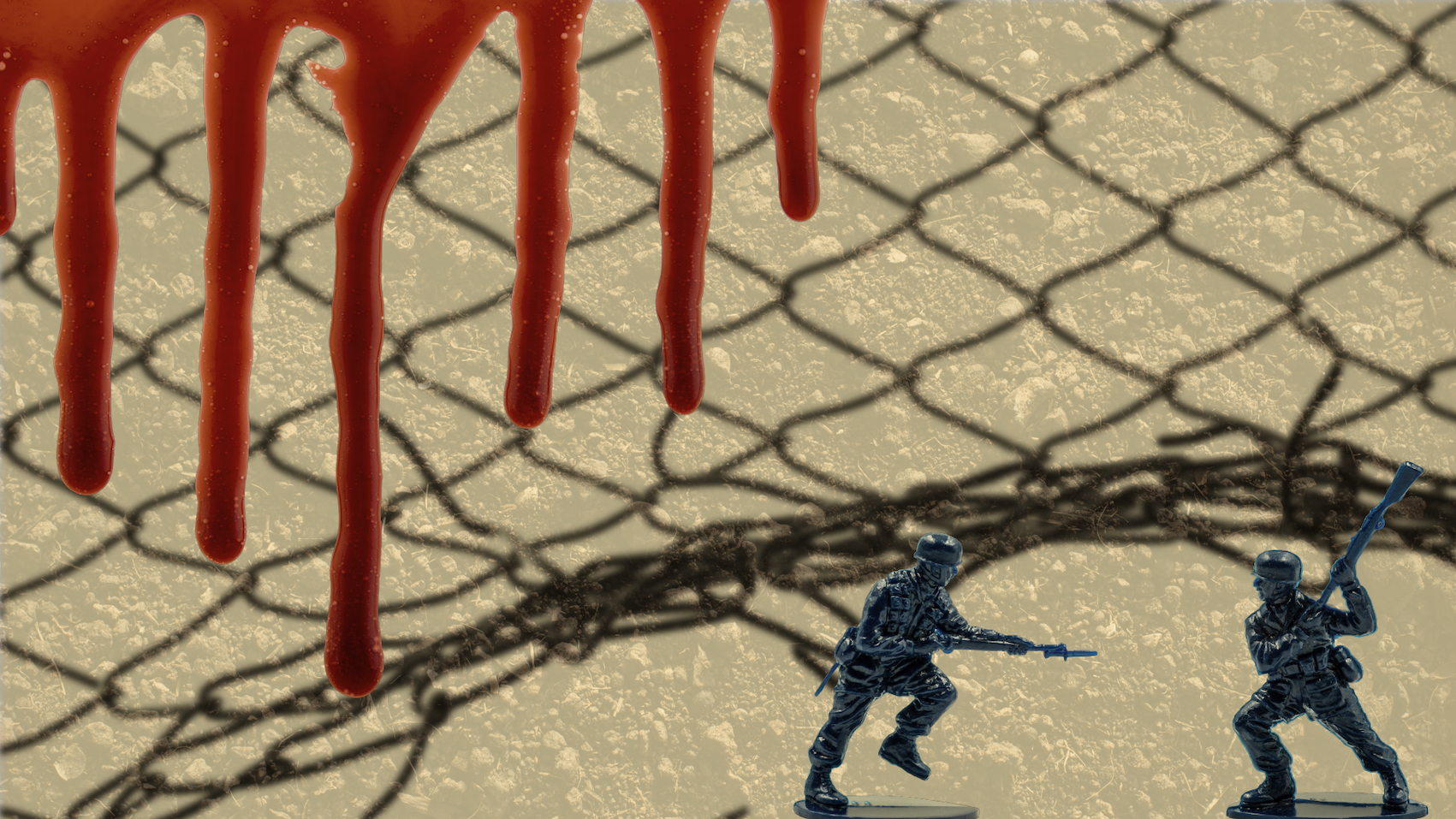
Like many other boys, six-year-old Igor Novikov loved playing the game “war,” where the good guys were Soviets and the bad guys were German fascists. He had a toy gun and a saber to play out the conflict with his friends. His family lived in an area of Kiev called the Jewish Bazaar, abbreviated as Yevbaz (short for Yevrejsky Bazaar). His father, Vasily Novikov was Christian and of Russian nationality, worked as the chief mechanic at a bakery located on one of the streets adjoining Yevbaz. The bakery was in the house where Igor’s family lived. His Jewish mother, Fanya Kagan, worked as a cashier in a pharmacy located at Yevbaz. The yard of their house was divided into two parts. In the main part, called the big yard, was the bakery, and the second part was a narrow, unremarkable courtyard at the end of which was a large cellar with sheds. This house had many communal apartments.
On June 22, 1941, the residents of Igor’s house at Yevbaz woke up to the sounds of anti-aircraft fire, the roar of planes, and explosions from bombs. Sirens wailed, and everyone rushed into the basement shelter. War had come and it was far scarier than the game. The Soviet soldiers had left Kiev, while the Germans took control of the city. From the very beginning of the Nazi invasion of the USSR, numerous Soviet loudspeakers in Kiev blared: “Kiev is ours! We will not surrender Kiev! We are driving out the enemy!” Flyers with the text were pasted everywhere: “Oh, and Hitler the Bandit will get his beaten.”
Around noon on September 19, a growing rumble could be heard at Yevbaz—gunshots and the roar of engines merged into a single cacophony—the advance units of the Wehrmacht were approaching. To the victorious cries of Soviet loudspeakers, German troops entered Kiev. They rode on motorcycles, in cars, in armoured personnel carriers, in tanks, and on horse-drawn carts. Behind the tanks moved powerful trucks, followed by infantry: young soldiers in green uniforms with sleeves rolled up to their elbows, holding automatic rifles in their hands. The soldiers were sweaty and dusty, but cheerful, well-fed, and content, singing songs in German.
Vasily Novikov found himself in the city centre, on Vladimirskaya Street, in the square near the Opera House, at three o’clock on that bright, sunny day. He saw a smart, cheerful crowd walking back and forth along the sidewalks of Vladimirskaya Street. The ladies were dressed up in silk dresses and mantillas. They wore earrings and brooches. Men appeared in frock coats and elegant suits. Two or three priests came in silk cassocks. Old officials and teachers in uniform frock coats from the time of Tsar Nicholas II walked toward Vasily. He was shocked by the sight of this unprecedented non-Soviet crowd. All these people were chatting cheerfully, bowing politely to each other, as if congratulating one another on getting rid of the Bolsheviks.
The Germans sensed the festive mood of the crowd and decided to play along. They turned on Moscow Radio with loudspeakers. Terrible news spread throughout the city that Kiev was burning, set on fire by the enemy, that German soldiers were looting apartments, killing women and children, shooting men, and driving residents from their homes. These reports caused bursts of cheerful laughter among the “lucky ones” who had escaped from “Soviet hell.” Vasily looked closely at these people, who sincerely welcomed the new regime, and realized a new anthropological type of people had appeared in Kiev. They could be Germany’s allies in its solution to the Jewish question.
The entire Jewish population of the Novikovs’ house was evacuated thousands of kilometres deep into the territory of the USSR. Most families from mixed marriages remained. Fanya’s parents and sisters urged her to evacuate with them. After much thought and hesitation, she decided to stay. Those who remained in their courtyard hoped that the rumours of German atrocities against the Jewish population would not come true. Surely, the Germans couldn’t shoot old people, women, and children.
On the night of September 24, 1941, the population of Kiev woke up to loud explosions and bright flashes. Walls shook, doors and windows flew open. Panic ensued. The residents of Yevbaz did not understand who was bombing Kiev: the Soviet army had left the city, and the Germans had captured it. People did not know where to run or where to hide. Soon everything became clear: flashes were sparkling and rumbling was heard from the city centre, from the main street Khreshchatyk, where mines planted by Soviet sappers retreating from the city under the best buildings of Kiev were exploding. The city centre was on fire. Khreshchatyk became a huge bonfire. The Germans fought the fire, but could not retrieve the hundreds of corpses of their fallen comrades, which had been burned to ashes. After several days of desperate struggle with the fire, the Germans ceased resistance and only watched the fire from a distance. After four hours, the explosions became less frequent, the glow faded, but the fires continued for two weeks. The Germans declared the Jews of Kiev guilty of sabotage. They began to prepare a punitive action against the Jewish population.
The leaves on the trees of Kiev’s maples, birches, lindens, ash trees, oaks, and rowans turned yellow, red, and fell. Asters, dahlias, chrysanthemums, roses, and nasturtiums bloomed. Nature celebrated. Against the backdrop of Kiev’s beautiful autumn palette, unprecedented human tragedies unfolded in this city.
On the evening of September 28, Yevbaz did not sleep. Vasily and Fanya told Igor to go to bed early, but he could not. His mother came up to him and quietly sang a Jewish melody that he had heard before.
On the morning of September 29, Igor woke up and saw his parents standing in an embrace and crying. He didn’t understand why. He was told that his mother was leaving for a short time to visit her father. Between Igor’s father and mother, there was an open suitcase on the floor, into which they were putting her things. He also began to cry. All the Jewish neighbours gathered in the courtyard of the house to carry out the order of the Kiev commandant to appear “at the corner of Melnikovskaya and Dokterivskaya streets (near the cemeteries), taking with them documents, money, valuables, as well as warm clothes, underwear, and other items.” His mother left the courtyard with the other Jewish neighbours. Igor never saw her again. She was shot with machine guns in Babi Yar.
Yevbaz was a historic area, the former main marketplace of Kiev for many generations of its residents. It functioned for almost a century. Jews gave it life. It was a place where they gathered to trade, socialize, and maintain their traditions. After the war, the marketplace never returned to how it used to be.
Kiev became the only city in history where the Nazis did not establish a ghetto. They were in a hurry to kill the Jews. On September 28, a march began to the ravines on the western outskirts of the city, to Babi Yar.
The execution of the Jews took place on Yom Kippur. Thousands of Jews left their homes. These were people who remained in Kiev, deceived by the triumphant slogans of Soviet loudspeakers. Crowds of people flowed slowly and mournfully into the river of death, supporting sleeping children in their arms and helping to carry the elderly. They were surrounded on all sides by barbed wire, Germans, and police.
Vasily returned home gaunt and aged. He said nothing to his son, but the boy sensed that something irreparable had happened. Children grow up quickly during wartime. Igor’s childhood was over.
The game of hide-and-seek from the killers began. Hiding his son’s Jewish origins from the Germans and Ukrainian police who were searching for surviving Jews, Vasily married a Russian neighbour who he worked with in a bakery.
Igor found himself in a Russian Orthodox family with its customs and traditions. He was baptized, given a cross to wear around his neck, and taught to cross himself and read Orthodox prayers. From October 1941 to November 1943, Igor was not allowed to go out into the courtyard to play, for fear of denunciations. His route was: room— basement. When searches began, he was hidden in the basement. He lived underground. The land of Kiev did not save him but repelled him. There was no light in the Yevbaz basement; it was dark, cold, damp, and hungry. He was as pale and yellow as a wax candle. He already understood that his mother was dead. He lived in fear that “bad people” would catch and kill him, just as they had killed his mother. In the darkness of the dungeon, he often dreamed that he was being captured by Germans and Ukrainian police and woke up in horror. He dreamed of his mother. He heard her last Jewish melody. He dreamed of his parents’ farewell. The faces of his Jewish relatives who had left for evacuation flashed before his eyes. He clearly imagined his Jewish neighbours gathered in the courtyard of their house to die. There were no Jews left in Yevbaz. His mother’s people had left Kiev. Igor no longer wanted to play “war.” Yevbaz had fallen into the abyss of Babi Yar.
Like many other boys, six-year-old Igor Novikov loved playing the game “war,” where the good guys were Soviets and the bad guys were German fascists. He had a toy gun and a saber to play out the conflict with his friends. His family lived in an area of Kiev called the Jewish Bazaar, abbreviated as Yevbaz (short for Yevrejsky Bazaar). His father, Vasily Novikov was Christian and of Russian nationality, worked as the chief mechanic at a bakery located on one of the streets adjoining Yevbaz. The bakery was in the house where Igor’s family lived. His Jewish mother, Fanya Kagan, worked as a cashier in a pharmacy located at Yevbaz. The yard of their house was divided into two parts. In the main part, called the big yard, was the bakery, and the second part was a narrow, unremarkable courtyard at the end of which was a large cellar with sheds. This house had many communal apartments.
On June 22, 1941, the residents of Igor’s house at Yevbaz woke up to the sounds of anti-aircraft fire, the roar of planes, and explosions from bombs. Sirens wailed, and everyone rushed into the basement shelter. War had come and it was far scarier than the game. The Soviet soldiers had left Kiev, while the Germans took control of the city. From the very beginning of the Nazi invasion of the USSR, numerous Soviet loudspeakers in Kiev blared: “Kiev is ours! We will not surrender Kiev! We are driving out the enemy!” Flyers with the text were pasted everywhere: “Oh, and Hitler the Bandit will get his beaten.”
Around noon on September 19, a growing rumble could be heard at Yevbaz—gunshots and the roar of engines merged into a single cacophony—the advance units of the Wehrmacht were approaching. To the victorious cries of Soviet loudspeakers, German troops entered Kiev. They rode on motorcycles, in cars, in armoured personnel carriers, in tanks, and on horse-drawn carts. Behind the tanks moved powerful trucks, followed by infantry: young soldiers in green uniforms with sleeves rolled up to their elbows, holding automatic rifles in their hands. The soldiers were sweaty and dusty, but cheerful, well-fed, and content, singing songs in German.
Vasily Novikov found himself in the city centre, on Vladimirskaya Street, in the square near the Opera House, at three o’clock on that bright, sunny day. He saw a smart, cheerful crowd walking back and forth along the sidewalks of Vladimirskaya Street. The ladies were dressed up in silk dresses and mantillas. They wore earrings and brooches. Men appeared in frock coats and elegant suits. Two or three priests came in silk cassocks. Old officials and teachers in uniform frock coats from the time of Tsar Nicholas II walked toward Vasily. He was shocked by the sight of this unprecedented non-Soviet crowd. All these people were chatting cheerfully, bowing politely to each other, as if congratulating one another on getting rid of the Bolsheviks.
The Germans sensed the festive mood of the crowd and decided to play along. They turned on Moscow Radio with loudspeakers. Terrible news spread throughout the city that Kiev was burning, set on fire by the enemy, that German soldiers were looting apartments, killing women and children, shooting men, and driving residents from their homes. These reports caused bursts of cheerful laughter among the “lucky ones” who had escaped from “Soviet hell.” Vasily looked closely at these people, who sincerely welcomed the new regime, and realized a new anthropological type of people had appeared in Kiev. They could be Germany’s allies in its solution to the Jewish question.
The entire Jewish population of the Novikovs’ house was evacuated thousands of kilometres deep into the territory of the USSR. Most families from mixed marriages remained. Fanya’s parents and sisters urged her to evacuate with them. After much thought and hesitation, she decided to stay. Those who remained in their courtyard hoped that the rumours of German atrocities against the Jewish population would not come true. Surely, the Germans couldn’t shoot old people, women, and children.
On the night of September 24, 1941, the population of Kiev woke up to loud explosions and bright flashes. Walls shook, doors and windows flew open. Panic ensued. The residents of Yevbaz did not understand who was bombing Kiev: the Soviet army had left the city, and the Germans had captured it. People did not know where to run or where to hide. Soon everything became clear: flashes were sparkling and rumbling was heard from the city centre, from the main street Khreshchatyk, where mines planted by Soviet sappers retreating from the city under the best buildings of Kiev were exploding. The city centre was on fire. Khreshchatyk became a huge bonfire. The Germans fought the fire, but could not retrieve the hundreds of corpses of their fallen comrades, which had been burned to ashes. After several days of desperate struggle with the fire, the Germans ceased resistance and only watched the fire from a distance. After four hours, the explosions became less frequent, the glow faded, but the fires continued for two weeks. The Germans declared the Jews of Kiev guilty of sabotage. They began to prepare a punitive action against the Jewish population.
The leaves on the trees of Kiev’s maples, birches, lindens, ash trees, oaks, and rowans turned yellow, red, and fell. Asters, dahlias, chrysanthemums, roses, and nasturtiums bloomed. Nature celebrated. Against the backdrop of Kiev’s beautiful autumn palette, unprecedented human tragedies unfolded in this city.
On the evening of September 28, Yevbaz did not sleep. Vasily and Fanya told Igor to go to bed early, but he could not. His mother came up to him and quietly sang a Jewish melody that he had heard before.
On the morning of September 29, Igor woke up and saw his parents standing in an embrace and crying. He didn’t understand why. He was told that his mother was leaving for a short time to visit her father. Between Igor’s father and mother, there was an open suitcase on the floor, into which they were putting her things. He also began to cry. All the Jewish neighbours gathered in the courtyard of the house to carry out the order of the Kiev commandant to appear “at the corner of Melnikovskaya and Dokterivskaya streets (near the cemeteries), taking with them documents, money, valuables, as well as warm clothes, underwear, and other items.” His mother left the courtyard with the other Jewish neighbours. Igor never saw her again. She was shot with machine guns in Babi Yar.
Yevbaz was a historic area, the former main marketplace of Kiev for many generations of its residents. It functioned for almost a century. Jews gave it life. It was a place where they gathered to trade, socialize, and maintain their traditions. After the war, the marketplace never returned to how it used to be.
Kiev became the only city in history where the Nazis did not establish a ghetto. They were in a hurry to kill the Jews. On September 28, a march began to the ravines on the western outskirts of the city, to Babi Yar.
The execution of the Jews took place on Yom Kippur. Thousands of Jews left their homes. These were people who remained in Kiev, deceived by the triumphant slogans of Soviet loudspeakers. Crowds of people flowed slowly and mournfully into the river of death, supporting sleeping children in their arms and helping to carry the elderly. They were surrounded on all sides by barbed wire, Germans, and police.
Vasily returned home gaunt and aged. He said nothing to his son, but the boy sensed that something irreparable had happened. Children grow up quickly during wartime. Igor’s childhood was over.
The game of hide-and-seek from the killers began. Hiding his son’s Jewish origins from the Germans and Ukrainian police who were searching for surviving Jews, Vasily married a Russian neighbour who he worked with in a bakery.
Igor found himself in a Russian Orthodox family with its customs and traditions. He was baptized, given a cross to wear around his neck, and taught to cross himself and read Orthodox prayers. From October 1941 to November 1943, Igor was not allowed to go out into the courtyard to play, for fear of denunciations. His route was: room— basement. When searches began, he was hidden in the basement. He lived underground. The land of Kiev did not save him but repelled him. There was no light in the Yevbaz basement; it was dark, cold, damp, and hungry. He was as pale and yellow as a wax candle. He already understood that his mother was dead. He lived in fear that “bad people” would catch and kill him, just as they had killed his mother. In the darkness of the dungeon, he often dreamed that he was being captured by Germans and Ukrainian police and woke up in horror. He dreamed of his mother. He heard her last Jewish melody. He dreamed of his parents’ farewell. The faces of his Jewish relatives who had left for evacuation flashed before his eyes. He clearly imagined his Jewish neighbours gathered in the courtyard of their house to die. There were no Jews left in Yevbaz. His mother’s people had left Kiev. Igor no longer wanted to play “war.” Yevbaz had fallen into the abyss of Babi Yar.