



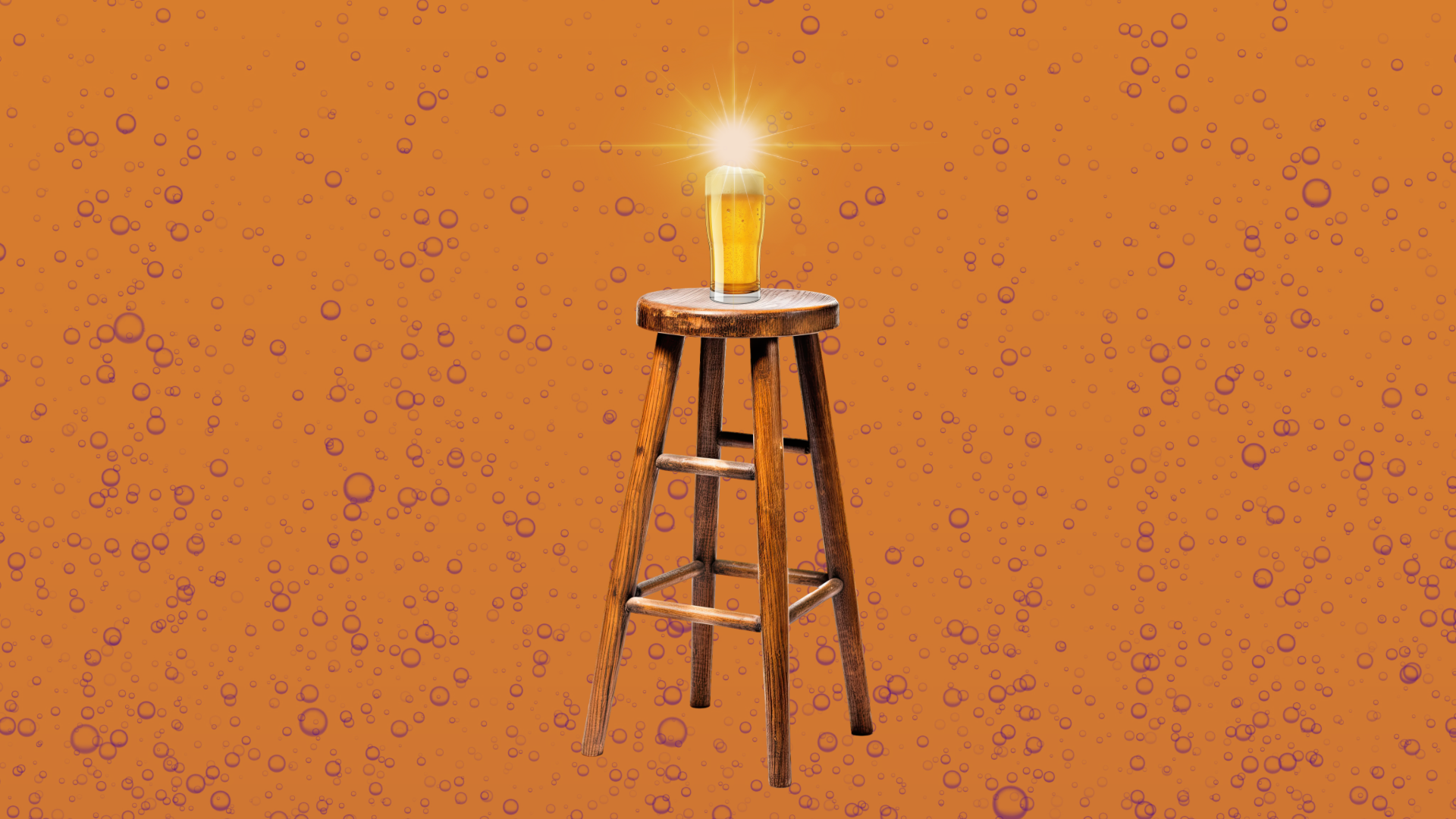
The last person I expected to meet in Fink’s Bar was the messiah.
The reader will ask how did I know that he was the messiah? The simple truth is that he told me. (Incidentally, I use a small “m” in “messiah,” only God's name do I capitalize.)
I was skeptical at first. In Jerusalem there are plenty of people who will tell you they are the messiah. And so, when he told me, I didn’t respond.
Finally, his persistent preaching of his messiahship got on my nerves. “Show me,” I said, folding my arms. “Prove to me that you are the messiah. Hit me with a minor miracle.” I made my request in a low voice, partly in deference to his claim, but mostly because I didn’t want Fink’s regulars to hear me. There is not a bar in the world so ready as Fink’s to declare a man persona non grata.
He sighed, “You give me little choice.”
He said this in a tone of such sadness that I regretted refuting his claim (while still, inwardly, convinced of its truth).
He pointed at the beer and it immediately turned a ruddy colour. I couldn’t help thinking of Jesus changing the water into wine. The self-claimed messiah must have read my mind. “Changing water into wine isn't so hard—beer into wine requires real skill.” I scrutinized him in order to figure out if he was serious. I discerned that he was—although the concept of a droll messiah fitted my approach to Judaism, a religion that has always been accompanied by a people with a penchant for dark and absurdist humour.
“Well done,” I said, for lack of anything to say.
“Nu, taste it. You still doubt. I don’t work with coloured liquids.”
I sipped it. It was wine. And delicious wine. “Is it from the wonderful wine reserved for the righteous to drink in paradise?”
“It’s not a bad vintage, but it doesn’t compare to that wine,” he assured me.
I wondered if I would be destined to drink the real thing someday but feared asking. I forgot that this messiah was a mind reader. “I can’t tell you,” he said, “that contravenes the rules of the game. Besides, you have some more years yet—before you are judged.”
I tried to fathom if this was an optimistic or a pessimistic assessment of my chances. He clearly knew I was thinking this, but he kept his messianic cards close to his chest. I reasoned that if I accepted him as the messiah, my chances might improve.
But then he laughed at me so robustly that everyone at Fink’s looked in our direction. I was a bit embarrassed, but then realized why should I concern myself with what these small fry thought—they’re not sitting with the messiah (as I believed him now to be—you would believe, too, if you had tasted the wine, that wasn’t Uri Geller’s hocus pocus at work). I even started to bask in my new role as a confidant to the messiah.
The messiah caught my egotism at once. He raised a warning finger and the expression “pride goes before a fall” jumped into my mind. I could not recall if it came from the Old or New Testaments, but in any event my attention was drawn to his surprisingly manicured finger (my messiah had always visually been modelled on Jeremiah or John the Baptist, hair-shirted and dirty-nailed). “The point is that I need not simply recognition, but a disciple, a hasid. I need you.”
The way he pointed at me even reminded me of Uncle Sam’s “We Want You” poster or God’s finger that almost touches Adam’s in The Sistine Chapel.
I started to shiver all over. Being a disciple for the messiah wasn’t exactly my cup of tea. “Why me?” I asked weakly.
“You possess the prerequisites.”
“Not that I can see.”
“We don’t see things through your eyes.” “We?” I wondered—“you and Him?”
He nodded.
“What do I have to do?” I asked, weak-voiced.
“First of all, finish your drink. It will strengthen you for your task. Then I’ll enumerate.” I felt frightened.
“Don't worry,” he said reassuringly. “Remember, if you succeed in your task, thus helping me succeed in mine, you will not go unrecompensed.” He pointed to my glass of wine that seemed to suddenly glow a rich ruby red such as I had never seen in my life, it seemed to emanate from the world-to-come.
I stretched forth a hand to seize the glass, eager to down this treasure. But he was quicker. Before I could drink, the liquid reverted to its previous colour. “Don't jump above your belly-button,” he admonished me, invoking the familiar saying that I myself liked to use; obviously he knew this. “Now down the hatch, we have work to do.”
I complied. I didn’t wait to be told twice, this wasn’t my sergeant in the army, this is the messiah!
As we were leaving, I turned back in order to take one last look at the place. I had the unmistakable feeling that I was no longer one of Fink’s “regulars.” Yet I was comforted by the thought of the wonderful wine that possibly (ultimately) awaited me. Nothing on Fink’s admittedly superb wine-list, I’d soon find out, would come close.
The last person I expected to meet in Fink’s Bar was the messiah.
The reader will ask how did I know that he was the messiah? The simple truth is that he told me. (Incidentally, I use a small “m” in “messiah,” only God's name do I capitalize.)
I was skeptical at first. In Jerusalem there are plenty of people who will tell you they are the messiah. And so, when he told me, I didn’t respond.
Finally, his persistent preaching of his messiahship got on my nerves. “Show me,” I said, folding my arms. “Prove to me that you are the messiah. Hit me with a minor miracle.” I made my request in a low voice, partly in deference to his claim, but mostly because I didn’t want Fink’s regulars to hear me. There is not a bar in the world so ready as Fink’s to declare a man persona non grata.
He sighed, “You give me little choice.”
He said this in a tone of such sadness that I regretted refuting his claim (while still, inwardly, convinced of its truth).
He pointed at the beer and it immediately turned a ruddy colour. I couldn’t help thinking of Jesus changing the water into wine. The self-claimed messiah must have read my mind. “Changing water into wine isn't so hard—beer into wine requires real skill.” I scrutinized him in order to figure out if he was serious. I discerned that he was—although the concept of a droll messiah fitted my approach to Judaism, a religion that has always been accompanied by a people with a penchant for dark and absurdist humour.
“Well done,” I said, for lack of anything to say.
“Nu, taste it. You still doubt. I don’t work with coloured liquids.”
I sipped it. It was wine. And delicious wine. “Is it from the wonderful wine reserved for the righteous to drink in paradise?”
“It’s not a bad vintage, but it doesn’t compare to that wine,” he assured me.
I wondered if I would be destined to drink the real thing someday but feared asking. I forgot that this messiah was a mind reader. “I can’t tell you,” he said, “that contravenes the rules of the game. Besides, you have some more years yet—before you are judged.”
I tried to fathom if this was an optimistic or a pessimistic assessment of my chances. He clearly knew I was thinking this, but he kept his messianic cards close to his chest. I reasoned that if I accepted him as the messiah, my chances might improve.
But then he laughed at me so robustly that everyone at Fink’s looked in our direction. I was a bit embarrassed, but then realized why should I concern myself with what these small fry thought—they’re not sitting with the messiah (as I believed him now to be—you would believe, too, if you had tasted the wine, that wasn’t Uri Geller’s hocus pocus at work). I even started to bask in my new role as a confidant to the messiah.
The messiah caught my egotism at once. He raised a warning finger and the expression “pride goes before a fall” jumped into my mind. I could not recall if it came from the Old or New Testaments, but in any event my attention was drawn to his surprisingly manicured finger (my messiah had always visually been modelled on Jeremiah or John the Baptist, hair-shirted and dirty-nailed). “The point is that I need not simply recognition, but a disciple, a hasid. I need you.”
The way he pointed at me even reminded me of Uncle Sam’s “We Want You” poster or God’s finger that almost touches Adam’s in The Sistine Chapel.
I started to shiver all over. Being a disciple for the messiah wasn’t exactly my cup of tea. “Why me?” I asked weakly.
“You possess the prerequisites.”
“Not that I can see.”
“We don’t see things through your eyes.” “We?” I wondered—“you and Him?”
He nodded.
“What do I have to do?” I asked, weak-voiced.
“First of all, finish your drink. It will strengthen you for your task. Then I’ll enumerate.” I felt frightened.
“Don't worry,” he said reassuringly. “Remember, if you succeed in your task, thus helping me succeed in mine, you will not go unrecompensed.” He pointed to my glass of wine that seemed to suddenly glow a rich ruby red such as I had never seen in my life, it seemed to emanate from the world-to-come.
I stretched forth a hand to seize the glass, eager to down this treasure. But he was quicker. Before I could drink, the liquid reverted to its previous colour. “Don't jump above your belly-button,” he admonished me, invoking the familiar saying that I myself liked to use; obviously he knew this. “Now down the hatch, we have work to do.”
I complied. I didn’t wait to be told twice, this wasn’t my sergeant in the army, this is the messiah!
As we were leaving, I turned back in order to take one last look at the place. I had the unmistakable feeling that I was no longer one of Fink’s “regulars.” Yet I was comforted by the thought of the wonderful wine that possibly (ultimately) awaited me. Nothing on Fink’s admittedly superb wine-list, I’d soon find out, would come close.