


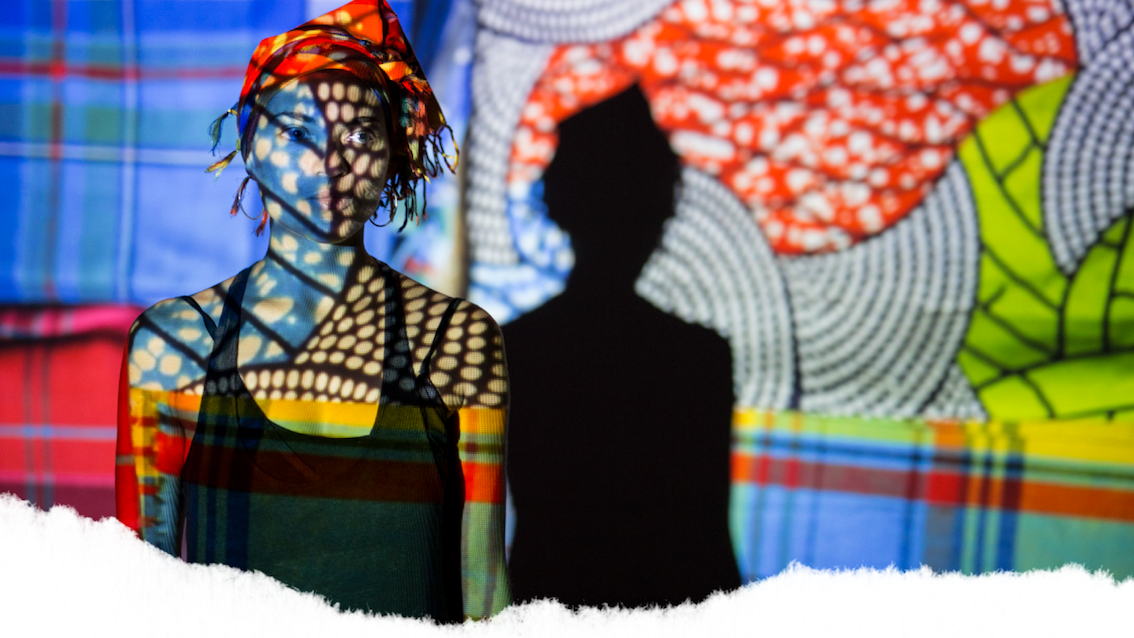
In 2023, the Ontario Arts Council (OAC) launched a project with community-based organizations in Ontario to improve equity, diversity, inclusion, and accessibility efforts. One of the projects chosen was SHVILIM. A collaborative effort between FENTSTER, No Silence on Race, and Shoreline Collaboratives.
FENTSTER is a Jewish arts and culture organization. It ran primarily as a window gallery in downtown Toronto for nearly nine years but has recently shifted into focusing on organizing arts events celebrating diverse Jewish culture and inclusivity. No Silence on Race is an organization that highlights multi-ethnic and multi-racial Jews through programming. And Shorelines Collaboratives is a consultancy that helps organizations foster equitable workplaces.
SHIVILM is dedicated to “enhancing the visibility of Jewish culture in Ontario’s arts landscape while supporting greater understanding about anti-Jewish oppression.”
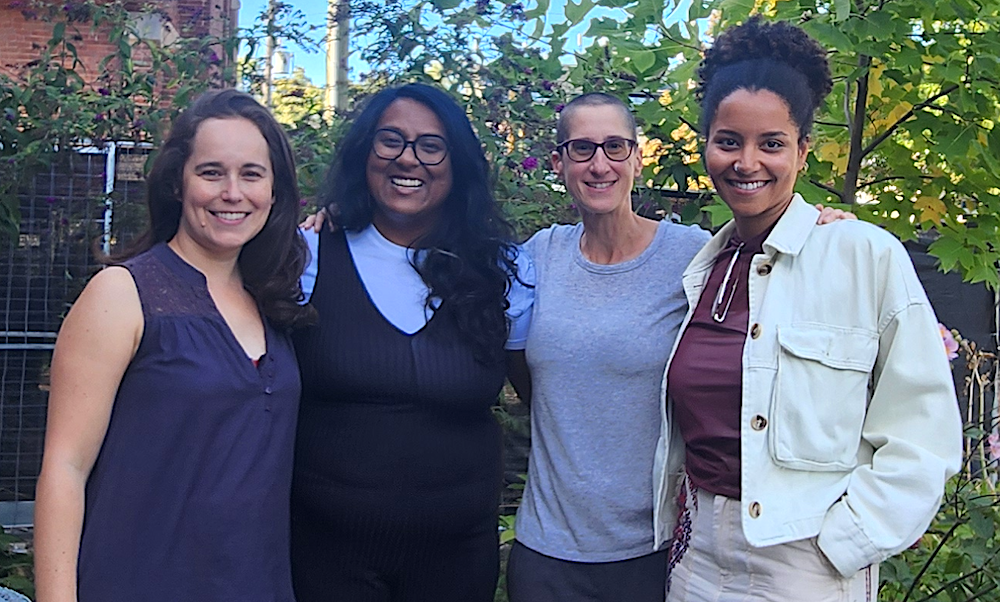
SHVILIM, which in Hebrew means “paths,” has created an educational resource called Bridging Worlds that opens up new pathways for understanding antisemitism and Jewish history and culture in Ontario.
Bridging Worlds offers tools for Jews to find Jewish belonging in an increasingly hostile world while also offering historical artifacts and facts to help those in and outside of the Jewish community understand Jewish history and antisemitism.

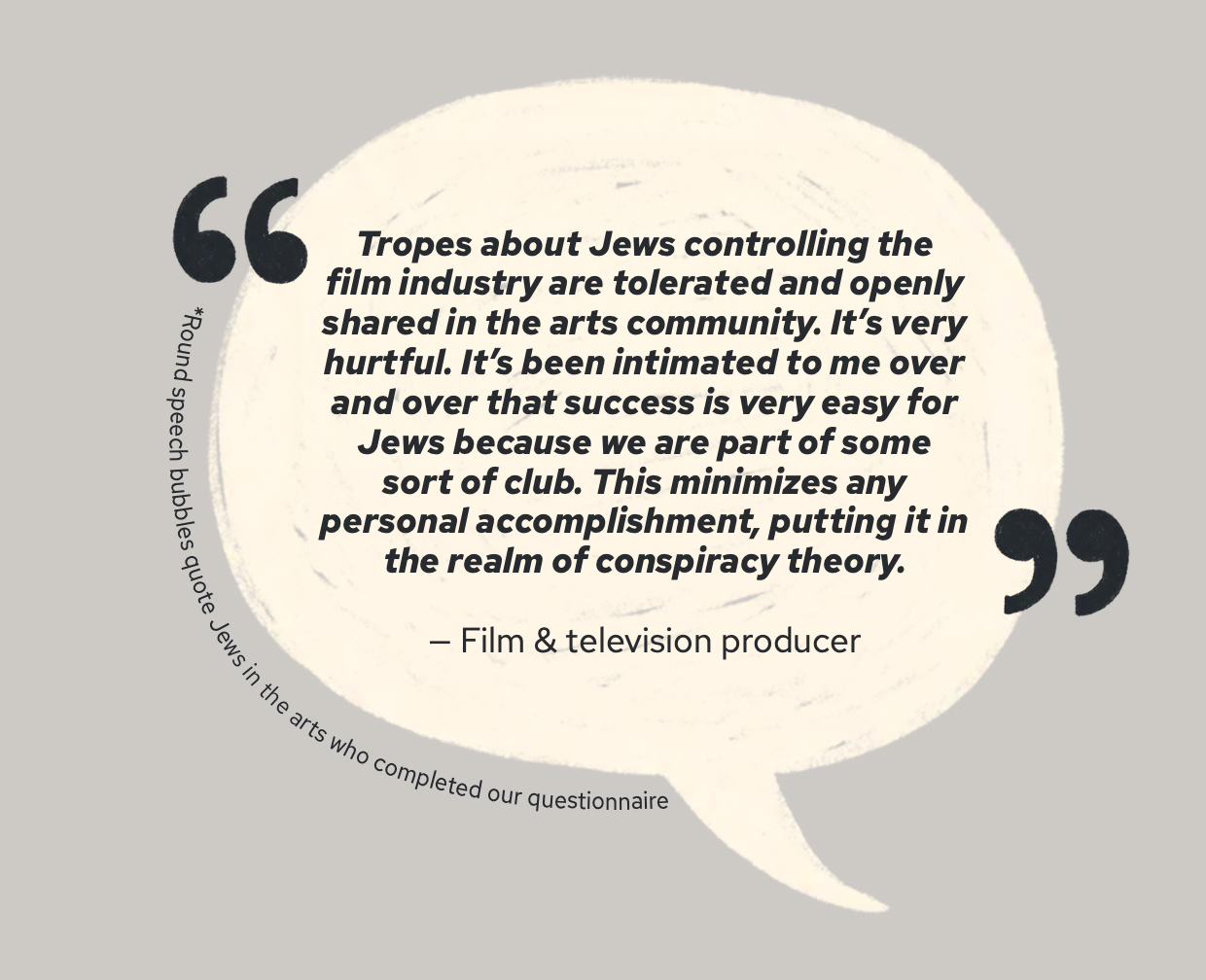
The series offers a four-part resource guide filled with different perspectives and teachings. It includes information on tropes and stereotypes, as well as anonymous testimonials from arts workers and artists on their experiences in the community, which were taken from a survey SHVILIM conducted, and more.
One survey participant noted that “Sometimes it feels difficult and slightly unsafe to be Jewish in non-Jewish spaces. Sometimes it feels difficult and slightly unsafe to be Jewish within Jewish spaces.” On the small corner of the internet SHVILIM has created free, accessible, and visually beautiful documents that hope to repair and deepen the understanding of Jewish oppression.
I spoke with project director Evelyn Tauben, art historian, curator, and founder of FENTSTER; and Sarah Margles, research and strategic design lead, with over twenty years of practice in anti-oppression counselling, on the intricacies of realizing Bridging Worlds.
Before diving into the documents for yourself, read on to find out how it came together.
When I started working within the Jewish community, I was surprised at how many different approaches there are to defining antisemitism. Was it difficult when doing this project, and in reaching out to other people in and outside of the Jewish community, in defining it?
Margles: We didn’t define it on purpose. In a lot of ways, the way we designed The Dynamics of the Antisemitism (the second document in the series), it is meant to be an alternative to a definition. There’s three dynamics [Exaggeration of Power, Blame, and Isolation]. Is the incident that you’re looking at playing into one of those dynamics? If it does, then Jews are targeted. We offer a framework for how to look at things that are happening or things that are said and then assess where it falls on how harmful it is.
Tauben: There’s a preoccupation of labelling. And people want you to just say, Yes, this is antisemitism. And the truth is, things are very complicated, and it’s not always necessary to even put a label on it. Just to name something here is a bit sticky and maybe harmful to Jews. We’re serving the arts community, right? How can we have better conversations in the arts world about how we think about these tropes?

How did both of your professional experiences help you create this initiative and shape it into what it is?
Margles: I have quite an extensive background in thinking about systems of oppression and I have an education background. I come at it thinking about teaching and educating and helping people understand complicated things. I spent many years working in DEI spaces. I’ve had very few experiences of antisemitism in my life, and all of them have been in those spaces. And some were fierce. A couple of them were career altering, where I had to leave my job. When I had flagged the problem, there was no awareness, no willingness to look at it. I’ve been thinking for a long time, especially in that DEI work, about what are the elements that make it easy for some groups to build strong allyship, to change public discourse on a form of targeting, and why is it so hard for Jews to do that? A lot of it is the nature of antisemitism. In many ways, antisemitism isn’t about Jews. It’s about these imaginary people who have these magical, strong powers that have very little to do with who we are.
Tauben: I’ve been working in Jewish arts and culture for over 20 years, and it feels like, depending on the day, I’m in either a straddling position or a bridge-building position, or in an isolated and stuck place where I’m between these worlds, and sometimes each world has a lot of suspiciousness about the other and a lack of understanding about the other. I’ve kind of made it my role to move between worlds and try to keep talking to everybody. I’ve been a part of an anti-oppression community for over 15 years. It feeds into how I think about the world and how I do my work. But this was the first time I felt I could really bring those commitments together and make an offering to the arts community that honours Jewish stories, where people in the arts are at, what they need, and what they’re up against—what we’re all up against. I felt called to do it, which is a mixed bag because it’s more fun to curate and produce concerts than to spend two years of your life thinking about antisemitism.
There are many elements within each of the documents. Was it difficult to find a balance in how much material to show regarding, for instance, survey responses or historical findings on antisemitism or addressing the current climate we are in?
Tauben: A few things we did stick in quite late in the game because it created more balance to the narrative. We have this section about Jews and power, and that Jewish power is exaggerated, which is part of the dynamic of antisemitism. But there was a feeling that we must also name that white-presenting Jews do have privilege. And there’s a tension because there are some scenarios where we have privilege and power, and sometimes where we’re targeted and the power is exaggerated. And that’s important to at least name, even though it’s not dealt with in a very substantial way.
How important was it to have voices outside of the Jewish community joining in on this project?
Margles: It was important for a number of reasons. One is we needed internal checks and balances. We can’t see our own biases, and so as much as we may be intending for things to follow a certain set of values and certain lines of integrity, we needed people who would be able to catch us if we fell off and weren’t aware of it. Also, we wanted to bring in their voices and their perspectives around a lot of the issues and make sure we are capturing diverse viewpoints. We also wanted to make sure the documents are understandable to someone who’s not in the community. Having eyes on this from a ton of different perspectives in and out of the Jewish community was hugely important to maintain the integrity and ensure that the quality of what we produced was top notch.
Tauben: That happened all the time where someone came in with a different lens, and I was like, Oh, wow. I just totally missed this because I am an Ashkenazi Jew. And they said it with love, but sometimes with ferocity as the situation warranted. Our core philosophy about this work is that we won’t be able to end antisemitism alone. That’s maybe, or largely, why some of the other approaches are not working. Because we’re shouting off onto the side by ourselves, saying, Please take us seriously. The most personally transformative part of this work was developing these close relationships with allies. I actually did not know this level of allyship was possible.
Was there anything else you learned about during the creation of these materials that surprised you?
Margles: Learning happened all the time and everybody who was part of the project wanted to have their boundaries pushed. They wanted to hear different perspectives. They wanted to clarify their own perspectives, which is very different from a polarized environment where you dig your heels in and you just block out anything that’s different from how you see the world. It was very hopeful in a lot of ways, in ways that walking through the world these days doesn’t feel so hopeful.
Four questions for reflection conclude each chapter of Bridging World, and I wonder, after creating these materials, what questions are you left with?
Tauben: The main question that we’re actively grappling with is: Where do we go from here?
Some people have had to go on to more, better compensated jobs, but enough people believe that there’s something here that we created that has legs and that there’s more possibility. And so, we’re asking ourselves: If we had more funding and if we took more time, what would that look like? How can we use what we learned and created for future initiatives? What’s the best use of our time and energy? What do people really need and want right now? What’s possible? The best thing we could think of doing, might not be possible right now. People are really worn out from being so scared and discouraged for so long. They may not have capacity for some of the offerings we’re interested in, like dialogue spaces that bring people together who have different lived experiences and perspectives. And then, another question is who wants to walk this path with us as we try to go forward? Can this be for other communities beyond the arts community? Who else is already thinking in these ways that we can partner with? There’s a lot of questions. At the end of this, it still feels very unresolved.
This interview has been edited for clarity and length.
In 2023, the Ontario Arts Council (OAC) launched a project with community-based organizations in Ontario to improve equity, diversity, inclusion, and accessibility efforts. One of the projects chosen was SHVILIM. A collaborative effort between FENTSTER, No Silence on Race, and Shoreline Collaboratives.
FENTSTER is a Jewish arts and culture organization. It ran primarily as a window gallery in downtown Toronto for nearly nine years but has recently shifted into focusing on organizing arts events celebrating diverse Jewish culture and inclusivity. No Silence on Race is an organization that highlights multi-ethnic and multi-racial Jews through programming. And Shorelines Collaboratives is a consultancy that helps organizations foster equitable workplaces.
SHIVILM is dedicated to “enhancing the visibility of Jewish culture in Ontario’s arts landscape while supporting greater understanding about anti-Jewish oppression.”
SHVILIM, which in Hebrew means “paths,” has created an educational resource called Bridging Worlds that opens up new pathways for understanding antisemitism and Jewish history and culture in Ontario.
Bridging Worlds offers tools for Jews to find Jewish belonging in an increasingly hostile world while also offering historical artifacts and facts to help those in and outside of the Jewish community understand Jewish history and antisemitism.
The series offers a four-part resource guide filled with different perspectives and teachings. It includes information on tropes and stereotypes, as well as anonymous testimonials from arts workers and artists on their experiences in the community, which were taken from a survey SHVILIM conducted, and more.
One survey participant noted that “Sometimes it feels difficult and slightly unsafe to be Jewish in non-Jewish spaces. Sometimes it feels difficult and slightly unsafe to be Jewish within Jewish spaces.” On the small corner of the internet SHVILIM has created free, accessible, and visually beautiful documents that hope to repair and deepen the understanding of Jewish oppression.
I spoke with project director Evelyn Tauben, art historian, curator, and founder of FENTSTER; and Sarah Margles, research and strategic design lead, with over twenty years of practice in anti-oppression counselling, on the intricacies of realizing Bridging Worlds.
Before diving into the documents for yourself, read on to find out how it came together.
When I started working within the Jewish community, I was surprised at how many different approaches there are to defining antisemitism. Was it difficult when doing this project, and in reaching out to other people in and outside of the Jewish community, in defining it?
Margles: We didn’t define it on purpose. In a lot of ways, the way we designed The Dynamics of the Antisemitism (the second document in the series), it is meant to be an alternative to a definition. There’s three dynamics [Exaggeration of Power, Blame, and Isolation]. Is the incident that you’re looking at playing into one of those dynamics? If it does, then Jews are targeted. We offer a framework for how to look at things that are happening or things that are said and then assess where it falls on how harmful it is.
Tauben: There’s a preoccupation of labelling. And people want you to just say, Yes, this is antisemitism. And the truth is, things are very complicated, and it’s not always necessary to even put a label on it. Just to name something here is a bit sticky and maybe harmful to Jews. We’re serving the arts community, right? How can we have better conversations in the arts world about how we think about these tropes?
How did both of your professional experiences help you create this initiative and shape it into what it is?
Margles: I have quite an extensive background in thinking about systems of oppression and I have an education background. I come at it thinking about teaching and educating and helping people understand complicated things. I spent many years working in DEI spaces. I’ve had very few experiences of antisemitism in my life, and all of them have been in those spaces. And some were fierce. A couple of them were career altering, where I had to leave my job. When I had flagged the problem, there was no awareness, no willingness to look at it. I’ve been thinking for a long time, especially in that DEI work, about what are the elements that make it easy for some groups to build strong allyship, to change public discourse on a form of targeting, and why is it so hard for Jews to do that? A lot of it is the nature of antisemitism. In many ways, antisemitism isn’t about Jews. It’s about these imaginary people who have these magical, strong powers that have very little to do with who we are.
Tauben: I’ve been working in Jewish arts and culture for over 20 years, and it feels like, depending on the day, I’m in either a straddling position or a bridge-building position, or in an isolated and stuck place where I’m between these worlds, and sometimes each world has a lot of suspiciousness about the other and a lack of understanding about the other. I’ve kind of made it my role to move between worlds and try to keep talking to everybody. I’ve been a part of an anti-oppression community for over 15 years. It feeds into how I think about the world and how I do my work. But this was the first time I felt I could really bring those commitments together and make an offering to the arts community that honours Jewish stories, where people in the arts are at, what they need, and what they’re up against—what we’re all up against. I felt called to do it, which is a mixed bag because it’s more fun to curate and produce concerts than to spend two years of your life thinking about antisemitism.
There are many elements within each of the documents. Was it difficult to find a balance in how much material to show regarding, for instance, survey responses or historical findings on antisemitism or addressing the current climate we are in?
Tauben: A few things we did stick in quite late in the game because it created more balance to the narrative. We have this section about Jews and power, and that Jewish power is exaggerated, which is part of the dynamic of antisemitism. But there was a feeling that we must also name that white-presenting Jews do have privilege. And there’s a tension because there are some scenarios where we have privilege and power, and sometimes where we’re targeted and the power is exaggerated. And that’s important to at least name, even though it’s not dealt with in a very substantial way.
How important was it to have voices outside of the Jewish community joining in on this project?
Margles: It was important for a number of reasons. One is we needed internal checks and balances. We can’t see our own biases, and so as much as we may be intending for things to follow a certain set of values and certain lines of integrity, we needed people who would be able to catch us if we fell off and weren’t aware of it. Also, we wanted to bring in their voices and their perspectives around a lot of the issues and make sure we are capturing diverse viewpoints. We also wanted to make sure the documents are understandable to someone who’s not in the community. Having eyes on this from a ton of different perspectives in and out of the Jewish community was hugely important to maintain the integrity and ensure that the quality of what we produced was top notch.
Tauben: That happened all the time where someone came in with a different lens, and I was like, Oh, wow. I just totally missed this because I am an Ashkenazi Jew. And they said it with love, but sometimes with ferocity as the situation warranted. Our core philosophy about this work is that we won’t be able to end antisemitism alone. That’s maybe, or largely, why some of the other approaches are not working. Because we’re shouting off onto the side by ourselves, saying, Please take us seriously. The most personally transformative part of this work was developing these close relationships with allies. I actually did not know this level of allyship was possible.
Was there anything else you learned about during the creation of these materials that surprised you?
Margles: Learning happened all the time and everybody who was part of the project wanted to have their boundaries pushed. They wanted to hear different perspectives. They wanted to clarify their own perspectives, which is very different from a polarized environment where you dig your heels in and you just block out anything that’s different from how you see the world. It was very hopeful in a lot of ways, in ways that walking through the world these days doesn’t feel so hopeful.
Four questions for reflection conclude each chapter of Bridging World, and I wonder, after creating these materials, what questions are you left with?
Tauben: The main question that we’re actively grappling with is: Where do we go from here?
Some people have had to go on to more, better compensated jobs, but enough people believe that there’s something here that we created that has legs and that there’s more possibility. And so, we’re asking ourselves: If we had more funding and if we took more time, what would that look like? How can we use what we learned and created for future initiatives? What’s the best use of our time and energy? What do people really need and want right now? What’s possible? The best thing we could think of doing, might not be possible right now. People are really worn out from being so scared and discouraged for so long. They may not have capacity for some of the offerings we’re interested in, like dialogue spaces that bring people together who have different lived experiences and perspectives. And then, another question is who wants to walk this path with us as we try to go forward? Can this be for other communities beyond the arts community? Who else is already thinking in these ways that we can partner with? There’s a lot of questions. At the end of this, it still feels very unresolved.
This interview has been edited for clarity and length.