



A seventy-three-year-old Jewish woman, who is also a mother, grandmother, and successful poet, is sitting outside of a café reading Vanity Fair. There is a cup of tea in front of her.
(Angrily slapping the magazine against the table) Calling me the luckiest woman in literature, what a load of crap. Lucky in love, what nonsense. An event unparalleled in the history of North American publishing, my left buttock. Five members of one Jewish family having books on sex coming out in the same season, my right buttock. That’s the caption under the five photographs of my estranged husband and kids. (Opening the magazine and looking at the article she is angry about). There are our photographs, separately, like mugshots. Mugshots, I tell you. The journalist—at least that’s what she called herself—took me to my favourite restaurant downtown and before I had my first sip of wine, asked me if I had a nice wholesome photograph of my family, perhaps at a cottage, lakeside, something dreamy and evocative. I quickly gulped down my glass of wine, then shouted we never had a cottage, never vacationed together, not once, my husband was a philandering booze-guzzling workaholic who had a pathological weakness for shiksas.
(Closing the magazine) “May I quote you on that?” The journalist asked so politely it was as if she were requesting permission to go to the washroom from a feared teacher. I accidentally pushed her tape-recorder off the table, uttering with syrupy contrition, “Oh my, I never could hold my liquor . . . ”
“That’s quite all right,” the journalist said, bending down to pick up her nasty little contraption. I called her a supercilious little fart and laughed at the stupidity of my remark. The journalist, to her credit, told me how in high school she had written a history of flatulence for the school newspaper, and the faculty adviser had tried to censor her. I had to laugh. My mood eased and I revealed that the last family photo of all of us together was two decades ago, standing around my soon-to-be estranged—though never divorced—husband’s lime-green sports car, also known as a midlife crisis. I had photos from family gatherings at bar mitzvahs, weddings, funerals, but I didn’t want to put any undue emphasis on Jewishness, sensing that the journalist somehow wanted to frame her story in terms of me being the stereotypical overzealous bubbie.
Books on sex, sex books, bookish sex, sexual words, word-luscious sexiness, sex thoughts, sex words, sex-sexier-sexiest (woman points to the magazine) that’s what rings their bells, starts them salivating. I shouldn’t act so indignant. I’m not a hurt naive child. I’m an angry seventy-three-year-old woman. But I’m first and foremost a poet, maybe a little long in the tooth poet, but I take my creativity seriously—it’s what I am.
“As the matriarch of a family that has a penchant for attracting publicity on the topic of sex, do you consider sex central to your existence?” After so many questions concerning sex and my family, I had had enough. Perhaps I was tired, or it was the exquisitely refined English accent of the interviewer, or maybe I simply overdosed on questions about sex and my family. For heaven’s sake, the name of my book of poetry is Nothing of the Flesh.
“No more radio interviews! No more TV interviews! No more print-journalist interviews!” I yelled at the top of my well-worn voice, shaking the walls of the radio studio.
Oh my fragmented, dispersed family. What has happened to us?
My three boys are now grown with children of their own, and all of them seem to have a skewered predilection for hanging dirty laundry in public. My oldest lives on the West Coast, a psychiatrist, who has recently published a controversial—and if you ask me, four-letter-word-saturated, orifice-obsessed—novel, Entwined in the Act. The second, currently residing on the East Coast, is an author of two dozen chapbooks of erotic poetry—the latest an idiotically titled An Instruction Manual of Desire—and a sometimes performance artist. He is determined to take his art to the people, whether the people want to partake or not. And my youngest, living in the middle of the country, the one who showed absolutely no writing skills or literary talent growing up, after five years as a finance-company manager, is self-publishing a book called Hard Discipline: The Abstinence Path to Spiritual, Mental, and Physical Health.
I wish someone could get the long-gone patriarch of the family to explain what has happened to our family, why we have turned into a family of writers and performers about sex, or no sex, depending on your interpretation. My husband is writing his memoirs. Arguably one of the country’s most famous sex researchers, even though he hasn’t done an iota of sex research in almost two decades. Stopped his ground-breaking research in the middle of book four of his proposed five-book series on the history of sex in North America.
Sometimes during dinner-party chatter or in the midst of too much coffee-shop small talk, I like to recite coldly, harshly, perhaps somewhat virulently, my formerly erudite, estranged hubby’s book titles: The Composition of Adult Bisexuality in North America. The Sexual Composition of Adult Heterosexuality in North America. The Sexual Composition of Adult Homosexuality in North America. He abandoned his project in the middle of the fourth volume, The Sexual Composition of Teen Sexuality in North America. Our three children were teenagers at the time. Maybe it was his much ballyhooed midlife crisis, the lime-green sports car that distracted him from completing the book. Volume five was going to be The Sexual Composition of North America: An Overview.
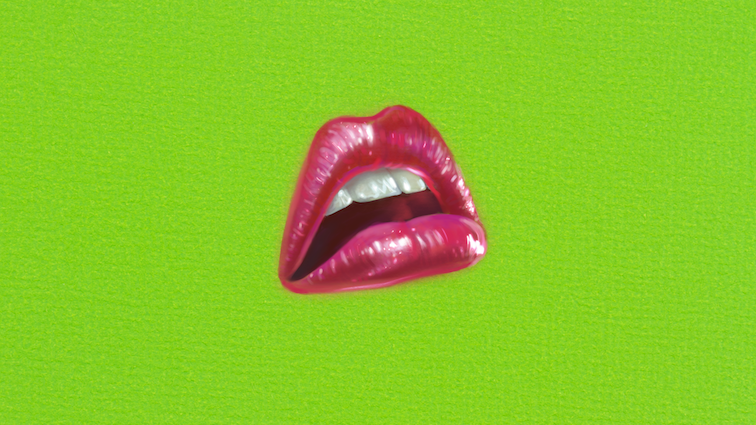
The questions the interviewers ask even slither into my dreamscapes, darkening what should be unfettered romps through the subconscious. My nightmares sometimes have gigantic lips uttering questions:
“Are your poems autobiographical?”
“Did you engage in threesomes?”
“Do you find that vigorous, robust sexual activity affects your writing” I tell the gigantic lips they are chapped, oozing out collagen, and I grasp a corner of the lips and squeeze them between my fingers, and say, “You can’t shove art down the throats of people who persist in keeping their mouths firmly closed.” Such is my rebellious dream life.
Oh well, I could always move, change my name, remake myself into a prim, sedate woman of letters, and write poems about sexless objects. I could pretend I had never married, never had three children, never wandered into writing life, never been a passionate, sensuous, loving being. But then, I fear, no one might be interested in reading my poems. As my last lover said, in his exuberant, youthful, passionate way, “Love teaches you everything you need to know about the heart.” Then the carefree young man gave me a soft, gentle kiss, and whispered, “And you have to get your education wherever you can, sweetheart.” That carefree young man, I can say, was more than a metaphor or literary example of getting lucky in love, even if he is now only a beautiful, loving memory. But as long as imagination embraces me, I await getting lucky in love again . . . and again.
A seventy-three-year-old Jewish woman, who is also a mother, grandmother, and successful poet, is sitting outside of a café reading Vanity Fair. There is a cup of tea in front of her.
(Angrily slapping the magazine against the table) Calling me the luckiest woman in literature, what a load of crap. Lucky in love, what nonsense. An event unparalleled in the history of North American publishing, my left buttock. Five members of one Jewish family having books on sex coming out in the same season, my right buttock. That’s the caption under the five photographs of my estranged husband and kids. (Opening the magazine and looking at the article she is angry about). There are our photographs, separately, like mugshots. Mugshots, I tell you. The journalist—at least that’s what she called herself—took me to my favourite restaurant downtown and before I had my first sip of wine, asked me if I had a nice wholesome photograph of my family, perhaps at a cottage, lakeside, something dreamy and evocative. I quickly gulped down my glass of wine, then shouted we never had a cottage, never vacationed together, not once, my husband was a philandering booze-guzzling workaholic who had a pathological weakness for shiksas.
(Closing the magazine) “May I quote you on that?” The journalist asked so politely it was as if she were requesting permission to go to the washroom from a feared teacher. I accidentally pushed her tape-recorder off the table, uttering with syrupy contrition, “Oh my, I never could hold my liquor . . . ”
“That’s quite all right,” the journalist said, bending down to pick up her nasty little contraption. I called her a supercilious little fart and laughed at the stupidity of my remark. The journalist, to her credit, told me how in high school she had written a history of flatulence for the school newspaper, and the faculty adviser had tried to censor her. I had to laugh. My mood eased and I revealed that the last family photo of all of us together was two decades ago, standing around my soon-to-be estranged—though never divorced—husband’s lime-green sports car, also known as a midlife crisis. I had photos from family gatherings at bar mitzvahs, weddings, funerals, but I didn’t want to put any undue emphasis on Jewishness, sensing that the journalist somehow wanted to frame her story in terms of me being the stereotypical overzealous bubbie.
Books on sex, sex books, bookish sex, sexual words, word-luscious sexiness, sex thoughts, sex words, sex-sexier-sexiest (woman points to the magazine) that’s what rings their bells, starts them salivating. I shouldn’t act so indignant. I’m not a hurt naive child. I’m an angry seventy-three-year-old woman. But I’m first and foremost a poet, maybe a little long in the tooth poet, but I take my creativity seriously—it’s what I am.
“As the matriarch of a family that has a penchant for attracting publicity on the topic of sex, do you consider sex central to your existence?” After so many questions concerning sex and my family, I had had enough. Perhaps I was tired, or it was the exquisitely refined English accent of the interviewer, or maybe I simply overdosed on questions about sex and my family. For heaven’s sake, the name of my book of poetry is Nothing of the Flesh.
“No more radio interviews! No more TV interviews! No more print-journalist interviews!” I yelled at the top of my well-worn voice, shaking the walls of the radio studio.
Oh my fragmented, dispersed family. What has happened to us?
My three boys are now grown with children of their own, and all of them seem to have a skewered predilection for hanging dirty laundry in public. My oldest lives on the West Coast, a psychiatrist, who has recently published a controversial—and if you ask me, four-letter-word-saturated, orifice-obsessed—novel, Entwined in the Act. The second, currently residing on the East Coast, is an author of two dozen chapbooks of erotic poetry—the latest an idiotically titled An Instruction Manual of Desire—and a sometimes performance artist. He is determined to take his art to the people, whether the people want to partake or not. And my youngest, living in the middle of the country, the one who showed absolutely no writing skills or literary talent growing up, after five years as a finance-company manager, is self-publishing a book called Hard Discipline: The Abstinence Path to Spiritual, Mental, and Physical Health.
I wish someone could get the long-gone patriarch of the family to explain what has happened to our family, why we have turned into a family of writers and performers about sex, or no sex, depending on your interpretation. My husband is writing his memoirs. Arguably one of the country’s most famous sex researchers, even though he hasn’t done an iota of sex research in almost two decades. Stopped his ground-breaking research in the middle of book four of his proposed five-book series on the history of sex in North America.
Sometimes during dinner-party chatter or in the midst of too much coffee-shop small talk, I like to recite coldly, harshly, perhaps somewhat virulently, my formerly erudite, estranged hubby’s book titles: The Composition of Adult Bisexuality in North America. The Sexual Composition of Adult Heterosexuality in North America. The Sexual Composition of Adult Homosexuality in North America. He abandoned his project in the middle of the fourth volume, The Sexual Composition of Teen Sexuality in North America. Our three children were teenagers at the time. Maybe it was his much ballyhooed midlife crisis, the lime-green sports car that distracted him from completing the book. Volume five was going to be The Sexual Composition of North America: An Overview.
The questions the interviewers ask even slither into my dreamscapes, darkening what should be unfettered romps through the subconscious. My nightmares sometimes have gigantic lips uttering questions:
“Are your poems autobiographical?”
“Did you engage in threesomes?”
“Do you find that vigorous, robust sexual activity affects your writing” I tell the gigantic lips they are chapped, oozing out collagen, and I grasp a corner of the lips and squeeze them between my fingers, and say, “You can’t shove art down the throats of people who persist in keeping their mouths firmly closed.” Such is my rebellious dream life.
Oh well, I could always move, change my name, remake myself into a prim, sedate woman of letters, and write poems about sexless objects. I could pretend I had never married, never had three children, never wandered into writing life, never been a passionate, sensuous, loving being. But then, I fear, no one might be interested in reading my poems. As my last lover said, in his exuberant, youthful, passionate way, “Love teaches you everything you need to know about the heart.” Then the carefree young man gave me a soft, gentle kiss, and whispered, “And you have to get your education wherever you can, sweetheart.” That carefree young man, I can say, was more than a metaphor or literary example of getting lucky in love, even if he is now only a beautiful, loving memory. But as long as imagination embraces me, I await getting lucky in love again . . . and again.