


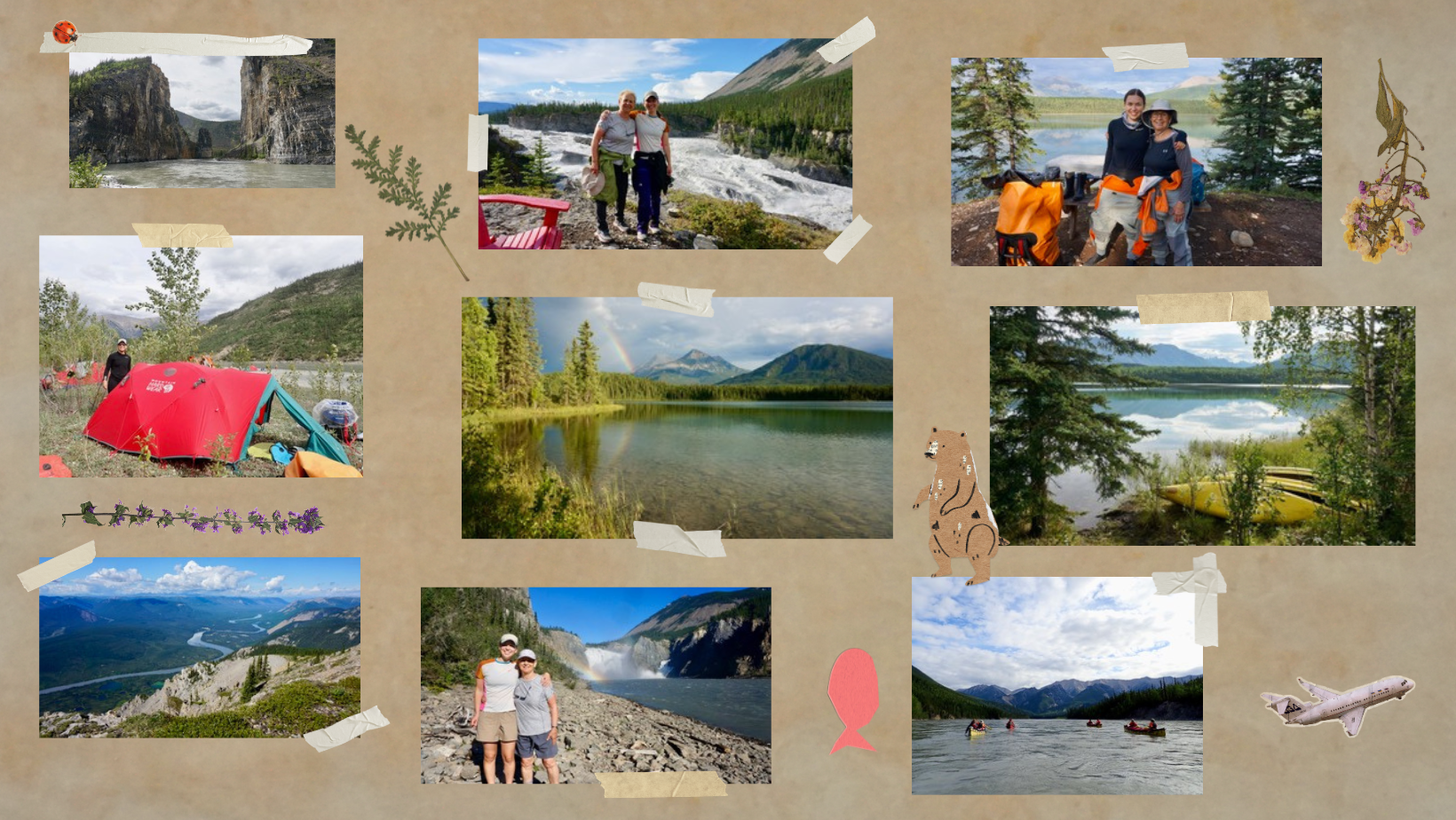
Bonnie Chandler, a dentist from Toronto, loves the outdoors. It started from when she was a kid going camping with her dad. She later spent three seasons in Algonquin Park doing fisheries research, where she spent off-hours canoeing and kayaking.
Her adventures in the wild never stopped and she has instilled that same intrepid spirit in the next generation. Just as Bonnie’s father took her on nature trips, she takes her children on wilderness expeditions.
I had the pleasure of speaking to Bonnie and her daughter Yael, a product designer, about their most-recent trip to the Nahanni River, known by the Dehcho Dene people as Nahʔą Dehé, in the Northwest Territories.
From August 1 until August 14, Bonnie and Yael lived alongside the river and its surrounding land, topped with spindly trees. They went with Black Feather, a company that has been taking participants on “self-propelled trips by foot, canoe, sea kayak, ski and raft in unique wilderness locales” for over 50 years.
However, it is not their first trek through the North. The mother-daughter duo, who I am campaigning to go on The Amazing Race Canada, have paddled through the Wind River in the Yukon, the Kiel River in the Northwest Territories, and now the Nahanni River. But it never gets old. From bear sightings to fishing to witnessing breath-taking canyons, nature’s beauty remains striking. And it is their time together, amongst the unbelievable landscapes that leads to a strengthening of connection between family, community, and the land we dwell on.
Some of us will never go on wilderness excursions, our adventures will lead us elsewhere, but reading can transport you anywhere. Next stop: Nahanni River.
What does it mean for you both, as mother and daughter, to take these trips together?
Bonnie: I’m very blessed that she would come with me three times. And we get along great. We help each other out. But Yael is stronger than me right now. She’s a real bear.
Yael: This trip we were with two sets of couples, and then two single people who came on their own. I think all of them have kids, and they all said, I wish that my daughter, my son, would come with me. When we went on our first trip, and I was telling some of my friends, they were shocked that I was willing to spend two weeks sharing a tent with my mom.
Bonnie: I was the oldest one on this trip and Yael was the youngest by about 30 years. On other trips there wasn’t such a difference, but I have to say, everyone loved Yael. I find Yael extremely happy on these trips. You can’t wipe that smile off her face.
How do you accommodate your Jewish practice on these trips?
Bonnie: We keep kosher, so we ate a vegetarian diet on the trip.
Yael: We explained to people what kashrut means, why we follow it. One of our guides this year, Charlie, his dad was a Black Feather guide before him. He said that his dad once took a group of Orthodox Jews on a private trip and all the guides made sure everything was kosher. They brought new pots and pans and brought kosher meat. They’re really accommodating. The company is fantastic.
How are the meals prepared?
The guides know how to cook. When you go on a canoe trip on your own, you’re packing dehydrated food and oatmeal, it’s not super inspiring. They take no dried food. It’s all fresh and they plan their meals so it lasts until day 12 and day 14 without a refrigerator. They make cinnamon buns from scratch. You see the guides the night before making the dough, and in the morning, rolling up the cinnamon buns. Each trip we’ve been on, the guides prefer different levels of involvement in cooking from the participants. On our second trip, they were happy for everyone to help. Everyone was always in the “kitchen,” which is two overturned canoes in an L shape, cutting stuff up and stirring food over the fire. You’re never hungry.
Bonnie: We always help with the dishes. Everybody’s happy to chip in.
What did your Judaism bring to this experience?
Bonnie: This year we had a woman on our trip who was born Jewish but hasn’t practiced Judaism in a long time. One night, she came up to us after dinner and she said, It’s my dad's yahrzeit, I usually light a candle. And so our guide gave us a candle. Yael said Kaddish, and she repeated after me. She didn’t know the words. I don't know if she’s ever said it before, it was special.
Over the course of your travels, what have you learned from one another?
Yael: My mom has a lot of experience doing trips like this and adventuring and being in nature. I’m always learning about different trees and plants and flowers from her, and even just how she puts up her tent or how she takes it down.
I'm sure that it can get hard sometimes when you’re out there.
Yael: There are challenges we had on this trip. The weather was great and not too cold, because it can get cold up there. But there was one day when it poured for 30 hours straight. We were cold and wet, and paddling in the rain, and then setting up our tent in the rain. And tents are not waterproof. The guides were making a fire with wet wood. But it’s all part of the experience, and it’s kind of character building and team building.
Bonnie: I think more people should do it. It's pretty expensive. That’s the one thing. I think that's why people who go on the trip are a little older. But it can be really life changing.
How so?
Yael: You have to be self-reliant, but as a group. And turning off your phone and shoving it at the bottom of your pack and not seeing it for two weeks is an amazing feeling. You have tons of questions on these trips like, “What tree is that?” “What if I can’t start a fire?” Needing to figure stuff out on your own is an experience we don’t always have today. When you’re on a trip like this, you have 14 days and you’re starting at point A and you need to get to point B. But in between that time, the guides and the group are constantly making decisions about how far we can go based on the group’s energy or the weather. Those are the things that matter. Coming back from that and going back to work in tech, a high-pressure environment, I just had this feeling that the deadlines at work are based on nothing. It feels so artificial, in a sense, after being in nature and seeing what really matters and where we should be putting our effort.
Bonnie Chandler, a dentist from Toronto, loves the outdoors. It started from when she was a kid going camping with her dad. She later spent three seasons in Algonquin Park doing fisheries research, where she spent off-hours canoeing and kayaking.
Her adventures in the wild never stopped and she has instilled that same intrepid spirit in the next generation. Just as Bonnie’s father took her on nature trips, she takes her children on wilderness expeditions.
I had the pleasure of speaking to Bonnie and her daughter Yael, a product designer, about their most-recent trip to the Nahanni River, known by the Dehcho Dene people as Nahʔą Dehé, in the Northwest Territories.
From August 1 until August 14, Bonnie and Yael lived alongside the river and its surrounding land, topped with spindly trees. They went with Black Feather, a company that has been taking participants on “self-propelled trips by foot, canoe, sea kayak, ski and raft in unique wilderness locales” for over 50 years.
However, it is not their first trek through the North. The mother-daughter duo, who I am campaigning to go on The Amazing Race Canada, have paddled through the Wind River in the Yukon, the Kiel River in the Northwest Territories, and now the Nahanni River. But it never gets old. From bear sightings to fishing to witnessing breath-taking canyons, nature’s beauty remains striking. And it is their time together, amongst the unbelievable landscapes that leads to a strengthening of connection between family, community, and the land we dwell on.
Some of us will never go on wilderness excursions, our adventures will lead us elsewhere, but reading can transport you anywhere. Next stop: Nahanni River.
What does it mean for you both, as mother and daughter, to take these trips together?
Bonnie: I’m very blessed that she would come with me three times. And we get along great. We help each other out. But Yael is stronger than me right now. She’s a real bear.
Yael: This trip we were with two sets of couples, and then two single people who came on their own. I think all of them have kids, and they all said, I wish that my daughter, my son, would come with me. When we went on our first trip, and I was telling some of my friends, they were shocked that I was willing to spend two weeks sharing a tent with my mom.
Bonnie: I was the oldest one on this trip and Yael was the youngest by about 30 years. On other trips there wasn’t such a difference, but I have to say, everyone loved Yael. I find Yael extremely happy on these trips. You can’t wipe that smile off her face.
How do you accommodate your Jewish practice on these trips?
Bonnie: We keep kosher, so we ate a vegetarian diet on the trip.
Yael: We explained to people what kashrut means, why we follow it. One of our guides this year, Charlie, his dad was a Black Feather guide before him. He said that his dad once took a group of Orthodox Jews on a private trip and all the guides made sure everything was kosher. They brought new pots and pans and brought kosher meat. They’re really accommodating. The company is fantastic.
How are the meals prepared?
The guides know how to cook. When you go on a canoe trip on your own, you’re packing dehydrated food and oatmeal, it’s not super inspiring. They take no dried food. It’s all fresh and they plan their meals so it lasts until day 12 and day 14 without a refrigerator. They make cinnamon buns from scratch. You see the guides the night before making the dough, and in the morning, rolling up the cinnamon buns. Each trip we’ve been on, the guides prefer different levels of involvement in cooking from the participants. On our second trip, they were happy for everyone to help. Everyone was always in the “kitchen,” which is two overturned canoes in an L shape, cutting stuff up and stirring food over the fire. You’re never hungry.
Bonnie: We always help with the dishes. Everybody’s happy to chip in.
What did your Judaism bring to this experience?
Bonnie: This year we had a woman on our trip who was born Jewish but hasn’t practiced Judaism in a long time. One night, she came up to us after dinner and she said, It’s my dad's yahrzeit, I usually light a candle. And so our guide gave us a candle. Yael said Kaddish, and she repeated after me. She didn’t know the words. I don't know if she’s ever said it before, it was special.
Over the course of your travels, what have you learned from one another?
Yael: My mom has a lot of experience doing trips like this and adventuring and being in nature. I’m always learning about different trees and plants and flowers from her, and even just how she puts up her tent or how she takes it down.
I'm sure that it can get hard sometimes when you’re out there.
Yael: There are challenges we had on this trip. The weather was great and not too cold, because it can get cold up there. But there was one day when it poured for 30 hours straight. We were cold and wet, and paddling in the rain, and then setting up our tent in the rain. And tents are not waterproof. The guides were making a fire with wet wood. But it’s all part of the experience, and it’s kind of character building and team building.
Bonnie: I think more people should do it. It's pretty expensive. That’s the one thing. I think that's why people who go on the trip are a little older. But it can be really life changing.
How so?
Yael: You have to be self-reliant, but as a group. And turning off your phone and shoving it at the bottom of your pack and not seeing it for two weeks is an amazing feeling. You have tons of questions on these trips like, “What tree is that?” “What if I can’t start a fire?” Needing to figure stuff out on your own is an experience we don’t always have today. When you’re on a trip like this, you have 14 days and you’re starting at point A and you need to get to point B. But in between that time, the guides and the group are constantly making decisions about how far we can go based on the group’s energy or the weather. Those are the things that matter. Coming back from that and going back to work in tech, a high-pressure environment, I just had this feeling that the deadlines at work are based on nothing. It feels so artificial, in a sense, after being in nature and seeing what really matters and where we should be putting our effort.